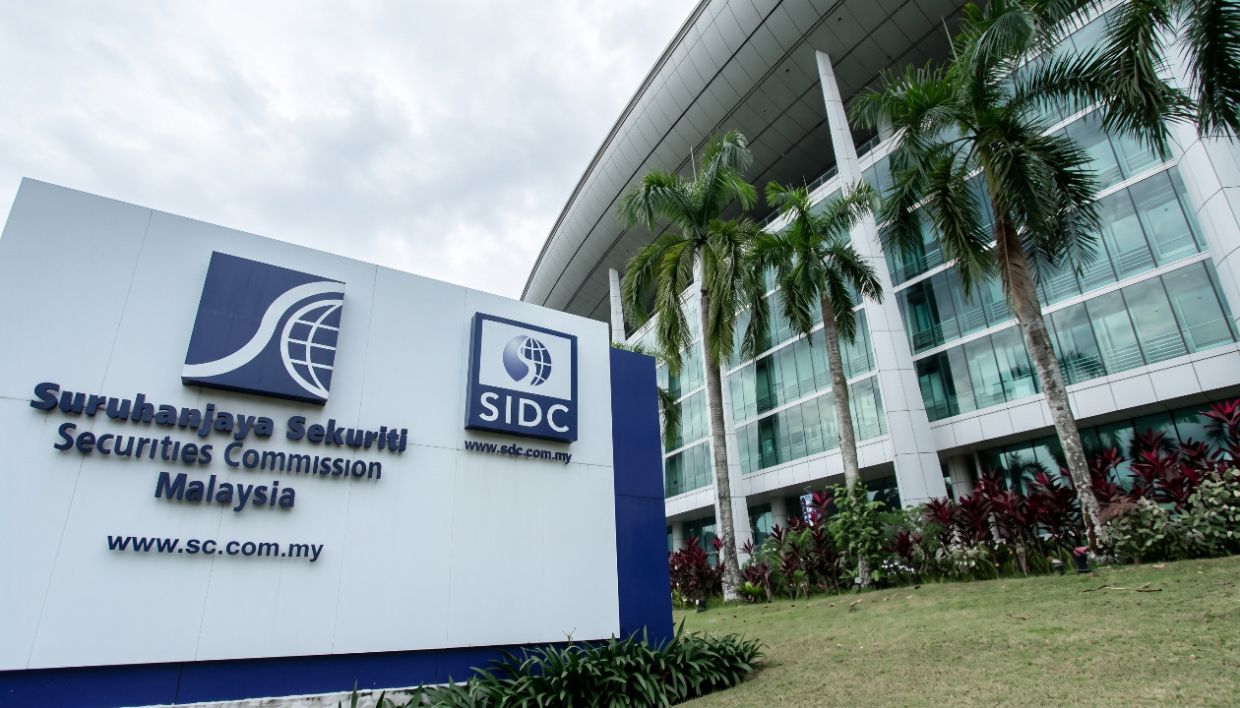
The Kuala Lumpur Sessions Court has delivered a three-year prison sentence to former bank analyst Mohd Arif Fadzlee Mohd Arifin, concluding a significant enforcement case brought by the Securities Commission Malaysia against unlicensed financial advisory activities. The conviction underscores the regulatory body's commitment to protecting investors from unqualified practitioners operating in the capital markets, a persistent challenge across Southeast Asia where informal financial advisory networks often blur the lines between legitimate and illicit activity.
Mohd Arif faced two distinct charges under the Capital Markets and Services Act 2007, both stemming from conduct that occurred in Petaling Jaya and Nilai during 2011. The first charge alleged that he presented himself as a representative of CIMB Wealth Advisors Berhad while engaging in the regulated activity of securities dealing, a violation of section 59(1) of the legislation. This charge carried particular weight because it demonstrated a deliberate association with an established financial institution without possessing the requisite Capital Markets Services Representative's Licence from the SC or being a registered person authorised to conduct such activities. Securities dealing is explicitly designated as a regulated activity under Schedule 2 of the CMSA, meaning any individual or entity engaging in this function must obtain prior licensing approval from the Securities Commission, a safeguard designed to ensure minimum competency and ethical standards among those handling client investments.
The second charge, brought under section 362(3) of the CMSA, targeted his misuse of the Unit Trust Consultant title, a credential that created a false impression of regulatory authorisation. By adopting this professional designation without holding the corresponding licence, Mohd Arif misrepresented his qualifications to potential clients, exploiting a title that typically signals approval from the Securities Commission. This form of credential misuse represents a sophisticated violation because it leverages existing regulatory frameworks to deceive consumers into believing they are transacting with qualified professionals, a tactic that has caused substantial financial harm across the region.
The Securities Commission initiated formal charges against Mohd Arif on January 23, 2024, establishing a timeline that reflects the investigative complexity often involved in pursuing historical financial crimes. Upon arraignment, he was released on bail of RM60,000, a condition that allowed him to remain free pending trial while ensuring his appearance in court. The three-year interim period between the alleged offences in 2011 and the commencement of formal proceedings highlights the challenges Malaysian authorities face in building watertight cases against financial misconduct, requiring extensive documentation retrieval and witness coordination across more than a decade.
During the trial proceedings, the prosecution mounted a substantial case by calling ten witnesses, including two individuals who had been directly harmed by Mohd Arif's conduct. This witness-heavy approach reflected the prosecution's strategy of establishing both the regulatory breach through technical evidence and the real-world impact on consumers through victim testimony. On February 27, 2026, the Sessions Court determined that the prosecution had successfully established a prima facie case, a legal threshold requiring the prosecution to demonstrate sufficient evidence that, if accepted, would prove each element of the charges. This ruling compelled Mohd Arif to mount a formal defence rather than having the case dismissed at that preliminary stage.
Mohd Arif's defence strategy proved unsuccessful. He elected to testify under oath in his own defence but did not call any supporting witnesses or present corroborating evidence. The court ultimately found that his testimony failed to raise any reasonable doubt regarding the prosecution's case, indicating that the judicial officer found the evidence of unlicensed activity overwhelming and Mohd Arif's explanations unconvincing. This outcome demonstrates that courts in Malaysia take a serious view of regulatory violations in the financial sector, particularly where individuals deliberately misrepresent their credentials to gain client trust.
The sentencing structure reflects the gravity with which Malaysian courts view securities law violations. Mohd Arif received three years imprisonment on each charge, with both sentences running concurrently, meaning he will serve a combined three-year term rather than six years sequentially. This concurrent arrangement typically reflects judicial consideration of proportionality while still imposing substantial custodial punishment. The statutory sentencing frameworks available to the court permitted sentences of up to five years for the section 59(1) offence, paired with fines up to RM5 million, while section 362(3) violations attracted maximum imprisonment of five years or fines to RM1 million. The court's decision to impose three years on each count without additional fines suggests the judicial officer prioritised custodial punishment as the most appropriate deterrent.
This case carries implications extending beyond the individual defendant, signalling to financial practitioners throughout Malaysia and the region that the Securities Commission maintains an active enforcement posture against unlicensed activities. The lengthy delay between the alleged offences and prosecution completion should not be interpreted as regulatory apathy; rather, it reflects the meticulous investigative work required to build conviction-level evidence in financial crime cases. For Malaysian investors, the case reinforces the importance of verifying practitioner credentials through the SC's official registry before engaging financial advisors, particularly in an era of online communication where false credentials can proliferate rapidly.
The conviction also highlights vulnerabilities in how professional titles circulate within Malaysian financial networks. The Unit Trust Consultant designation, while now tightly regulated, historically operated in a grey zone where enforcement proved challenging. Regulatory authorities across Southeast Asia have increasingly recognised that credential misuse often precedes larger-scale financial fraud, making these seemingly technical violations essential enforcement priorities. Mohd Arif's case demonstrates that courts will impose meaningful penalties on individuals who exploit the trust inherent in financial advisory relationships, establishing precedent that discourages similar misconduct.
Looking forward, this sentencing should prompt both financial institutions and individual practitioners to reexamine their compliance frameworks. Banks and wealth management firms, even those not directly employing offenders, must ensure their institutional names are not misused by unaffiliated individuals—a challenge particularly acute where former employees retain institutional knowledge and client relationships. For practitioners themselves, the message is clear: operating without proper licensing carries criminal consequences that extend beyond civil regulatory sanctions to imprisonment, a deterrent substantially more severe than professional disciplinary action alone.

