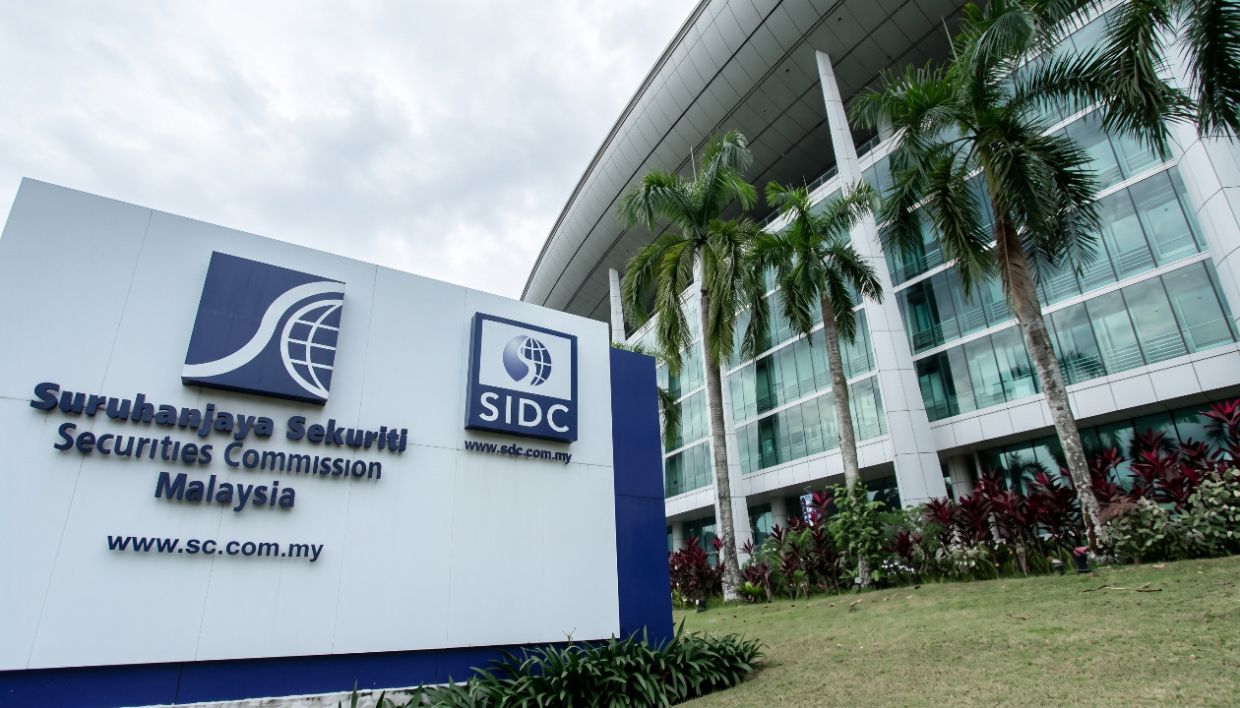
The Kuala Lumpur Sessions Court has delivered a significant blow to financial crime by sentencing Muhamad Fadzli Jamaludin, formerly a director of Kyaputen Sdn Bhd, to five years imprisonment following his conviction for operating an unlicensed fund management business and engaging in money laundering activities. The verdict, handed down by Sessions Court judge Puan Hamidah Mohamed Deril, sends an important message about regulatory enforcement in Malaysia's financial sector, where the Securities Commission Malaysia (SC) continues to intensify efforts against unauthorised financial operators.
Fadzli faced a total of 12 charges across two separate but jointly tried cases. The first set comprised three charges brought under section 58(1) of the Capital Markets and Services Act 2007 (CMSA), alleging that he had misrepresented himself as conducting a legitimate fund management business despite lacking the necessary licence from the SC. These initial charges were formally presented on November 9, 2023. Just three weeks later, on November 29, 2023, prosecutors added a further nine charges under section 4(1)(b) of the Anti-Money Laundering, Terrorism Financing and Proceeds of Unlawful Activities Act 2001, broadening the case to include serious allegations of converting proceeds from unlawful activities into apparently legitimate funds.
The trial revealed the scope and sophistication of the scheme. The prosecution marshalled 23 witnesses during court proceedings, among them six victims whose combined financial losses amounted to RM1.263 million. The illicit operations spanned approximately 20 months, commencing in August 2018 and continuing until April 2020, with activities concentrated in the Kuala Lumpur and Melaka regions. This extended operational period suggests that Fadzli's activities went undetected for a considerable time before regulatory authorities intervened, underscoring the vulnerability of retail investors who may struggle to verify a fund manager's licensing status independently.
The defence strategy proved ineffective at trial. Rather than calling witnesses to counter the prosecution's narrative, Fadzli opted to take the stand himself and provide testimony under oath. However, his account failed to establish reasonable doubt regarding the accusations against him. Judge Puan Hamidah Mohamed Deril found the prosecution's evidence sufficiently compelling to support conviction on all charges. This outcome reflects the high bar that unlicensed operators face in court, particularly when multiple victim witnesses can corroborate losses and transactions.
The sentencing structure demonstrates judicial restraint balanced against the seriousness of the offences. Fadzli received five years imprisonment for each of the 12 charges, with all terms ordered to be served concurrently rather than consecutively. This means he will serve five years in total rather than a potential 60-year sentence. While this approach is procedurally standard in Malaysian courts, it is worth noting that the maximum penalties available under the relevant legislation are substantially more severe. Under section 58(1) of the CMSA, conviction can attract fines up to RM10 million and imprisonment reaching 10 years. Money laundering convictions carry even harsher potential sentences of up to 15 years' imprisonment, supplemented by financial penalties not less than five times the value of the proceeds involved or RM5 million, whichever figure is higher.
The gap between maximum available penalties and those imposed reflects judicial discretion and the specific circumstances of individual cases. However, the fact that Fadzli's term approached the upper range for unlicensed fund management suggests that the court regarded his activities with considerable gravity. The decision also underscores the SC's determination to pursue such cases through the courts, establishing precedent that unlicensed financial operations carry real consequences rather than merely administrative penalties.
This conviction carries particular significance for Malaysian investors, who increasingly engage with alternative investment products beyond traditional bank deposits and stock market instruments. The proliferation of unauthorised fund managers operating through informal networks, social media platforms, and personal referrals has created a parallel financial ecosystem where consumer protections are minimal and recovery of lost funds is exceptionally difficult. The Fadzli case illustrates the risks investors face when they bypass regulatory safeguards in pursuit of potentially higher returns or personalised investment arrangements.
The SC's formal response emphasises the licensing requirement as the cornerstone of investor protection. The regulator has reiterated that fund management constitutes a regulated activity in Malaysia, and anyone presenting themselves as providing such services must hold valid licensing from the SC. This distinction between licensed and unlicensed operators is not merely administrative; it separates entities subject to ongoing regulatory supervision, mandatory reporting, and professional conduct standards from those operating entirely outside the system with no accountability mechanisms.
For Malaysian investors, the practical implication is straightforward: before engaging any individual or entity to manage funds, they should verify licensing status through the SC's official registry. This simple precaution would have prevented the losses suffered by Fadzli's six identified victims and potentially protected other investors in his schemes. The SC's continued emphasis on this point reflects awareness that many Malaysians remain unfamiliar with regulatory safeguards or are persuaded by personal relationships and promised returns to overlook such formalities.
Beyond the individual case, the Fadzli conviction reflects broader trends in financial crime enforcement across Southeast Asia. As legitimate financial services expand and wealth accumulation accelerates in the region, so too do unauthorised schemes targeting investors. Regulatory agencies from Indonesia to Thailand to Singapore face similar challenges in detecting, prosecuting, and deterring unlicensed operators. Malaysia's success in bringing this case to conviction and securing a substantial prison sentence demonstrates institutional capacity and judicial willingness to treat financial crimes seriously.
The intersection of unlicensed fund management with money laundering charges adds another dimension to the case's significance. The dual categorisation of offences suggests that not only did Fadzli operate without proper licensing, but authorities detected that funds flowing through his schemes included proceeds of unlawful activities. This connection between financial regulation and anti-money laundering enforcement reflects the integrated approach modern regulators employ, recognising that unauthorised financial channels frequently facilitate the circulation of illicit proceeds alongside legitimate capital.
Moving forward, the SC's public reminder about the importance of regulatory compliance serves both as a warning to potential offenders and as education for the investing public. The agency's decision to highlight the case through formal statements aims to reinforce messaging about proper verification procedures. As Malaysia's financial markets mature and retail participation broadens, these educational campaigns become increasingly important in maintaining market integrity and protecting the savings and investments of ordinary Malaysians from predatory operators.

