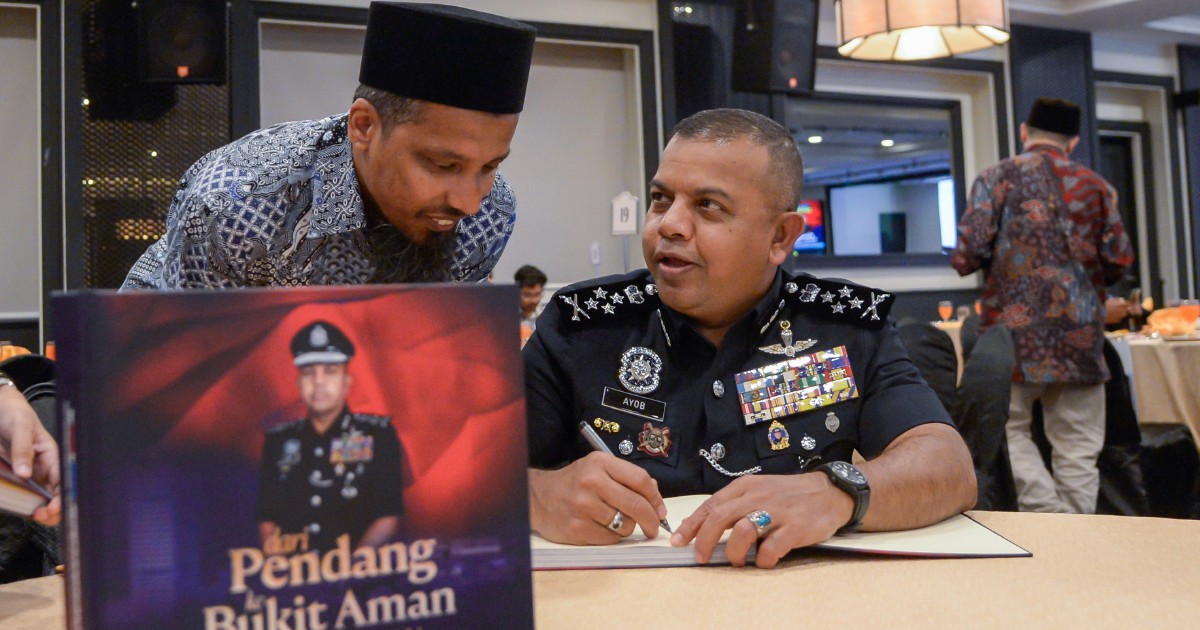
Tan Sri Ayob Khan Mydin Pitchay, the former Deputy Inspector-General of Police, has singled out the investigation surrounding the Gang Nicky case as among the most consequential matters his department confronted during his years in senior command. Speaking about the high-profile inquiry that gripped public attention and tested investigative capabilities at the Royal Malaysia Police's premier headquarters in Bukit Aman, the retired officer underscored the depth and complexity of the probe.
The Gang Nicky investigation emerged as a watershed moment for Malaysia's law enforcement apparatus, demanding substantial resources and specialized expertise across multiple police units. The case presented investigators with challenges that extended beyond conventional criminal procedures, requiring coordination between different divisions and sustained effort across an extended timeframe. For a department managing numerous competing priorities, the concentration of resources and personnel on this single inquiry reflected its perceived gravity and the public interest it commanded.
Investigations of this magnitude typically involve examining networks, financial transactions, and potential connections that span geographical and organizational boundaries. The Gang Nicky case demanded officers to navigate complex evidentiary landscapes while maintaining investigative protocols and ensuring prosecutorial viability. Such undertakings test institutional capacity and the professional judgment of commanding officers responsible for allocating investigative resources and maintaining operational momentum.
The case's prominence in Ayob Khan's recollection suggests enduring professional significance beyond mere criminal statistics. High-profile investigations often become touchstones within law enforcement culture, shaping institutional memory and influencing subsequent approaches to similar matters. The Gang Nicky probe likely established precedents or revealed investigative methodologies that influenced how subsequent cases of comparable complexity were handled within Bukit Aman's structure.
For Malaysian readers following police administration and criminal justice matters, the former deputy IGP's observations carry particular weight given his operational experience directing investigative functions. His characterization of the case as one of Bukit Aman's most substantial endeavors provides a quantitative and qualitative benchmark for assessing the investigation's scope relative to other major police operations undertaken during that period.
The timing of such reflections often coincides with changing leadership or transitional periods within law enforcement hierarchies. When senior officers depart their posts, they frequently offer perspective on achievements and challenges from their tenure, allowing public understanding of institutional priorities and constraints faced by the police leadership. Ayob Khan's comments contribute to the broader narrative of how Malaysia's police force prioritized its investigative agenda during his deputy IGP years.
Public appreciation of major criminal investigations typically increases when senior officials discuss their significance. The Gang Nicky case presumably generated substantial media coverage and community concern at the time of active investigation. Subsequent official reflection on its importance validates public perception and demonstrates that law enforcement treated the matter with corresponding seriousness, reinforcing institutional credibility in criminal justice proceedings.
For Southeast Asian observers of Malaysia's policing standards and investigative practices, such cases and their official characterization offer insight into how the region's largest economy manages serious criminal enterprises. Malaysia's capacity to deploy substantial resources to major investigations reflects institutional maturity and organizational commitment to combating organized criminal activity, factors relevant to regional security assessments and police cooperation frameworks.
The legacy of significant investigations extends beyond immediate prosecutorial outcomes. Cases that consume substantial institutional resources and sustain public attention often catalyze discussions about police training, investigative methodology refinement, and inter-agency coordination mechanisms. The Gang Nicky investigation likely contributed to institutional learning within Bukit Aman regarding how to approach similarly complex criminal networks in subsequent years.
Ayob Khan's elevation to deputy IGP during an era encompassing the Gang Nicky investigation situates him within a formative period of modern Malaysian policing. His retrospective assessment reflects not merely personal career highlights but institutional developments that shaped how Bukit Aman approached complex criminal investigation during a crucial phase of police modernization and administrative refinement in Malaysia.

