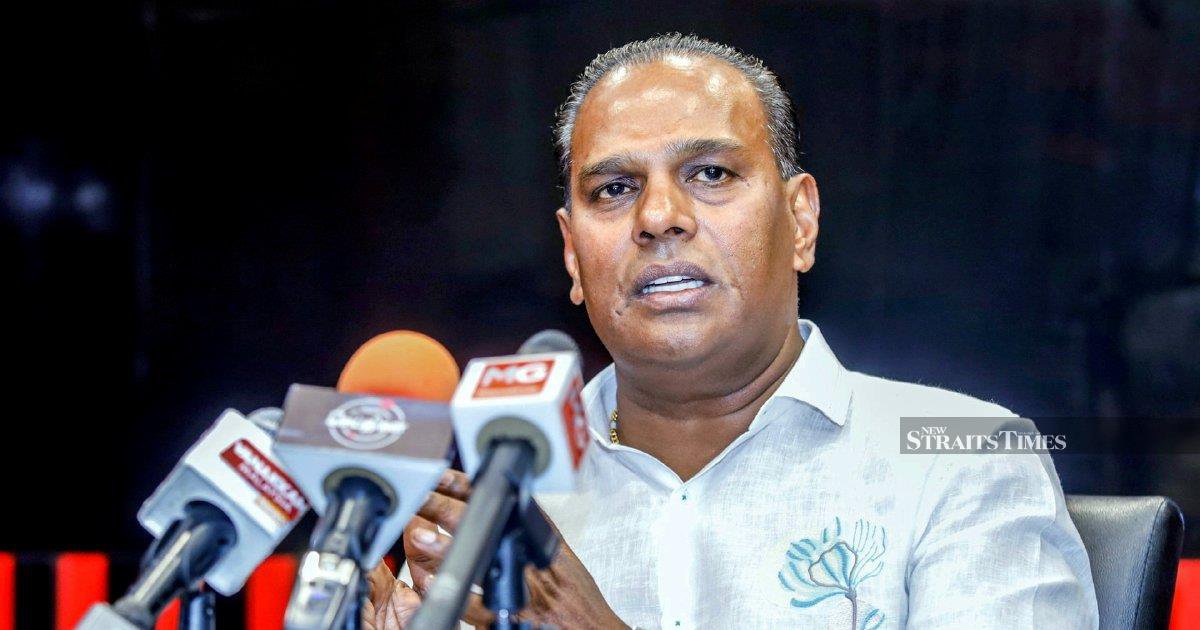
Datuk Seri M. Saravanan, who previously served as Human Resources Minister, is bracing for corruption charges to be filed against him tomorrow as he forcefully reiterates his innocence regarding alleged misconduct. The timing of his statement, released just ahead of the anticipated charges, signals a carefully orchestrated legal defence that seeks to establish distance between his ministerial role and decisions involving the recruitment and approval of foreign workers into Malaysia's labour market.
The former minister's categorical denial of involvement in foreign worker approvals represents a critical juncture in what has become an increasingly high-profile investigation into potential governance breaches within the human resources portfolio. By asserting that he neither possessed the requisite authority nor participated in approval mechanisms, Saravanan appears to be laying groundwork for his legal team's counter-narrative against whatever accusations prosecutors are expected to level.
Foreign worker recruitment has emerged as a particularly sensitive governance issue in Malaysia, given its intersection with labour policy, economic management, and public perceptions of institutional integrity. The ministry overseeing this portfolio wields considerable influence over which sectors access foreign talent, how many workers receive approval, and the conditions under which they operate. Questions about the administration of these powers have historically attracted scrutiny from anti-corruption authorities and civil society watchdogs.
Saravanan's insistence that he lacked authority in this domain raises structural questions about ministerial responsibilities and departmental delegation. If accurate, his position would suggest that approvals operated through separate bureaucratic channels or were handled by subordinate officials without ministerial intervention. This defence strategy, common in high-level corruption cases, attempts to shift accountability downward through the administrative hierarchy rather than accept personal responsibility.
The timing of Saravanan's statement reflects standard pre-charge procedure where accused individuals and their representatives seek to influence the narrative before formal legal proceedings commence. By going on record with a comprehensive denial, he creates a documented baseline of his defence that can be referenced throughout subsequent court proceedings and public discourse.
The investigation into Saravanan's conduct arrives amid broader concerns about transparency and accountability within Malaysia's ministerial apparatus. The human resources ministry manages portfolios with substantial fiscal and administrative implications, making it a department where governance lapses can affect significant segments of the workforce and business community. Any findings of misconduct within this ministry ripple through employment practices across multiple sectors.
Foreign worker policies have particular relevance for Malaysia's competitive positioning within Southeast Asia. Neighbouring countries including Thailand, Indonesia, and the Philippines all compete for investment and economic activity partly through their approaches to labour flexibility and foreign talent acquisition. Governance transparency in Malaysian worker recruitment decisions therefore carries implications beyond national borders, influencing regional perceptions of Malaysia's institutional reliability.
The allegations against Saravanan occur within a broader context of elevated scrutiny of ministerial conduct across Malaysian government. Recent years have witnessed multiple investigations into high-level officials, contributing to public discourse about institutional checks and the effectiveness of anti-corruption mechanisms. Each case becomes a test of whether Malaysia's investigative and judicial systems can hold powerful figures accountable or whether political connections ultimately prove determinative.
Saravanan's defence strategy hinges partly on administrative compartmentalisation—the argument that someone holding ministerial rank need not personally authorise or approve all decisions issued under their ministry's purview. This reflects genuine bureaucratic realities, where vast volumes of approvals flow through ministerial departments daily without explicit ministerial intervention. However, this same reality creates ambiguity about where responsibility ultimately resides, particularly when approvals involve discretionary judgement or deviations from established procedures.
The expected charges will reveal the prosecution's specific allegations regarding what misconduct occurred, which decisions or processes are implicated, and what evidence connects Saravanan personally to any wrongdoing. Until charges are formally filed and details disclosed, the precise nature of the case remains opaque. Saravanan's advance denial therefore operates somewhat in the dark, responding to anticipated allegations rather than concrete accusations.
For Malaysian observers and the broader Southeast Asian business community, the case represents another data point in assessing the country's institutional capacity for self-regulation and accountability. Successful prosecution of high-ranking officials demonstrates institutional resilience, while dismissals or acquittals perceived as influenced by political considerations undermine confidence in governance frameworks that investors and international partners depend upon when evaluating Malaysia's reliability.
The coming legal proceedings will determine whether Saravanan's assertions of innocence and administrative separation from foreign worker approvals withstand prosecutorial evidence. His defence will likely involve detailed examination of bureaucratic procedures, chain-of-command protocols, and documentary records establishing what decisions he personally made versus what subordinates handled autonomously. The resolution of this high-profile case will carry implications extending well beyond the individual minister to broader questions about institutional accountability within Malaysia's administrative apparatus.

