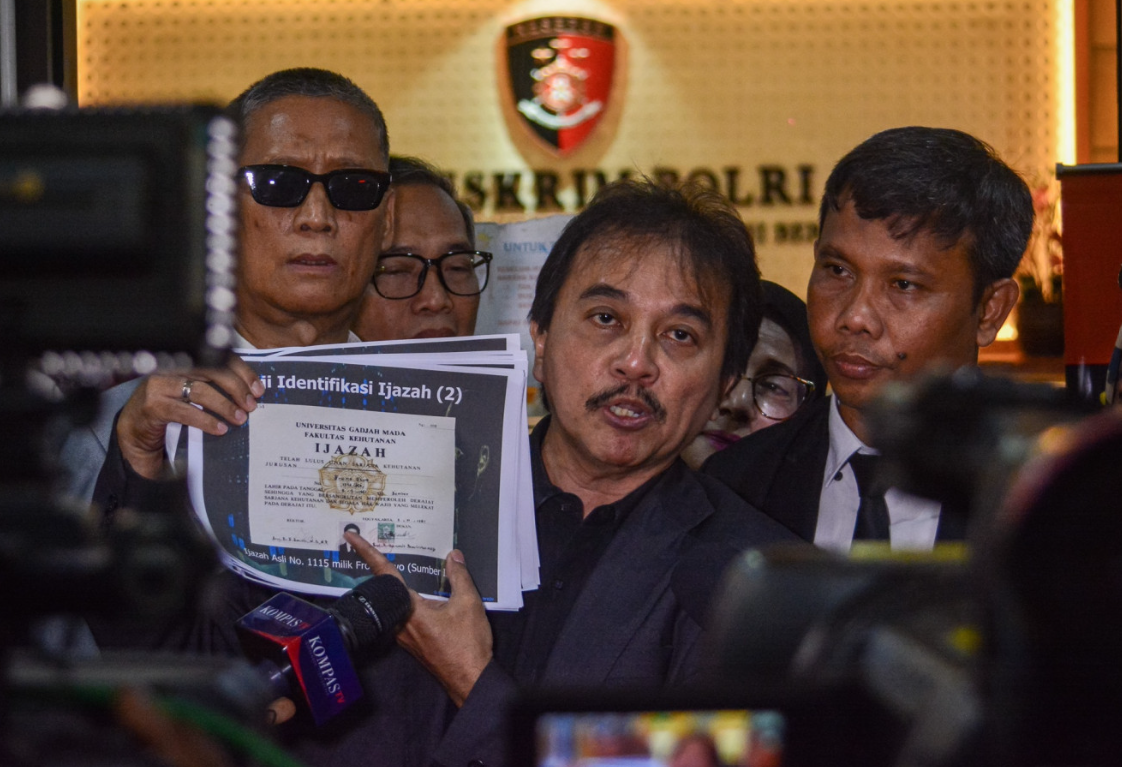
Jakarta authorities have escalated a longstanding political controversy by detaining former youth and sports minister Roy Suryo and health activist Tifauzia 'Tifa' Tyassuma on suspicion of defamation in connection with allegations that former president Joko 'Jokowi' Widodo obtained his university diploma through fraudulent means. The two were taken into custody on Friday morning at their residences as part of standard police procedure before transferring their case to the Jakarta Prosecutor's Office, according to Roy's legal representative Ahmad Khozinudin.
The detention represents a significant turning point in what has become one of Indonesia's most politically contentious academic credential disputes. What began as social media allegations in 2019 has since spawned multiple legal battles, investigations, and court proceedings involving numerous parties across the political spectrum. The case exemplifies how questions over institutional credibility and transparency can become prolonged flashpoints in Indonesian public discourse, particularly when they involve high-ranking officials.
Police investigators justified the arrests as a procedural necessity rather than punitive action. According to General Crimes Directorate investigation director Sr Comr Iman Imanuddin, the detention facilitates the formal transfer of suspects and evidence to prosecutors while completing administrative requirements such as health evaluations and documentation verification. This framing attempts to depoliticise what many observers view as a controversial move, though the timing and circumstances suggest deeper institutional calculations about managing the sensitive matter.
Roy and Tifa face accusations of not merely making false statements about Jokowi's credentials but of electronically manipulating documentary evidence to substantiate their claims. These dual allegations significantly escalate the legal jeopardy they face beyond simple defamation charges. The investigation has proceeded under the Electronic Information and Transactions Law, which provides for sentences up to six years, substantially more severe than traditional libel provisions and reflecting heightened state concern about digital-era misinformation and document fraud.
The diploma controversy itself extends across several phases of investigation and litigation. National Police formally declared Jokowi's degree authentic in May 2025 and terminated an earlier forgery investigation, seemingly settling the matter. However, critics including Roy Suryo continued raising objections during a subsequent case review conducted in July 2025, perpetuating the dispute despite official closure. This pattern of investigation followed by renewed criticism illustrates the deep polarisation surrounding the issue.
Roy's legal defence team, led by attorney Refly Harun, has contested the detention as unnecessarily coercive and procedurally excessive. Refly emphasised that his client had consistently appeared for police questioning and fulfilled all reporting obligations without resistance, questioning why physical detention became necessary when the case transfer to prosecutors was not scheduled until Monday. This argument frames the arrest as punitive rather than procedurally justified, suggesting the police may be applying pressure beyond what case management requirements demand.
The defamation investigation has ensnared multiple individuals beyond Roy and Tifa. Police originally designated six other suspects in the case, though subsequent mediation resulted in charges being dropped against three individuals: Eggi Sudjana, Damai Hari Lubis, and Rismon Sianipar. This selective prosecutorial approach—advancing charges against some accusers while dismissing cases against others—raises questions about consistency and whether investigative decisions reflect legal merit or political considerations.
Roy's background as a former minister under president Susilo Bambang Yudhoyono adds a retrospective political dimension to the case. His involvement in challenging Jokowi's credentials could be perceived as connected to broader inter-elite rivalries within Indonesian politics, where investigations sometimes serve factional interests. The intersection of institutional legitimacy questions and political competition complicates public understanding of whether the legal system is addressing genuine concerns or functioning as an instrument of political advantage.
For Malaysian and broader Southeast Asian observers, the case illuminates persistent challenges regarding institutional accountability and the politicisation of government investigative agencies across the region. When questions about high officials' qualifications trigger prolonged legal disputes rather than swift factual resolution, it undermines public confidence in both educational institutions and state institutions. The diploma case demonstrates how credential verification failures at the highest levels can cascade into prolonged political trauma.
The implications extend beyond Indonesia's borders. Throughout Southeast Asia, similar questions regarding official documentation and educational credentials periodically surface, yet rarely receive the sustained institutional attention this case has generated. The vigorous investigation and prosecution of those questioning Jokowi's diploma, despite initial police findings supporting its authenticity, suggests that in Indonesia as elsewhere regionally, challenging official narratives about elite figures carries substantial legal and professional risks.
Looking ahead, the case will likely proceed through prosecution and potentially trial phases, with each development reinforcing existing political divisions. The detention of Roy and Tifa signals that Indonesian authorities intend to pursue the matter aggressively, using available legal frameworks including electronic fraud provisions to establish consequences for sustained public questioning. Whether this approach ultimately strengthens or erodes public trust in institutional legitimacy remains an open question as the case enters its next phase.