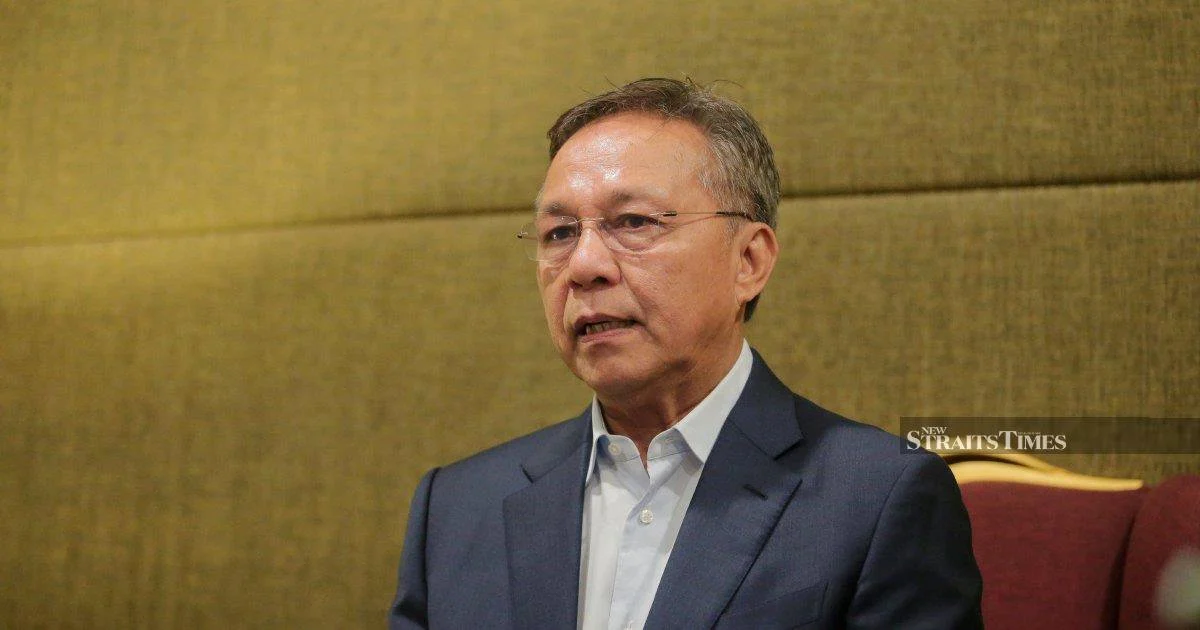
Datuk Seri Hasni Mohammad, who previously led Johor as menteri besar, has been conspicuously absent from the Barisan Nasional candidate roster unveiled for the state election, a development that has set off considerable speculation among political observers and party insiders about his future electoral direction.
The decision to exclude the veteran politician from the Johor BN candidate list marks a significant shift in his political trajectory. Rather than contesting the state-level race, informed sources have begun suggesting that Hasni may instead train his sights on a parliamentary constituency in the forthcoming national general election, representing a deliberate repositioning of his political ambitions.
This move carries considerable implications for Johor's political landscape, where the state election remains a critical test of Barisan Nasional's resilience in one of Malaysia's most strategically important states. The exclusion of a former menteri besar—a figure with substantial governmental experience and institutional memory—raises questions about internal party dynamics and succession planning within Johor's BN apparatus.
Historically, Johor has served as a crucial stronghold for Barisan Nasional, and leadership transitions within the state coalition have often signalled broader shifts in national party strategy. Hasni's pivot away from state-level politics potentially indicates that party leadership has identified him as more valuable in federal-level contests, where his experience and standing might prove decisive in marginal parliamentary constituencies.
The timing of this exclusion is particularly noteworthy given the fluid nature of Malaysian electoral politics. With the next general election potentially occurring within the next two to three years, BN strategists may be repositioning senior figures to maximise their effectiveness across different electoral tiers. This suggests a more coordinated national campaign strategy rather than isolated state-level candidate selection.
Hasni's political background provides context for understanding his potential parliamentary appeal. His tenure as menteri besar equipped him with executive experience and demonstrated administrative capabilities that carry weight in federal contests, particularly in constituencies where voters prioritise candidates with proven track records in governance and constituency development.
The exclusion also raises questions about generational renewal within Johor's BN structure. By stepping aside from state candidacy, Hasni effectively creates space for newer or rising figures to contest state seats, potentially invigorating the coalition's slate with fresh faces while retaining his political capital for national-level deployment.
For Malaysian voters and political observers, this manoeuvre underscores how candidates and senior politicians are increasingly viewed as strategic assets to be deployed according to broader electoral calculus rather than confined to single electoral cycles or levels of government. The boundary between state and federal politics has become increasingly porous, with experienced figures frequently shifting between these arenas based on party calculations.
Within Johor itself, the configuration of BN candidates for the state election will substantially influence the coalition's performance and its ability to maintain its traditional dominance in the state. Hasni's absence will be scrutinised as observers assess whether his exclusion strengthens or weakens BN's overall competitive position in the upcoming state polls.
The circumstances surrounding this decision also hint at potential tensions or shifts in priority within Johor's BN hierarchy. Whether Hasni's move reflects his personal preference, party strategy, or negotiated compromise between different factions remains unclear, though the political ramifications will become clearer as campaign dynamics unfold.
Looking forward, Hasni's repositioning represents a calculated decision by BN leadership to allocate political resources where they can yield maximum returns. Should he subsequently contest a parliamentary seat in the general election, his campaign will likely emphasise his administrative experience and developmental record in Johor, positioning him as a capable steward of federal resources and national policy implementation at the constituency level.
For Southeast Asian observers, this episode illustrates how Malaysian political parties continue to refine their strategic deployment of candidates, treating experienced politicians as valuable commodities to be positioned according to electoral mathematics and competitive advantage. The exclusion of former chief ministers from state contests in favour of federal electoral prospects is not unprecedented but remains significant when it involves figures of Hasni's stature and experience.
As the political calendar advances, clarity should emerge regarding Hasni's next move. Whether he ultimately translates speculation into concrete parliamentary candidacy will provide important insights into BN's broader electoral strategy and the party's confidence in retaining control across multiple levels of government in one of Malaysia's most politically consequential states.