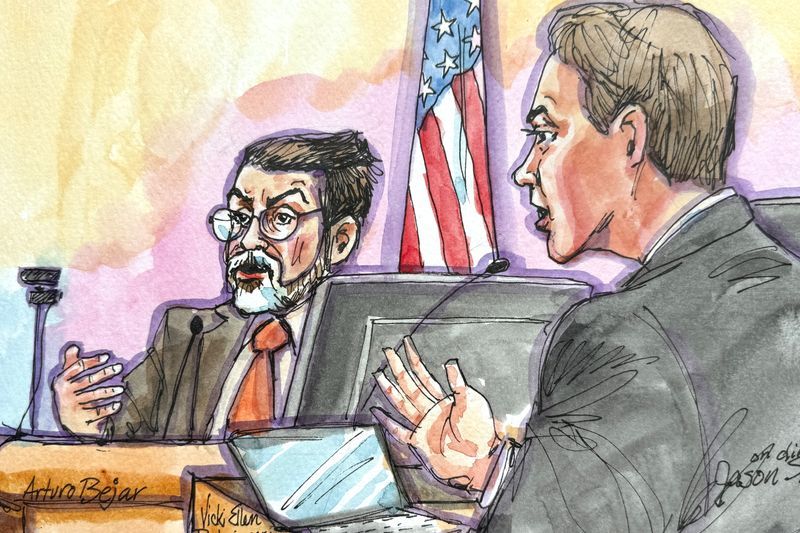
In a case that could fundamentally reshape how Meta operates its popular platforms, former engineering director Arturo Bejar resumed testimony in federal court in Oakland, California, on Wednesday in what legal experts are calling the most significant legal challenge yet to social media's impact on young users. Bejar, who spent six years at Meta during two separate periods beginning in 2009, has emerged as a central witness against the company, offering direct evidence from his time leading internal research into the well-being of Instagram users between 2019 and 2021. His testimony carries particular weight as he brings insider knowledge of how the company monitored—and potentially failed to adequately address—harms affecting adolescents on its platforms.
The trial, scheduled to proceed for six weeks in the Oakland federal courthouse, represents a coordinated legal assault on Meta's business practices by four states: California, Colorado, Kentucky and New Jersey. These states are mounting accusations that Meta deliberately engineered Facebook and Instagram to be psychologically addictive for younger users, deliberately misled the public about safety features and protections, and unlawfully harvested personal data from children under 13. An additional 29 states have joined the lawsuit specifically targeting Meta's data collection practices involving minors, creating a formidable coalition challenging the company's approach to youth safety.
Bejar's role in the case stems from his unique position within Meta's corporate structure. During his tenure as someone overseeing well-being studies on Instagram, he gained access to internal surveillance mechanisms and user research that revealed troubling patterns. Most significantly, he examined the gap between Meta's public reporting on content violations and the actual harm experienced by young people using the platforms. During his testimony, Bejar demonstrated this discrepancy to the jury by presenting an email he had previously sent to Meta's chief product officer Chris Cox, laying out evidence of what he characterized as extraordinarily high rates of harm experienced by adolescent users that far exceeded what the company's official metrics suggested.
The substance of Bejar's evidence challenges Meta's fundamental claim that it takes youth safety seriously. When describing his internal research, Bejar emphasized that Meta's own surveillance systems were fundamentally flawed in their design and application. Rather than measuring actual harm to young users, the company's monitoring focused narrowly on whether content violated Meta's stated policies—a distinction Bejar argues misses the real problem. A young person might experience serious psychological distress from content that technically complies with Meta's rules, yet the company's monitoring systems would flag it as acceptable. This methodological gap, Bejar contends, allowed Meta's leadership to claim the platforms were safer than they actually were.
Meta has consistently denied all allegations brought by the states, maintaining that it actively works to protect teenage users and operates responsibly. The company's legal team has challenged Bejar's credibility and relevance, arguing that his personal opinions extend beyond the actual scope of his work at the company and therefore should not influence the jury. Meta also unsuccessfully attempted to prevent Bejar from testifying altogether, claiming he had destroyed evidence by deleting private communications with other former employees through the encrypted messaging app Signal. U.S. District Judge Yvonne Gonzalez Rogers, presiding over the Oakland trial, rejected Meta's attempt to block Bejar's testimony, characterizing the company's effort as a long-shot maneuver designed to eliminate a particularly damaging witness.
Bejar's prominence in cases against Meta extends well beyond the current Oakland trial. He has already testified as a key witness in three cases that have proceeded to trial, lending his expertise and insider perspective to mounting evidence of Meta's problematic practices regarding child safety. In one previous case brought by New Mexico, his testimony contributed to a judgment requiring Meta to pay $942 million in damages and penalties, along with a court order mandating specific changes to how the company operates its platforms within that state. These precedents suggest that Bejar's testimony, when combined with other evidence, has proven persuasive to juries and judges evaluating Meta's conduct.
Beyond his courtroom appearances, Bejar has built a public profile as a vocal critic of Meta's safety record. In 2023, he testified before the U.S. Senate, providing lawmakers with detailed allegations that Meta understood teenagers faced harassment and other harms on its platforms but failed to implement adequate protective measures. His willingness to speak publicly, combined with his technical credibility and insider status, has made him an unusually effective critic of the company. Unlike external researchers or advocacy groups, Bejar's criticisms carry the weight of someone who directly participated in Meta's internal processes and witnessed firsthand how the company handled—or mishandled—safety concerns.
For Southeast Asian readers and regional observers, the implications of this trial extend beyond the immediate legal contest between Meta and American states. The social media landscape in the region includes large populations of young users on Facebook and Instagram, many of whom may face similar risks if Meta's platform design prioritizes engagement over well-being. A significant judgment or settlement against Meta in Oakland could set precedent for regulators and potential litigants across Southeast Asia, where concerns about social media's effects on youth mental health are similarly mounting. Several countries in the region have already begun scrutinizing tech company practices, and a landmark American verdict could catalyze stronger regulatory action locally.
The scale of legal jeopardy Meta faces underscores the seriousness of the challenge. Beyond the Oakland trial and the thousands of similar lawsuits already filed against the company, Meta confronts the prospect of coordinated state-level enforcement actions, federal regulatory attention, and evolving legislative proposals designed to constrain how tech companies market their services to minors. The company's difficulties in preventing Bejar from testifying suggest that the courts are unlikely to accept aggressive procedural obstacles to evidence presentation, meaning Meta must primarily defend itself on the substantive merits of its actual practices and policies.
Bejar's continued presence on the witness stand represents a critical moment in the ongoing reckoning between technology companies and the public interest in protecting young people. His testimony directly addresses the question of whether Meta knowingly overlooked internal evidence of harm to minors in pursuit of growth and engagement metrics. The jury's assessment of Bejar's credibility, combined with whatever additional evidence the states present, will likely shape not only the outcome of the Oakland trial but also the trajectory of future litigation against social media companies across North America and potentially beyond.

