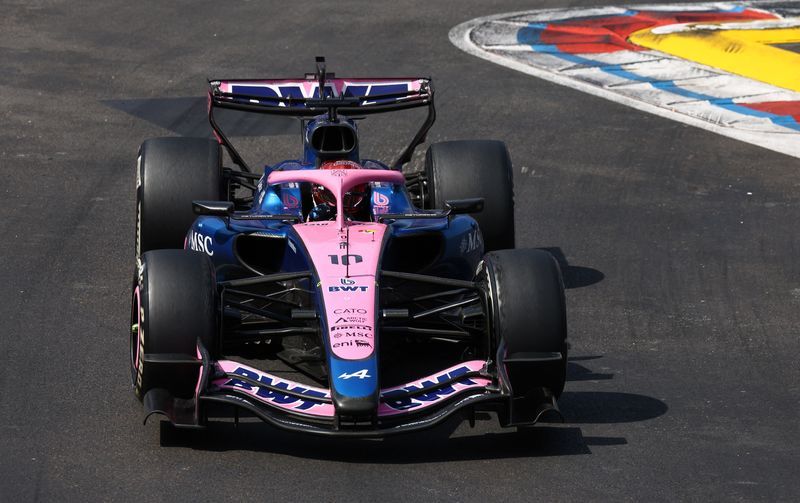
The conclusion of Formula One's most contentious sporting decision this season remains in judicial limbo. The FIA's international court of appeal heard arguments behind closed doors in Paris on Tuesday concerning the rightful third-place finisher at June's Monaco Grand Prix, with judges signalling they need between two and three weeks to deliver their verdict. The delayed judgment underscores the complexity of the case, which has divided the paddock and raised uncomfortable questions about consistency in penalty application across the grid.
At the heart of the dispute lies a cascade of reversals that have left teams and drivers uncertain about the race's final standings. Alpine's Pierre Gasly crossed the line in third position on June 7, only to be stripped of the result after stewards imposed two five-second penalties for exceeding the speed limit in the pit lane during his stop. The penalties demoted him to seventh place, allowing Red Bull's Isack Hadjar to be elevated to third and claim the podium trophy. However, Alpine successfully challenged the sanction four days later on June 12, presenting evidence of a timekeeping error that invalidated the penalties. Stewards accepted this argument and reinstated Gasly to third, forcing Hadjar to relinquish his podium and hand back the trophy.
The reversal triggered McLaren's intervention. The team lodged an appeal on June 16 after reviewing the implications for its own drivers' results. That subsequent appeal mechanism, combined with Red Bull's own challenge, has prolonged the uncertainty. If the appeals court upholds Hadjar's original promotion, the cascade effects ripple through multiple positions. Oscar Piastri of McLaren would move from sixth back to fifth, Liam Lawson would shift to sixth, and Arvid Lindblad of Racing Bulls would drop to seventh. The implications extend beyond the immediate podium, potentially affecting championship points accumulation at a critical juncture in the season.
What makes this case particularly thorny is the inconsistency in how identical offences were treated across the grid. Piastri himself incurred the same pit-lane speeding penalties as Gasly, but crucially, he served them during the race rather than accepting them as post-race additions. This distinction proved decisive in his case: once served during competition, the penalties were locked in and could not be subsequently overturned, even though the timekeeping error that invalidated Gasly's penalties would theoretically have applied equally to Piastri. The Australian driver consequently lost positions and championship points with no avenue for redress, a situation that rankled McLaren team principal Andrea Stella.
Stefano added ballast to the fairness argument by pointing out that George Russell, the Mercedes driver and championship contender, faced the identical pit-lane speeding violation but received a drive-through penalty. Russell reportedly requested that stewards convert his penalty to a post-race assessment, hoping to preserve his chances of later successfully challenging it as Gasly did. Russell finished outside the points after serving his drive-through penalty, highlighting the divergence in outcomes that emerged from the same underlying infraction.
Stella articulated McLaren's reasoning for appealing on two levels. Beyond the team's material interest in protecting Piastri's championship points—a tangible consequence that could shape the title race—McLaren positioned its challenge as defending the integrity and fairness of Formula One as a sport. The argument resonates beyond corporate interest: if identical infractions result in dramatically different final consequences depending on when they are served and which challenge mechanisms particular teams deploy, the sport's credibility suffers regardless of the eventual ruling.
When stewards overturned Gasly's penalties, they acknowledged the discomfort baked into their own decision. They noted that the situation created unfairness to other drivers, particularly those whose penalties had already been served. Stewards further observed that no regulatory framework exists empowering them to reverse or "undo" a penalty that has already been served during a race, making Piastri's situation effectively irreversible. This procedural observation highlights a regulatory gap that the appeals court must now navigate without clear guidance from the rulebook.
The confidential nature of Tuesday's hearing means the arguments presented and the judges' lines of questioning remain unknown to the public and teams. Formula One's governing body released only the basic timeline for a decision, without indicating which way the judges might be leaning. This opacity frustrates teams seeking strategic clarity heading into the latter stages of the season, as championship positions and point allocations remain theoretically in flux until the appeals court pronounces judgment.
For Malaysian and Southeast Asian motorsport enthusiasts, the Monaco affair illustrates broader governance challenges in Formula One that have periodically surfaced in other contexts. The sport's increasing complexity has spawned regulatory frameworks that can produce counterintuitive results when applied rigidly or inconsistently. The interval before the appeals ruling—two to three weeks—will carry teams through the Italian Grand Prix at Monza on September 6 and into preparations for Madrid's circuit debut on September 13, creating an extended period of uncertainty during active championship competition.
The outcome will likely establish precedent regarding the reversibility of post-race penalties and the regulatory pathway for correcting timekeeping errors. Whether stewards possess implicit authority to overturn served penalties in cases of official administrative failure remains the crux. Should the appeals court validate Hadjar's promotion and Gasly's demotion despite the timekeeping error, it signals that procedural rigidity trumps substantive fairness. Conversely, upholding the current standings validates the power to correct systemic errors retroactively but opens questions about consistency and what constitutes grounds for reversal.
The broader championship context amplifies the stakes. Mercedes' Kimi Antonelli leads the season after winning Monaco ahead of Ferrari's Lewis Hamilton. Every point adjustment flowing from the appeals court decision shifts the competitive landscape for teams fighting across the field. In a season where margins separate top contenders, the potential reallocation of points from a single Grand Prix could influence which team secures crucial bonuses and which drivers accumulate the points needed for trophies and future opportunities. The appeals court's judgment will settle not merely who finished third at Monaco, but will inscribe itself into the season's ultimate narrative.

