The highest judicial body in international motor racing will reconvene this week in the French capital to render a final verdict on one of the most contentious podium finishes of the 2024 Formula One season. At stake is the third-place trophy from the Monaco Grand Prix, contested territory since the race concluded on June 7, with multiple teams and drivers having their championship ambitions affected by conflicting steward decisions. The FIA's international court of appeal, meeting Tuesday at the federation's Paris headquarters, will decide definitively which driver legitimately completed the top-three positions after nearly three months of legal wrangling and procedural reversals.
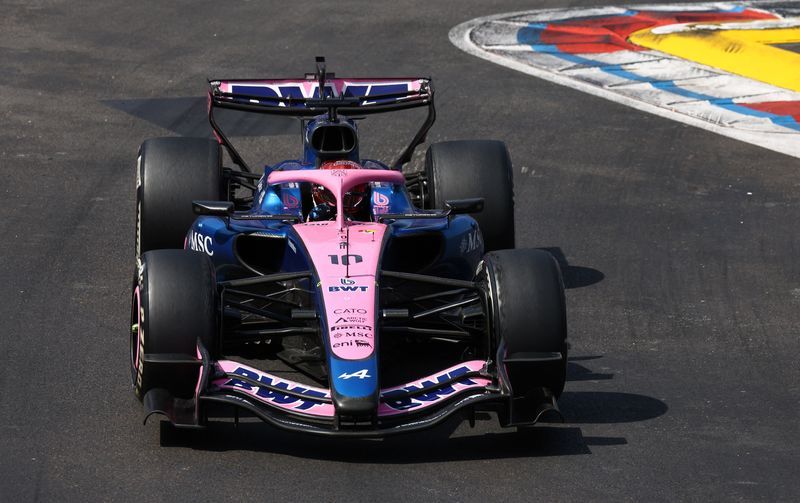
Alpine's Pierre Gasly crossed the line in third place on that June afternoon in the principality, only to be stripped of the position hours later by race stewards who imposed two five-second penalties for exceeding pit-lane speed limits. The decision elevated Red Bull's Isack Hadjar to the podium, allowing the latter driver to celebrate on the rostrum with champagne in hand. However, this judgment proved short-lived. On June 12, just five days after the race, stewards reversed their own ruling after examining evidence submitted by Alpine, Renault's racing division. The team successfully demonstrated that a timekeeping malfunction had produced the erroneous data leading to Gasly's original penalty, resulting in the penalties being rescinded and the trophy returned to the French driver.
Yet this second reversal triggered immediate alarm within the paddock's competitive community. Several insiders warned that allowing stewards to overturn penalties based on post-race evidence set a troubling precedent, potentially undermining the finality and credibility of race outcomes. The uncertainty prompted McLaren and Red Bull to file formal appeals to the international court on June 16, elevating the dispute beyond local stewards and into Formula One's appellate mechanism. Both teams believed fundamental competitive fairness had been compromised by the successive rulings.
McLaren's grievance centres on Oscar Piastri, who had fallen from fourth to fifth place when Gasly's reinstatement pushed him down the order. Critically, Piastri had served identical pit-lane speeding penalties during the race itself, accepting the five-second time additions under the assumption the violations were both genuine and unavoidable. Unlike Gasly, who never served his penalties and could theoretically have them removed without chronological consequence, Piastri lost time physically in the pits under the false premise that the offence was irrevocable. This created asymmetrical consequences: one driver received penalty amnesty after the fact, while another endured competitive damage based on faulty information he was compelled to accept in real time.
The ripple effects extended beyond the single race result. Piastri's drop from fourth to fifth cost him championship points at a stage when every point carries significant weight in the constructor and driver standings. Andrea Stella, McLaren's team principal, articulated this dual-layered concern during media appearances at the following weekend's Dutch Grand Prix, which Lando Norris won for the Woking outfit. Stella framed McLaren's appeal as serving broader interests beyond his team's immediate fortunes, positioning it as a matter of procedural integrity that threatened the sport's competitive credibility.
"We think that the process that happened after the race in Monaco needs to be reviewed because from a (standpoint of) fairness for all competitors, the fact that the penalty was removed introduces some significant elements of concern," Stella explained. His statement reflected frustration with stewards' capacity to essentially rewrite race outcomes through post-event investigations, a power that Stella suggested required scrutiny. The team boss emphasised that applying different penalty consequences to different drivers who committed identical infractions violated fundamental competitive principle.
Beyond McLaren's particular injury, Stella contended that broader Formula One governance demanded the court's attention. "The second aspect is the interest of McLaren. We got also materially penalised for having served a penalty that is not appealable and this even cost us points in the championship," the Italian continued. He separated the issues into two categories: a general sports integrity question affecting all competitors and stakeholders, and a specific McLaren championship impact question. This framing positioned the appeal as defending not merely team interests but the sport's credibility framework itself.
The dispute ultimately highlights structural tensions within Formula One's steward system and penalty architecture. When timekeeping errors or technical malfunctions produce erroneous penalties, the question of remedy becomes philosophically complex. Should drivers who served unwarranted penalties receive retroactive redress, and if so, how should their race results be reconstructed? Conversely, should decisions made in real time remain immutable regardless of subsequent technical discovery, preserving competitive finality even when evidence suggests errors occurred? Formula One has never fully resolved this question, leaving stewards and teams operating within ambiguous guidelines.
The appeal hearing will proceed without public or media attendance, maintaining confidentiality in keeping with FIA policy for appellate proceedings. This closed-door approach prevents real-time commentary or pressure from external parties but also obscures the court's reasoning from immediate public scrutiny. The FIA has committed to publishing a decision and supporting rationale as promptly as possible once deliberations conclude. Given the complexity of the issues and the potential precedent-setting nature of the ruling, observers expect the court to provide substantive written analysis rather than a bare verdict.
For Malaysian motorsport enthusiasts and regional followers of Formula One, this case represents more than a points dispute between European teams. It illuminates how the sport's governance structures cope with technological failure, fairness across asymmetrical circumstances, and the proper balance between competitive finality and retrospective correction. The court's decision will likely influence how stewards approach similar situations throughout the remainder of the season and beyond, potentially reshaping teams' strategic calculations when contesting penalty decisions. Whether the court sides with Gasly's reinstatement or overturns it entirely, the ruling will establish precedent affecting how Formula One adjudicates controversial pit-lane incidents going forward.

