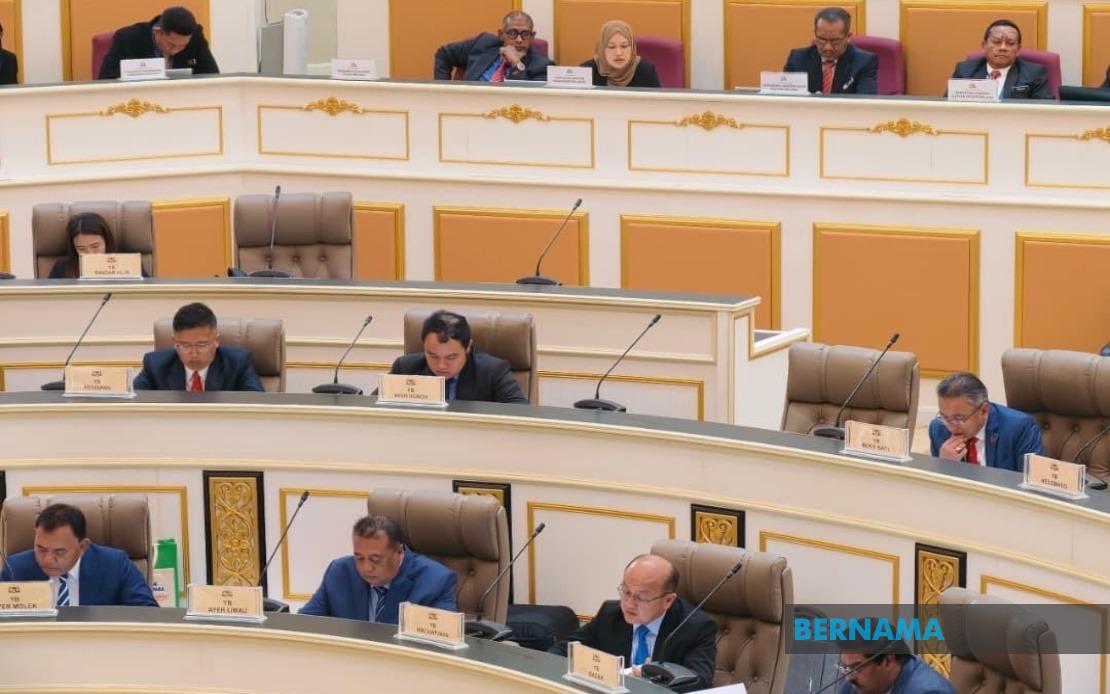
The political landscape in Melaka shifted on the final day of the State Legislative Assembly sitting this week when four Delegates from the Democratic Action Party (DAP) relocated their seating to the opposition bench, a symbolic and procedural move that formalised their party's dramatic exit from the state government. The relocation of Allex Seah Shoo Chin, Low Chee Leong, Leng Chau Yen, and Kerk Chee Yee to sit alongside Perikatan Nasional and Independent assemblymen underscored growing tensions within Melaka's fragile political coalition, which had held together as part of the broader Barisan Nasional (BN) administration.
The decision by these four representatives followed the party's announcement the previous day that DAP would immediately cease its support for the BN-led state government. The withdrawal marks a significant rupture in an alliance that had delivered several years of relative stability in the state. The departure of DAP, which had held four seats within the government structure, represents a considerable erosion of BN's legislative majority and raises questions about the durability of similar multiparty coalitions elsewhere in Malaysia.
The triggering event was the Melaka State Legislative Assembly's passage of constitutional amendments that would permit the appointment of nominated assemblymen. The measure drew fierce opposition from DAP, which characterized it as fundamentally antidemocratic and incompatible with the principle that elected representatives should derive their mandates solely from electoral contests. DAP chairman Khoo Poay Tiong articulated this position clearly, framing the party's exit as a principled stand rather than a tactical manoeuvre. This principled stance reflects wider contemporary debates within Malaysian politics regarding the balance between executive convenience and representative democracy.
The decision did not achieve complete unity within the Pakatan Harapan (PH) constellation, however. Parti Amanah Negara (Amanah), represented by sole assemblyman Adly Zahari who also chairs the Melaka PH coalition, opted to remain seated with the government bloc. This split within the opposition alliance demonstrates the fragility of multiparty arrangements and the difficulty of maintaining unified positions across ideologically diverse partners. Zahari's continued support for the government, while his DAP colleagues defected, creates an unusual and potentially unstable configuration where opposition allies sit on opposite sides of the chamber.
The constitutional amendment itself warrants examination for what it reveals about governance trends in Malaysian state politics. The ability to appoint assemblymen without electoral validation grants the ruling administration greater flexibility in managing parliamentary numbers but simultaneously undermines the legitimacy that flows from democratic selection. Such provisions are typically justified as mechanisms for including representatives of particular constituencies or expertise, yet critics contend they concentrate power and weaken the connection between legislators and the electorate. DAP's refusal to participate in this framework reflects broader ideological divisions within Malaysian politics regarding how power should be distributed and validated.
Prime Minister Datuk Seri Anwar Ibrahim had previously urged DAP to reconsider its withdrawal, appealing to the party to maintain focus on development and welfare provision rather than constitutional disagreements. The Prime Minister's intervention underscored the federal government's investment in preserving the Melaka configuration, suggesting concerns that the state's instability might ripple into broader coalition dynamics at the national level. His request that the party delay its decision reflected attempts at damage control, though they ultimately proved unsuccessful. The fact that such an appeal from the federal leadership could not prevent the breakup indicates the deep principled convictions held by DAP on this issue.
Assembly Speaker Datuk Ibrahim Durum's earlier remarks calling for disciplined participation and strict adherence to house rules took on heightened significance in light of these developments. The relocation of the four DAP members necessarily involved procedural adjustments and likely heightened the need for the Speaker to maintain order and impartiality as the assembly navigated unfamiliar parliamentary configurations. The seating change itself, whilst procedural in appearance, carried substantial political weight as a public declaration of the rupture.
For Malaysian political observers, the Melaka situation exemplifies the challenges inherent in coalition governance where partners hold fundamentally different views on constitutional matters. Unlike disagreements over resource allocation or policy priorities, which can sometimes be negotiated or compromised, questions of democratic principle tend to be less flexible. DAP's exit therefore likely reflects genuine conviction rather than negotiating theatre, even if the timing and manner of withdrawal might be subject to tactical calculation.
The implications extend beyond Melaka's borders. The state has long served as a testing ground for different governance configurations, and the instability evident in the current arrangement will be watched closely by observers assessing the viability of similar multiparty arrangements elsewhere. The precedent that constitutional amendments viewed as antidemocratic trigger coalition dissolution may influence calculations in other states or at federal level regarding what types of reforms can realistically be attempted within coalition frameworks.
With DAP now in opposition and Amanah remaining with government, the mathematics of Melaka governance becomes more complicated. The ruling coalition's ability to pass legislation and govern effectively will depend on the arithmetic in the chamber, potentially forcing the administration to seek support from Independents or rely on reduced majorities. This fragmentation creates space for individual assemblymen to exercise disproportionate influence, a dynamic that historically has encouraged defections and further instability.
The longer-term question is whether this represents merely a temporary reconfiguration or the beginning of more substantial change in Melaka's political alignment. Speculation about whether Amanah might eventually follow DAP into opposition, or whether the Perikatan Nasional contingent might seek to reshape the government, will likely dominate state political discussions. The assembly's next sitting will provide early indicators of whether the new arrangement stabilizes or whether further realignments loom.

