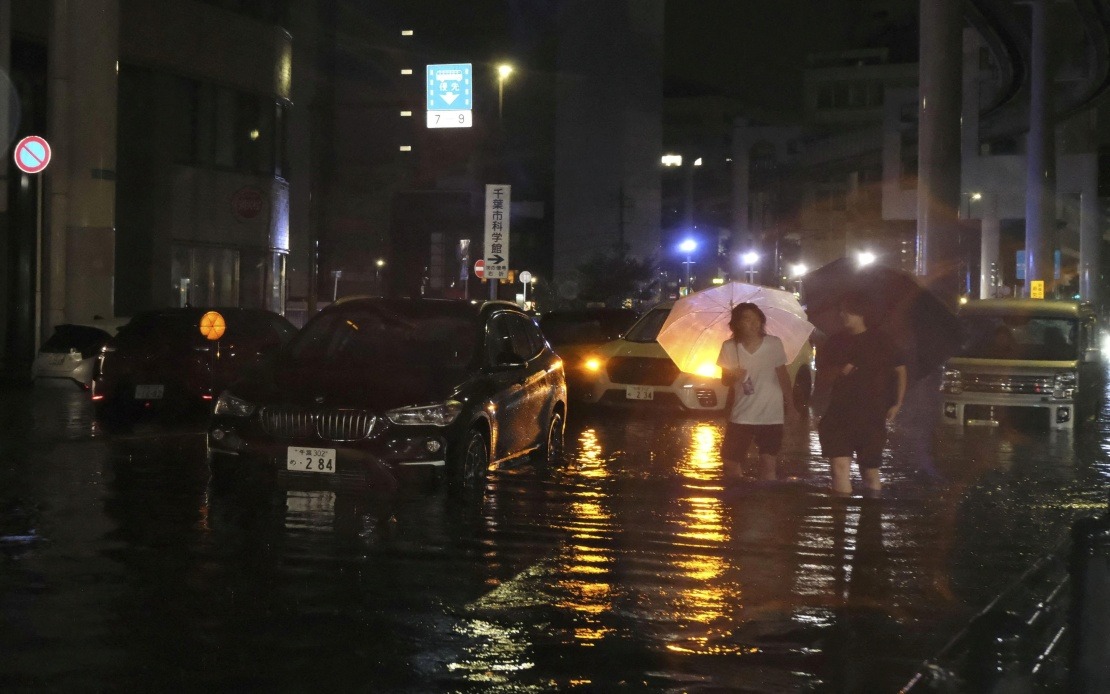
Four people have died and another lies unresponsive following relentless heavy rainfall that pounded eastern Japan's Chiba Prefecture through Thursday and into Friday morning. The Japan Meteorological Agency escalated its response to the extreme weather by issuing a Level 5 alert—its most severe classification—covering more than one-third of municipalities across the prefecture, which lies adjacent to Tokyo and serves as a critical commuter hub for the capital region. The unprecedented nature of the downpours prompted authorities to implement widespread evacuation procedures affecting hundreds of thousands of residents.
The meteorological agency attributed the exceptional rainfall to a collision of atmospheric systems over eastern Japan. Warm, moisture-laden air moving into the region met a mass of cold air positioned above it, creating conditions of extreme instability that transformed local precipitation into a relentless and dangerous deluge. This convergence produced rainfall of remarkable intensity, with hourly accumulations in some areas reaching levels that would normally occur across an entire month during August in typical years. In Chiba's Chuo Ward alone, precipitation hit 115 millimetres in a single hour Thursday night, illustrating the violence of the weather system.
The scale of the emergency became evident as local governments issued urgent directives to residents across affected communities. Both Chiba and Ichikawa, along with numerous other municipalities, broadcast immediate safety warnings and evacuation alerts, compelling citizens to seek higher ground and shelter. Road networks throughout the prefecture fell into disrepair as flood waters swept across highways and local thoroughfares, turning streets into temporary waterways and trapping both vehicles and pedestrians. In several locations, water erupted from underground infrastructure as storm drains became overwhelmed, with residents wading through knee-deep flooding to navigate home from work during the evening rush hour.
Parallel to the flood warnings, the Japan Meteorological Agency issued a Level 5 landslide alert for multiple municipalities, including Chiba and the neighbouring city of Ichihara. These warnings reflected fears that saturated soil conditions could trigger mass movements on hillsides and in mountainous terrain surrounding urban areas. The agency subsequently downgraded all alerts on Friday morning as the intensity of rainfall began to diminish, though forecasters cautioned that significant precipitation could persist in Chiba and adjacent prefectures throughout the day.
The evacuation response reached extraordinary proportions during the height of the emergency. The Fire and Disaster Management Agency reported that at peak mobilisation, evacuation orders covered more than 400,000 residents across both Chiba and neighbouring Ibaraki prefectures. By Friday morning at 7 am, this number had reduced to approximately 126,000 people still under active evacuation orders in the two prefectures, indicating that many residents had returned to their homes as conditions stabilised. The Cabinet Office established more than 200 evacuation centres across Chiba, Ibaraki, Saitama, and Gunma prefectures to accommodate displaced persons, though thousands of stranded commuters seeking refuge converged on government facilities, with roughly 1,800 people gathering at the Chiba prefectural government building alone.
The flooding created extraordinary logistical challenges across the region's major urban centres. The city of Chiba experienced particularly acute disruption, with water jetting upward through street-level manhole covers as underground sewerage systems became incapacitated by the volume of water. Such scenes of urban inundation underscore the vulnerability of modern infrastructure to extreme weather events, even in one of the world's most developed and well-prepared nations. The simultaneous emergence of water from multiple points across the city illustrated the comprehensive nature of the deluge and the saturation of all available drainage pathways.
Infrastructure systems buckled under the strain of the disaster. A subsidiary of Tokyo Electric Power Company Holdings Inc. reported that electrical outages affected approximately 45,000 homes across Chiba Prefecture at the worst point, leaving residents without power, lighting, or access to climate control during an emergency situation. These power disruptions further complicated evacuation efforts and emergency response operations, as hospitals, shelters, and emergency coordination centres struggled to maintain operations.
For Malaysian and Southeast Asian observers, this episode carries particular resonance given the region's own vulnerability to extreme precipitation events during monsoon seasons. The Japanese response—with its hierarchical alert system, rapid evacuation procedures, and extensive shelter infrastructure—offers a template for disaster preparedness in densely populated areas prone to flooding. Chiba Prefecture, as a prefecture bordering Japan's largest metropolitan area, faces similar challenges to Malaysia's own urban centres, where rapid industrialisation and population density can amplify the impact of heavy rainfall. The meteorological agency's capacity to issue granular, location-specific warnings represents the kind of precision forecasting and communication infrastructure that developing nations continue to enhance.

