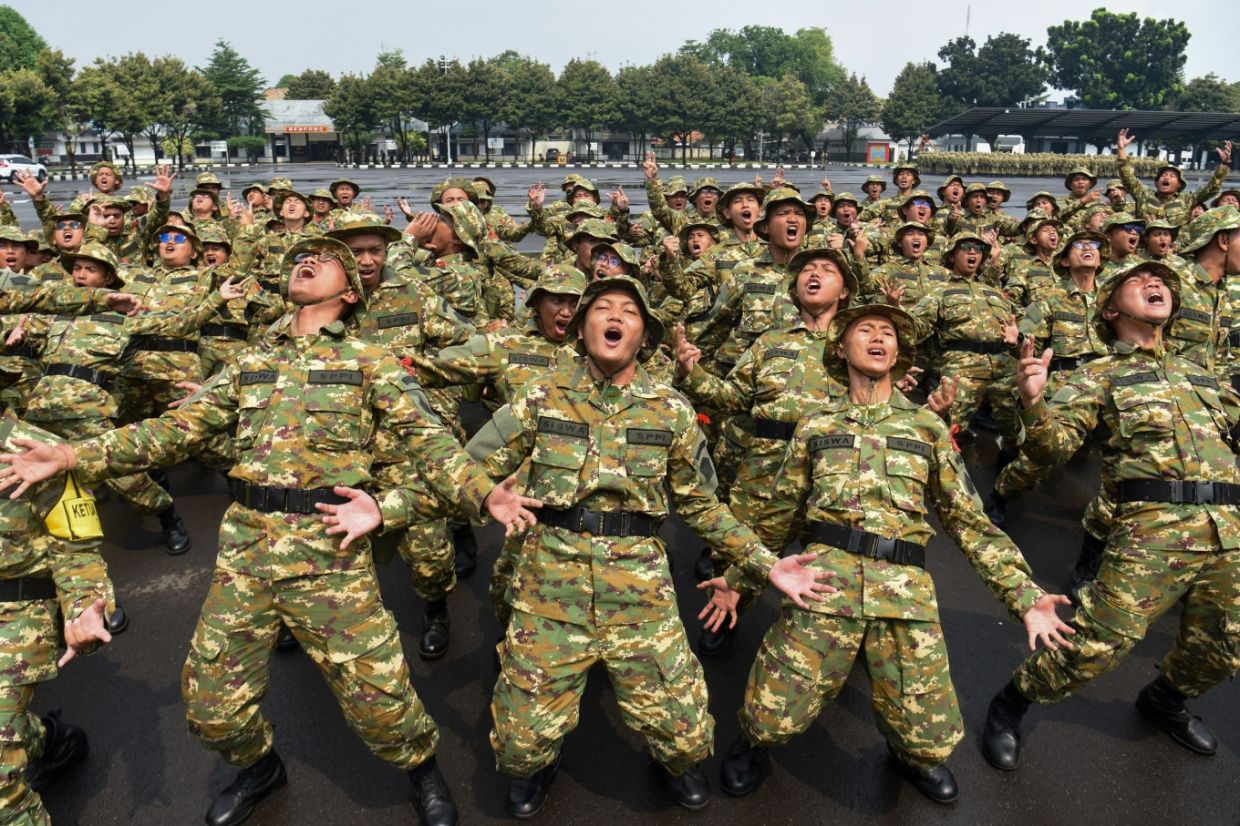
Indonesia's ambitious rural development agenda has become shadowed by tragedy following the deaths of four participants in a mandatory military-style training programme designed to prepare managers for President Prabowo Subianto's flagship Red and White Rural Cooperatives and fishing villages initiatives. The fatalities, occurring just days into a month-long basic military training course conducted under the Defence Ministry's reserve component, have alarmed policymakers and human rights advocates, who are demanding a comprehensive reassessment of whether such rigorous physical conditioning is appropriate or necessary for civilian cooperative administrators.
The training regimen, which has enrolled more than 35,000 participants so far, has proven deadly for at least four individuals. Anisa Muyassaroh collapsed from heat stroke during the programme in Balikpapan, East Kalimantan, while Yonanda Muhammad Taufiq suffered cardiac arrest during introductory activities at a training facility in Baturaja, South Sumatra. A third fatality occurred in Jakarta when Novia Rahmadhani Sihotang died after developing health complications linked to tuberculosis. Most recently, on Thursday 26 June, Muhammad Rifqi Renaldi Gunawan experienced severe breathing difficulties while undergoing training at an Air Force facility in Jakarta. Despite receiving intensive hospital care, he died early the following morning.
The Defence Ministry has responded to mounting pressure by pledging to conduct a "comprehensive review" of the programme's structure and safety protocols. Brigadier General Rico Ricardo Sirait, the ministry's spokesperson, outlined plans to strengthen health screening procedures before entry, enhance early detection systems for medical conditions, improve ongoing participant monitoring, and establish more robust emergency response mechanisms. These commitments come as the ministry faces intensifying scrutiny from both legislative and civil society institutions that question the fundamental rationale for subjecting cooperative managers to military-style conditioning in the first place.
Among the most vocal critics is Amnesty International Indonesia, whose executive director Usman Hamid has characterised the training initiative as "a fatal mistake that must be stopped immediately." The rights organisation has called for an independent investigation to determine whether inadequate training standards, insufficient safety precautions, or poor emergency protocols contributed to the four deaths. Hamid has further urged the government to abandon the military training model entirely and replace it with specialised education focusing exclusively on cooperative management principles, business operations, and financial literacy—skills directly relevant to managing rural economic initiatives.
Usman's critique extends beyond the immediate safety concerns to encompass broader questions about governance philosophy under the Prabowo administration. He has characterised the military training requirement as symptomatic of expanding militarisation within civilian affairs, warning that such developments echo the controversial military's dual function that characterised Indonesia's New Order era. From Amnesty's perspective, compulsory military training for cooperative managers contradicts fundamental cooperative principles, which traditionally emphasise democratic decision-making, collective participation, and horizontal rather than hierarchical organisational structures. The imposition of military-style authority relationships, therefore, sits uneasily with cooperative ideology and democratic governance norms.
Legislators have adopted a somewhat more measured but still critical tone. Members of the House of Representatives Commission I, which oversees defence and security matters, have indicated close monitoring of the programme's implementation. Dave Laksono, the deputy chair of Commission I representing the Golkar Party, has acknowledged that while military training may serve legitimate goals—instilling discipline, developing leadership capacity, and fostering nationalist sentiment—the current execution requires substantial refinement. Laksono has specifically identified the need to strengthen emergency response mechanisms and adapt training methodologies to better protect participant safety without necessarily eliminating the training entirely.
Commission I member Imas Aan Ubudiyah of the National Awakening Party has concentrated her critique on deficiencies in health and fitness assessment procedures. She has emphasised that potential trainees must undergo significantly more rigorous medical screening before participation, particularly given the physically demanding nature of the training activities. Imas has stressed that risk mitigation standards, comprehensive medical examinations, qualified medical supervision during training, and systematic assessment of participants' physical capabilities should constitute integral components of any revised training framework. Her recommendations also extend to wholesale changes in training curriculum and methodologies to reduce injury and fatality risks.
The government's formal position, articulated through Presidential Chief of Staff Dudung Abdurachman, has been cautiously defensive. Abdurachman has stated that investigations into the four deaths remain ongoing but that preliminary evidence suggests no institutional negligence has occurred. He has characterised the training itself as "not particularly strenuous," attributing the deaths instead to underlying pre-existing health conditions or other individual factors. However, acknowledging the mounting pressure and concerns, Abdurachman has conceded that future training iterations must place substantially greater emphasis on participant safety measures, suggesting that the government recognises the need for procedural modifications even if it resists broader structural criticism.
The deaths have injected urgency into what is fundamentally a structural question about Indonesia's development strategy. The government's long-term vision encompasses establishing 80,000 cooperative units and creating 5,000 fishing villages by 2029, representing an enormous undertaking in rural economic development and institutional capacity-building. The military training component was apparently conceived as a mechanism for ensuring that managers of these entities possess discipline, leadership qualities, and commitment to national objectives. However, the fatalities have exposed the tensions inherent in grafting military training onto a civilian administrative programme, raising uncomfortable questions about whether the benefits of such conditioning justify the demonstrated human cost.
For Malaysia and other Southeast Asian nations observing Indonesian policy developments, the controversy illuminates broader regional tensions surrounding the appropriate balance between military institutional involvement in civilian governance and democratic accountability. Indonesia's experience suggests that the militarisation of civilian training programmes can generate significant public backlash and human rights concerns, particularly when such programmes lack transparent safety standards and robust medical oversight. As regional governments contemplate their own capacity-building initiatives for cooperative development and rural management, the Indonesian experience offers cautionary lessons about the importance of aligning training methodologies with both programme objectives and humanitarian concerns.
The evolving situation also reflects Indonesia's ongoing negotiation with its authoritarian past. Under Prabowo's administration, the resort to military-style training for civilian cooperative managers has triggered comparisons to New Order-era policies, suggesting that questions about militarisation and civilian control of institutions remain politically sensitive in Indonesian society. The government faces pressure to demonstrate that it can achieve its legitimate development objectives through mechanisms that respect democratic principles and prioritise citizen safety, rather than defaulting to military institutional frameworks that carry historical baggage and, increasingly, documented human costs.

