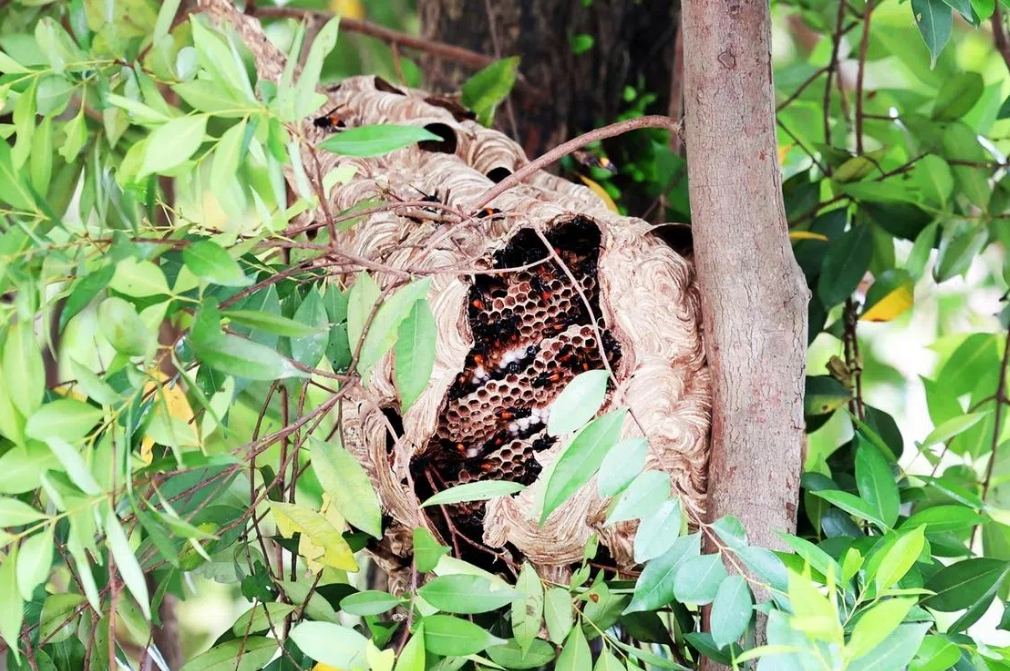
An afternoon attack by hornets near Redhill Market in Singapore's Tanjong Pagar district has prompted fresh warnings about the dangers posed by aggressive insects in urban areas. Four victims were admitted to Singapore General Hospital following the incident on July 10, which unfolded around 1pm when a nest became active on a tree situated between residential and commercial properties.
The hornets' nest, discovered on a tree along the footpath connecting Block 78 Redhill Lane and an adjacent Shell petrol station, triggered panic among the public when insects began attacking people in the vicinity. The Tanjong Pagar Town Council responded swiftly upon notification, establishing a cordon around the affected zone and engaging its contracted pest control service to extract the nest. Authorities confirmed the nest was successfully removed and the location declared safe for resumption of normal public activities.
Eyewitness accounts paint a disturbing picture of the chaos that erupted. A bystander identified as Chen, who was at the market when the attack occurred, reported hearing urgent shouts warning of hornets in the trees before witnessing an elderly man being pursued and stung by the insects. The incident disrupted the routine afternoon at what is typically a busy commercial hub, with visitors forced to seek shelter and assistance.
Another witness, Mei Zhen, discovered a woman in her 70s in a nearby toilet showing severe signs of trauma and injury. The victim's ears bore evidence of multiple stings, exhibiting pronounced redness, swelling, and bleeding. Beyond the visible wounds, the woman complained of headaches and vertigo, symptoms consistent with systemic reactions to venom exposure. Zhen's recollection suggests the attack was sustained and vicious, with more than a dozen insects swarming around the victim's head, some becoming entangled in her hair while others dispersed across the restroom floor and door.
The biological reality of hornet attacks explains the severity of such incidents and why victims require immediate medical intervention. These insects possess fundamentally different attacking capabilities compared to bees and smaller wasp species. Each sting delivers a substantially larger dose of venom, containing multiple toxic compounds. Histamine in the venom triggers allergic responses within the body, while melittin produces acute pain at the injection site. Additional proteins including phospholipase and hyaluronidase can damage human tissue at the cellular level, a factor that medical professionals must consider when treating victims.
In the most serious cases, hornet venom can precipitate life-threatening complications affecting multiple organ systems. Victims may experience dangerous drops in blood pressure, reduced circulation to critical organs including the heart and brain, and potentially fatal swelling of the airways that obstructs breathing. These severe outcomes underscore why rapid hospital admission and professional medical monitoring remain essential following such attacks, particularly for elderly individuals or those with underlying health conditions that compromise their ability to tolerate systemic reactions.
Local authorities have issued comprehensive guidance for residents to minimize their exposure to such hazards. The Tanjong Pagar Town Council emphasizes the importance of remaining composed and immediately vacating any area where a hornet nest or aggressive insects are detected. Citizens should retreat into nearby buildings rather than attempt intervention, as any effort to disturb or dismantle a nest substantially elevates the risk of mass attack. The council specifically warns against amateur removal efforts, which routinely result in severe injuries.
For those unfortunate enough to suffer stings, official protocol mandates leaving the vicinity immediately and contacting emergency services via the 995 hotline if symptoms suggest serious reactions or require urgent care. Prompt evacuation from the attack site and swift medical assessment provide the best prospects for preventing complications and managing pain effectively.
The July 10 incident represents part of an emerging pattern of hornet-related incidents across Singapore's parks and public spaces. Earlier in 2024, a separate attack at Sungei Buloh hospitalized five individuals, demonstrating that such episodes occur with concerning regularity. Most tragically, another 2024 incident resulted in fatality when a cyclist was attacked by hornets along the Sembawang Park Connector, highlighting the potential for these encounters to prove fatal, particularly when incidents occur in remote or less-populated locations where emergency response may be delayed.
The frequency and severity of these incidents have prompted questions about environmental management and whether urban development has inadvertently created conditions favoring hornet populations. Southeast Asian climates, including Singapore's tropical environment, naturally support diverse insect species, but the intersection of expanding human settlement with wildlife habitats has generated more frequent contact scenarios. As Malaysian and other regional readers consider their own exposure to similar risks in comparable tropical settings, the Singapore incidents offer valuable lessons about preparedness, public awareness, and the importance of professional pest management protocols rather than civilian intervention.
Authorities have sought additional information from the National Parks Board regarding broader hornet management strategies and patterns of nest establishment in public areas. Understanding why nests develop in high-traffic locations and how environmental factors influence hornet behavior could inform preventive measures designed to reduce future incidents. For residents across Singapore and the broader region, these cases underscore the necessity of respecting wildlife boundaries and trusting professional authorities to manage dangerous situations rather than risking personal injury through confrontation.

