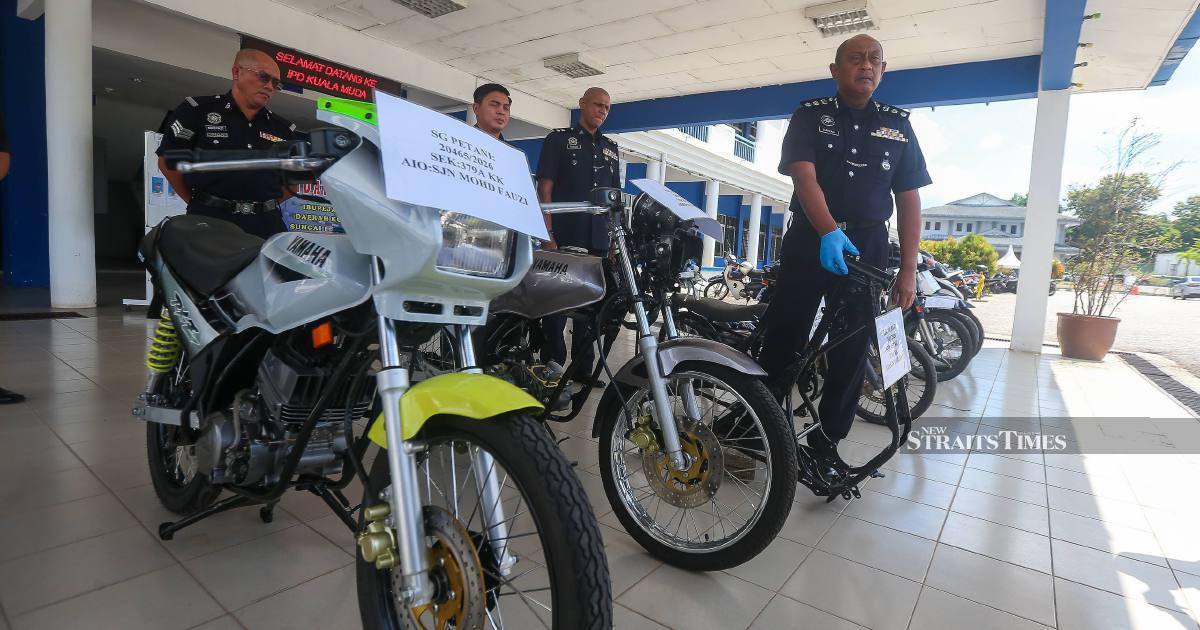
Authorities in Sungai Petani have apprehended four teenage males following an investigation into a string of motorcycle thefts occurring in the vicinity of the Keretapi Tanah Melayu Bhd (KTMB) parking area. Three of the arrested individuals are brothers, whilst the fourth suspect is an unrelated teenager, according to police records. The arrests were made on July 14, marking what officials describe as progress in addressing the persistent motorcycle theft problem affecting the region.
The Sungai Petani area, which sits along a major transport corridor in northern Kedah, has experienced recurring issues with vehicle theft targeting the railway station's parking facilities. The KTMB parking zone near the town serves commuters from across the state and beyond, making it a notable vulnerability point for organised theft operations. Thieves operating in such high-traffic areas typically exploit the relatively busy environment where suspicious activity can go unnoticed amongst genuine passenger movements.
Three of the four suspects being brothers raises questions about the role of family networks in youth crime dynamics. Research into juvenile delinquency in Southeast Asia frequently identifies family connections and peer influence as primary drivers of coordinated criminal behaviour amongst teenagers. The involvement of siblings suggests the operations may have benefited from familiarity, trust, and pre-arranged coordination that only close relatives can easily maintain whilst conducting illegal activities.
Motorcycle theft remains a significant concern across Malaysia's transport hubs, with perpetrators frequently targeting the two-wheeled vehicles due to their relative ease of theft compared to cars. High demand for spare parts and recovered motorcycles in the underground market creates financial incentives for organised juvenile theft rings. Sungai Petani's central location between major urban centres makes it an attractive operational base for criminals seeking to redistribute stolen bikes across wider geographical networks.
The Kedah Police Department's apprehension of this group demonstrates ongoing efforts to crack down on opportunistic criminals exploiting public infrastructure. However, the involvement of multiple teenagers highlights a troubling trend of youth involvement in organised crime networks. The psychological and social factors influencing adolescents to participate in coordinated theft operations warrant investigation by social welfare authorities alongside the criminal justice response.
The KTMB parking facilities serve essential functions for the public transport network, and security lapses in such areas impose genuine risks on regular commuters. Vehicle theft not only represents financial loss to individual owners but also undermines public confidence in using shared transport infrastructure. For rail commuters who depend on motorcycles for the final leg of their journey, knowing their vehicles face elevated theft risk at parking areas discourages usage patterns that would otherwise support integrated multi-modal transport networks.
Investigators will likely establish the timeline and scope of the suspected theft operation during the interrogation phase. Police will seek to determine whether the four arrested teenagers were responsible solely for the July 14 incident or whether they orchestrated multiple thefts over an extended period. The distinction carries implications for sentencing recommendations and for understanding the full extent of criminal activity requiring prevention measures.
The Sungai Petani incident forms part of a broader pattern of vehicle crime affecting Malaysian towns and cities. Bicycle and motorcycle theft rings frequently operate across state boundaries, complicating enforcement efforts. Regional cooperation between Kedah police and counterparts in neighbouring Penang and Perak may prove necessary to fully unravel the criminal network's operations and identify any adult supervisors potentially directing teenage operatives.
Theatres of youth crime investigation often reveal systemic gaps in supervision, rehabilitation, and legitimate opportunity provision that leave adolescents vulnerable to criminal recruitment. The forthcoming judicial proceedings will proceed within Malaysia's juvenile justice framework, which emphasises rehabilitation over purely punitive outcomes for offenders under 18 years of age. Addressing the underlying conditions that made these four teenagers available for involvement in motorcycle theft—whether economic desperation, insufficient parental oversight, or simple thrill-seeking—will be essential for reducing recidivism.
Authorities have indicated that further charges may be forthcoming as the investigation progresses, suggesting police are pursuing additional leads that may implicate the arrested teenagers in crimes beyond the confirmed July 14 incident. The case underscores the value of proactive policing around high-risk transport facilities and the importance of security enhancements at public parking areas serving major infrastructure. Enhanced surveillance, improved lighting, controlled access, and community reporting mechanisms represent evidence-based strategies for reducing motorcycle theft at such locations throughout Malaysia.

