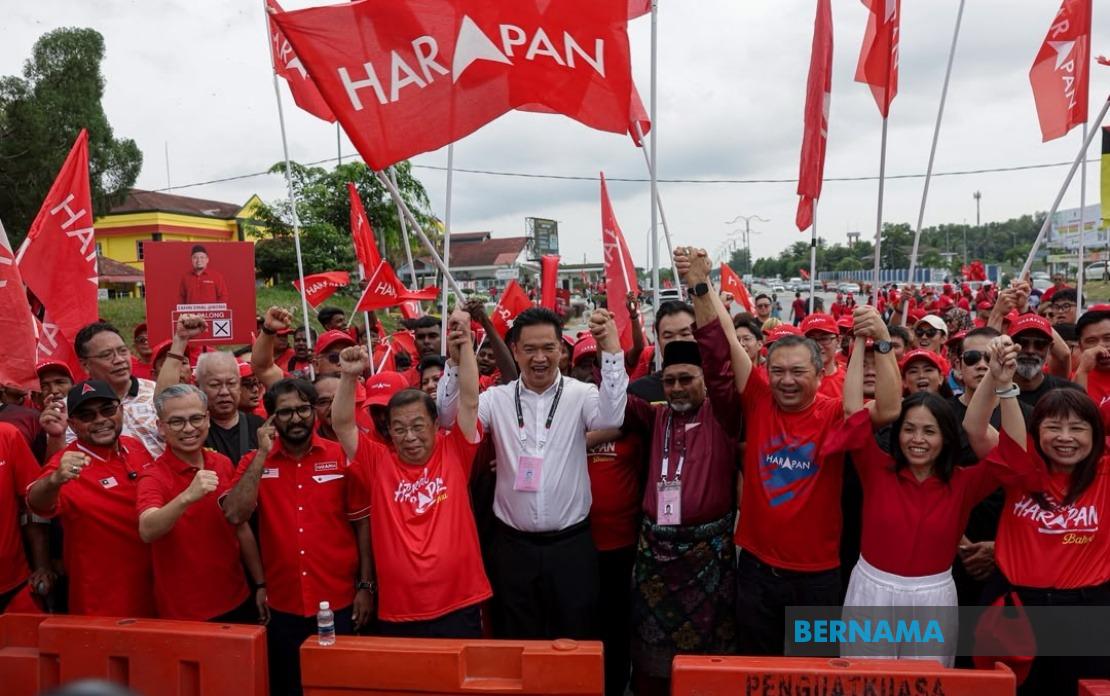
The Jeram Padang state seat has become the focal point of electoral intensity in the Jempol constituency, emerging as the only location to host a four-way contest in the 16th Negeri Sembilan State Election. Following the close of nominations on July 18 at the Jempol District and Land Office Hall, Returning Officer Amino Agos Suyub confirmed that this seat would feature a notably congested ballot paper, in contrast to other constituencies within the district that have settled into more conventional three-cornered or direct contests.
The four candidates competing for Jeram Padang represent a diverse political landscape reflecting Malaysia's fractured opposition and competing coalitions. Pakatan Harapan has fielded G. Manivannan, while the incumbent seat-holder, Datuk Mohd Zaidy Abdul Kadir, defends his position under the Barisan Nasional banner. Parti Pribumi Bersatu Malaysia has positioned R. Sri Sanjeevan in the contest, adding another dimension to what promises to be a closely watched battle. Completing the quartet is Dayana Dal of Parti Orang Asli Malaysia, whose candidacy carries particular significance as the sole Orang Asli representative vying for the seat, bringing indigenous representation to the forefront of the Jempol electoral discourse.
The nomination process itself unfolded in rapid succession on the morning of July 18, with candidates filing their papers within a compact eleven-minute window. Sri Sanjeevan and Dayana Dal submitted their nominations at 9.09 am and 9.12 am respectively, establishing themselves as early participants in the process. Manivannan followed at 9.17 am, accompanied by PH Communications Director Datuk Seri Fahmi Fadzil, underscoring the importance the coalition has attached to this particular seat. The incumbent Mohd Zaidy completed the filing sequence at 9.20 am, concluding the nomination phase with all four candidates formally registered to contest.
Beyond Jeram Padang, the Jempol constituency presents a more conventional electoral picture, though competition remains robust. The Serting state seat has attracted three candidates, with PH's Yaacob Mahmood challenging the sitting representative Mohd Fairuz Mohd Isa of Perikatan Nasional, alongside Bersatu's Muhammad Noraffendy Mohd Salleh. This configuration reflects the persistent three-way fragmentation that has characterised recent Malaysian state elections, where the traditional binary contest between ruling and opposition coalitions has splintered into multiple contenders. Perikatan Nasional's presence in Serting demonstrates the coalition's ongoing attempt to establish electoral credibility in Negeri Sembilan despite mixed results in recent national polls.
Parallel contests in neighbouring seats further illustrate the varied competitive dynamics across the district. In Palong, a three-way contest will pit incumbent Datuk Mustapha Nagoor of Barisan Nasional against PH's Muhammad Zahin Zinal Abidin and Bersatu's Rebin Birham. This arrangement places the ruling coalition's representative in a defensive posture against two separate challengers, a positioning that has become increasingly challenging for incumbents in Malaysia's current fractured political environment. The strategic implications of such multi-cornered contests often favour candidates with well-organised grassroots machinery and strong local community networks.
In marked contrast, the Bahau constituency has crystallised into a direct two-candidate confrontation, representing the more traditional electoral format that dominated Malaysian politics in earlier decades. Incumbent Teo Kok Seong of the Democratic Action Party, contesting under the Pakatan Harapan umbrella, will face Chong Fui Ming, the Barisan Nasional nominee fielded by the Malaysian Chinese Association. This straight fight suggests that local political dynamics in Bahau have not attracted sufficient secondary contenders to fragment the contest, or that both major coalitions have secured sufficient confidence to contest the seat without fear of split votes undermining their primary candidates.
The Electoral Commission has structured the election timeline to provide voters with preparatory opportunities before the formal polling process. Early voting has been scheduled for July 28, allowing those with scheduling constraints or mobility considerations to cast their ballots in advance of the main election day. The commission has designated August 1 as the official polling date for the 16th Negeri Sembilan State Election, providing a clear deadline by which all electoral activities in the state must conclude. This timeframe grants candidates approximately two weeks from the nomination closing date to mobilise their campaigns, conduct door-to-door canvassing, and deploy their media and communications strategies.
The variation in contest structures across Jempol's four state seats reflects broader patterns emerging across Negeri Sembilan and Malaysian electoral politics more generally. The four-way battle in Jeram Padang exemplifies how splintered opposition and government-aligned coalitions have transformed electoral mathematics, requiring candidates to appeal across a broader ideological spectrum to secure plurality victories. The prevalence of three-cornered contests demonstrates the consolidation of Bersatu and Perikatan Nasional as credible third forces that can mobilise sufficient electoral support to present serious challenges to established PH and BN machinery.
For Malaysian observers, the Jempol configurations offer insight into how local constituencies are responding to the national political realignment that has unfolded since 2018. The presence of Parti Orang Asli Malaysia in Jeram Padang signals an emerging willingness among indigenous-focused political entities to contest in state elections, a development that may extend beyond Negeri Sembilan if such candidacies generate significant voter traction. The composition of candidates across Jempol's seats also indicates the continued strength of community-rooted considerations in determining electoral outcomes, with major parties fielding candidates who possess existing local connections and ethnic or demographic associations that resonate within specific constituencies.
The upcoming Negeri Sembilan election carries implications extending beyond the state's immediate boundaries, functioning as a barometer of political sentiment in this strategically positioned peninsula state. Results from contests like Jeram Padang will provide data on whether coalitions are gaining or losing ground, whether new political entities can sustain electoral momentum, and whether voter preferences are consolidating around traditional parties or fragmenting into more diverse political expressions. For the three major coalitions—Pakatan Harapan, Barisan Nasional, and Perikatan Nasional—the August 1 polling will offer crucial feedback on their respective organisational capacities and electoral appeal in a state that has historically served as a testing ground for national political trends.

