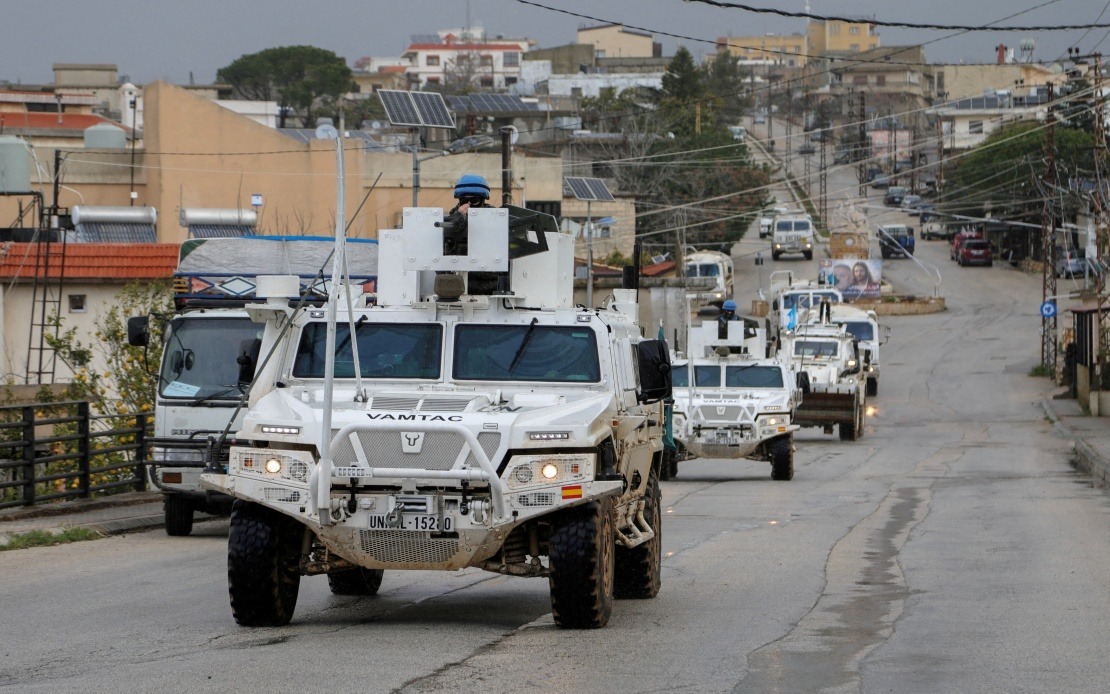
France and Italy have moved to establish a multinational coalition designed to maintain stability in Lebanon once the United Nations Interim Force in Lebanon concludes its three-decade mission at the end of December. French President Emmanuel Macron unveiled the initiative during talks with Italian Prime Minister Giorgia Meloni in the southern French city of Antibes, signalling a coordinated European commitment to preventing the country from becoming a flashpoint for renewed regional conflict.
The proposed coalition represents a significant diplomatic manoeuvre ahead of UNIFIL's scheduled departure. Under United Nations Security Council Resolution 2790, the force will formally cease operations on December 31, followed by a complete drawdown and withdrawal of personnel within a year. This timeline creates a critical juncture for Lebanon, which has struggled with political instability, economic collapse, and persistent security threats from multiple armed groups. The Lebanese state's capacity to maintain territorial control and prevent cross-border incidents remains substantially constrained, raising international concerns about a potential security vacuum once foreign peacekeeping forces depart.
Macron framed the initiative as essential to fortifying Lebanon's sovereignty and its fragile military institutions. Speaking at the joint press conference, the French leader emphasised that the coalition would function in close coordination with both the European Union and the United Nations, suggesting a multilayered diplomatic framework rather than unilateral intervention. This coordinated approach reflects broader European efforts to maintain a stabilising presence in the eastern Mediterranean and the Levant region, where France and Italy hold historical interests and maintain significant diplomatic networks.
The underlying rationale for the coalition addresses a fundamental security concern: preventing Lebanese territory from serving as a launching point for further destabilisation across the region. Lebanon's geography and political fragmentation have historically made it vulnerable to becoming a proxy theatre for competing regional powers. The withdrawal of UNIFIL, which has maintained a buffer presence since 1978, removes a neutral monitoring mechanism. In its absence, the Lebanese Armed Forces would assume sole responsibility for maintaining territorial integrity—a burden that observers consider excessive given the military's current resources, training levels, and institutional capacity.
Italian Prime Minister Meloni reinforced the urgency of maintaining international engagement, characterising a security void as "extremely dangerous." Her emphasis on the necessity of continued international presence underscores recognition that Lebanon's internal institutions alone cannot guarantee stability without external support. This assessment reflects the sobering reality that Lebanon's military, though professional, operates with limited equipment, funding, and operational capacity. The international coalition concept therefore positions external partners as force multipliers and institutional strengtheners rather than occupying powers.
The timing of this announcement carries particular significance for Southeast Asian observers monitoring Middle Eastern developments. Lebanon's instability has historically affected global shipping routes, particularly through its impact on regional security dynamics. Furthermore, the precedent of a European-led stabilisation coalition could influence how external powers approach other regions experiencing governance challenges or security transitions. The French and Italian model emphasises consensual multilateral engagement coordinated through established international institutions—a framework that contrasts with unilateral or purely military interventions.
For Malaysia and other ASEAN nations, the Lebanon initiative demonstrates how developed democracies navigate the complexities of supporting fragile states without assuming direct military control or appearing to impose external solutions. The emphasis on strengthening Lebanese sovereignty and indigenous institutions, rather than replacing them, reflects evolving international best practice in post-conflict or stability operations. This approach acknowledges that sustainable stability requires local ownership and capacity-building rather than perpetual foreign presence.
The coalition's success will depend substantially on securing buy-in from multiple stakeholder groups within Lebanon itself, as well as from regional powers with competing interests in the country. The explicit mention of UN coordination suggests an attempt to leverage international legitimacy rather than proceeding through bilateral arrangements. European involvement also signals a commitment to long-term engagement—typically more sustainable than crisis-driven interventions—given France and Italy's established diplomatic institutions and development programmes in the region.
Looking forward, the practical implementation of this coalition will determine its effectiveness. The arrangement must navigate complex questions regarding rules of engagement, force composition, funding mechanisms, and liability frameworks. Whether European nations can sustain political and financial commitment to Lebanon beyond initial announcements remains uncertain, particularly as competing crises demand attention and resources. The coalition also faces the challenge of operating in a region where multiple external powers—including the United States, Russia, Iran, and Gulf states—maintain overlapping interests and influence networks.
The initiative nonetheless represents a significant diplomatic commitment from two major European powers to prevent Lebanon's deterioration. It acknowledges that international order depends partly on preventing state collapse in strategically important locations, particularly those with histories of civil conflict and sectarian tensions. For Lebanon itself, the message is that withdrawal of UN peacekeepers need not mean international abandonment, though the durability and effectiveness of alternative arrangements remain to be demonstrated.

