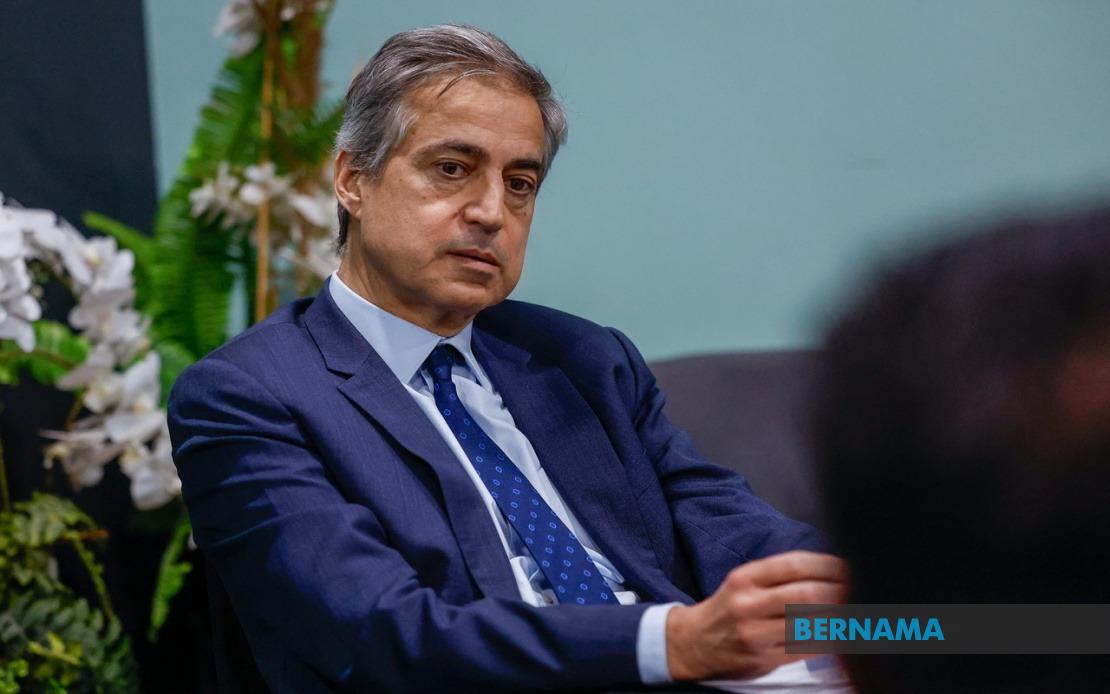
France and Malaysia are moving to deepen their strategic partnership at a time when geopolitical fragmentation is reshaping international relationships across multiple continents. French Ambassador to Malaysia Marc Abensour articulated this commitment during the French National Day reception on Tuesday evening, underscoring that both nations share a common responsibility to build bridges across an increasingly divided world order. The ambassador's remarks signal a deliberate effort by Paris to strengthen its presence in Southeast Asia through concrete economic ties and sustained engagement with the region's second-largest economy.
The bilateral relationship rests on multiple pillars that extend well beyond formal diplomacy. Abensour highlighted the robust nature of economic cooperation between the two countries, noting that bilateral trade expanded by 11 per cent in the previous year—a growth rate that demonstrates resilience amid global economic uncertainties. This commercial expansion reflects genuine business confidence in Malaysia's market fundamentals and France's attractiveness as a long-term investment partner. The figures underscore a relationship built on mutual economic interest rather than abstract diplomatic gestures, a foundation that typically proves more durable through periods of political change.
The French business footprint in Malaysia has grown to encompass approximately 600 companies, collectively generating employment for over 30,000 Malaysians. This employment contribution represents one of the most tangible measures of the partnership's value to the Malaysian economy and workforce. Such direct job creation extends the relationship's benefits beyond government circles into communities nationwide, creating constituencies with vested interests in maintaining strong France-Malaysia ties. For Malaysian policymakers, this employment generation capacity makes France an particularly valuable development partner.
Malaysia's significance within France's global investment strategy cannot be overstated. The country ranks as the world's tenth-largest destination for French foreign direct investment, a position that reflects years of accumulated confidence and institutional relationships. This standing places Malaysia alongside more traditionally dominant investment hubs, indicating that French corporations view the Southeast Asian market as sufficiently mature, stable, and rewarding to warrant substantial capital commitments. The consistency of French investment flows suggests both parties have successfully navigated potential friction points and developed reliable mechanisms for resolving commercial disputes.
People-to-people exchanges constitute the relationship's cultural and intellectual foundation. Abensour noted that more than 3,700 candidates in Malaysia currently pursue French-language certification, positioning the country third in Asia behind only India and China. This educational engagement means Malaysia hosts a growing cohort of French-language speakers who can facilitate business communications, cultural understanding, and diplomatic dialogue. Language proficiency typically correlates with deeper bilateral ties, as it enables more nuanced exchanges and reduces transaction costs in professional interactions. The concentration of French-language learners suggests sustained interest in French culture and the professional advantages associated with Francophone fluency.
The French National Day reception itself exemplified the sophisticated cultural diplomacy that characterizes modern France-Malaysia relations. Held at the ambassador's residence in Kuala Lumpur, the event drew approximately 800 attendees encompassing senior government officials, diplomats, and representatives from numerous nations. Federal Territories Minister Hannah Yeoh's presence as guest of honour reflected Malaysia's high-level political engagement with the French mission, a courtesy that signifies official recognition of the partnership's importance. The diversity of attendees underscored France's broader regional influence and its ability to convene significant gatherings that facilitate multilateral dialogue.
The carefully curated culinary experience at the reception—featuring French cuisine alongside a distinctly Malaysian durian-tasting booth—illustrated the thoughtful approach both nations take toward cultural exchange. Rather than imposing French traditions wholesale, the reception accommodated Malaysian preferences and tastes, demonstrating respect for local identity while sharing French gastronomic heritage. Such small but significant gestures of mutual recognition often carry outsized diplomatic weight by signalling acceptance and appreciation of the other party's culture.
French National Day's commemoration of the Storming of the Bastille on July 14, 1789, carries symbolic weight beyond historical commemoration. The celebration of liberty, equality, and fraternity resonates with Malaysia's own constitutional values and democratic aspirations, creating thematic alignment between the two nations' foundational principles. By observing this occasion in Malaysia with such prominence, France reinforces shared commitments to democratic governance and universal human values—themes that transcend specific bilateral interests and speak to broader aspirations for a rules-based international order.
The timing of this diplomatic emphasis on France-Malaysia relations reflects broader strategic calculations within Paris. As major powers reassess their global postures amid shifting geopolitical alignments, France is deliberately cultivating deeper engagement with Southeast Asia, particularly with nations like Malaysia that occupy strategically important positions. Malaysia's role as chair of ASEAN in 2024 and its location within critical shipping routes makes it an invaluable partner for French interests in maintaining a balanced, open Indo-Pacific region resistant to hegemonic concentration of power.
From Malaysia's perspective, deepening ties with France offers tangible benefits beyond immediate economic gains. The relationship provides access to European expertise, technology, and markets while positioning Malaysia as an attractive destination for French and European investment. Furthermore, the partnership contributes to Malaysia's broader objective of maintaining equidistant relationships with multiple global powers, reducing dependency on any single nation while maximizing negotiating leverage. For a middle-power nation navigating great-power competition, such diversified partnerships prove essential for preserving autonomy and strategic flexibility.
The emphasis on bridging divides in an increasingly fragmented world carries particular resonance for Southeast Asian nations facing pressures to align with competing power blocs. Abensour's articulation of shared responsibility to build bridges acknowledges the discomfort many regional nations experience when confronted with demands for exclusive alignment. Malaysia, in particular, has long advocated for non-alignment and independent foreign policy, making France's framing of partnership as bridge-building rather than bloc-joining particularly appealing to Malaysian policymakers and the broader regional audience.
Looking ahead, the trajectory of France-Malaysia relations appears positioned for continued expansion across multiple domains. The combination of solid economic fundamentals, genuine cultural interest, institutional relationships, and compatible strategic perspectives creates favourable conditions for sustained cooperation. Both nations have demonstrated capacity for pragmatic partnership that accommodates different values and interests while identifying common ground. As the international environment continues fragmenting along ideological and geopolitical lines, such pragmatic partnerships—grounded in reciprocal benefits rather than ideological conformity—will likely become increasingly valuable for both parties.

