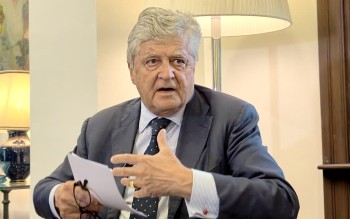
France has formally offered to collaborate with Malaysia on civil nuclear energy development should the government decide to include atomic power in its future energy strategy. The overture came from Nicolas Forissier, France's Minister Delegate for Foreign Trade and Economic Attractiveness, who acknowledged that Malaysia remains in the deliberation phase on whether to pursue this technically complex and capital-intensive energy option. He made clear that Paris views such a partnership as contingent on Malaysia's own determination, recognizing that the nation must first complete its internal consultation processes before committing to any nuclear pathway.
Forissier underscored France's substantial technical credentials in the nuclear sector, noting that approximately 60 per cent of French electricity generation currently derives from nuclear power plants, with the remainder sourced from wind, solar, and other renewable technologies. This diversified low-carbon energy portfolio has positioned France as one of Europe's lowest-emissions electricity producers and provides the foundation for the expertise France proposes to share with Malaysian partners. The minister emphasized that France stands prepared to transfer both experiential knowledge and practical technical know-how to support Malaysia's evaluation and potential implementation of nuclear capacity.
The partnership proposal carries particular weight given the global context of energy transition. Nuclear power has gained renewed attention across the world as nations grapple with simultaneous imperatives: meeting rising electricity demand, reducing carbon emissions to address climate change, and ensuring energy security amid geopolitical volatility. For Malaysia, which currently relies significantly on natural gas and faces growing energy demands from industrial and residential consumption, nuclear energy presents a theoretically viable pathway to increase low-carbon baseload electricity generation while preserving fossil fuel reserves for export revenue or future flexibility.
Forissier stressed that nuclear energy demands exceptionally long-term commitment and planning horizons, typically spanning 50 to 80 years from initial investment through eventual decommissioning. This extended timeline reflects the substantial upfront capital requirements, lengthy construction periods, complex regulatory frameworks, and need for sustained technical expertise across generations. His emphasis on long-term partnership signals that France envisions this not as a transactional technology transfer but as a multi-decade collaborative relationship requiring institutional stability and political continuity from both parties.
The French minister's visit to Malaysia on July 8 represented his first official engagement with the country and carried symbolic weight through the accompanying delegation of more than 20 French companies. This industrial contingent demonstrates substantive private-sector interest in deepening economic ties with Malaysia beyond diplomatic pleasantries, suggesting that French firms view potential Malaysian nuclear development as a genuine commercial opportunity rather than merely speculative positioning. The breadth of business participation also indicates that France's nuclear energy sector sees regional expansion possibilities, particularly within Southeast Asia.
The nuclear energy offer must be understood within the broader context of intensifying bilateral engagement between France and Malaysia. Forissier's statement referenced multiple recent high-level exchanges, including recent conversations between the foreign ministers of both nations and Malaysia's Defence Minister's visit to a French aircraft carrier in March 2025. Most significantly, Prime Minister Datuk Seri Anwar Ibrahim travelled to France on July 3 and 4, 2025, just days before Forissier's Malaysia visit, suggesting coordinated diplomatic momentum around deepening the strategic partnership.
For Malaysian policymakers, the nuclear option presents both opportunities and substantial challenges that extend well beyond technical considerations. Public acceptance remains uncertain in Malaysia, where previous discussions about nuclear energy have generated mixed public responses and concerns about safety, waste management, and environmental risks. The government's commitment to national consultation and debate reflects awareness that any decision to pursue nuclear energy will require building domestic consensus across political constituencies, civil society organizations, and the general public. International experience demonstrates that nuclear projects without public support face prolonged delays, cost overruns, and political vulnerability.
The proposal also intersects with Malaysia's existing renewable energy ambitions and commitments under regional climate frameworks. The government has already announced substantial targets for solar power expansion and is exploring other renewable technologies including offshore wind. Decision-makers must weigh whether nuclear energy complements these renewable pathways or competes for limited capital and political attention. The timing and sequencing of different energy infrastructure investments will significantly influence Malaysia's economic efficiency and technology leadership within Southeast Asia.
Regionally, Malaysia's potential nuclear development would carry implications for the broader Association of Southeast Asian Nations energy landscape. Few ASEAN members currently operate nuclear power plants, though Vietnam has pursued reactor construction and Thailand has discussed the possibility. A Malaysian decision to pursue civil nuclear energy could influence neighbouring countries' energy policy trajectories while also prompting discussions within ASEAN about radiation safety standards, emergency response protocols, and regional regulatory coordination. France's outreach to Malaysia may also reflect broader European strategic interests in strengthening partnerships across Southeast Asia amid evolving global power dynamics.
The financial dimensions of nuclear development warrant particular scrutiny for Malaysia's fiscal situation. Modern nuclear plants require extraordinary capital investment—often exceeding USD 10-20 billion per reactor unit—long construction timelines, and ongoing operational expenses. For Malaysia, financing such projects would necessitate either substantial government budgets, significant private investment participation, or combination with international financing partnerships. The economic viability will depend critically on long-term electricity price assumptions, fuel costs, and discount rates applied to future revenues.
Maturity of Malaysia's nuclear regulatory framework also requires consideration. Successful nuclear energy development demands robust independent regulatory authorities, comprehensive safety standards, skilled workforce development, and transparent governance mechanisms. Malaysia would need to either substantially strengthen existing institutions or establish new specialized bodies capable of licensing, monitoring, and enforcing nuclear safety across the entire lifecycle of reactor operations. This institutional development itself represents a multi-year undertaking requiring sustained political commitment.
Looking forward, Malaysia's approach to the French partnership offer will likely reflect several intersecting factors: the outcomes of domestic consultations on nuclear energy, trajectory of renewable energy costs and deployment, evolving regional energy cooperation frameworks, and France's willingness to accommodate Malaysia's specific technical requirements and financial parameters. The offer itself demonstrates France's strategic interest in Southeast Asian partnerships and suggests that Malaysia's energy transition decisions increasingly attract international attention from established nuclear powers seeking to expand their influence in the region's energy future.

