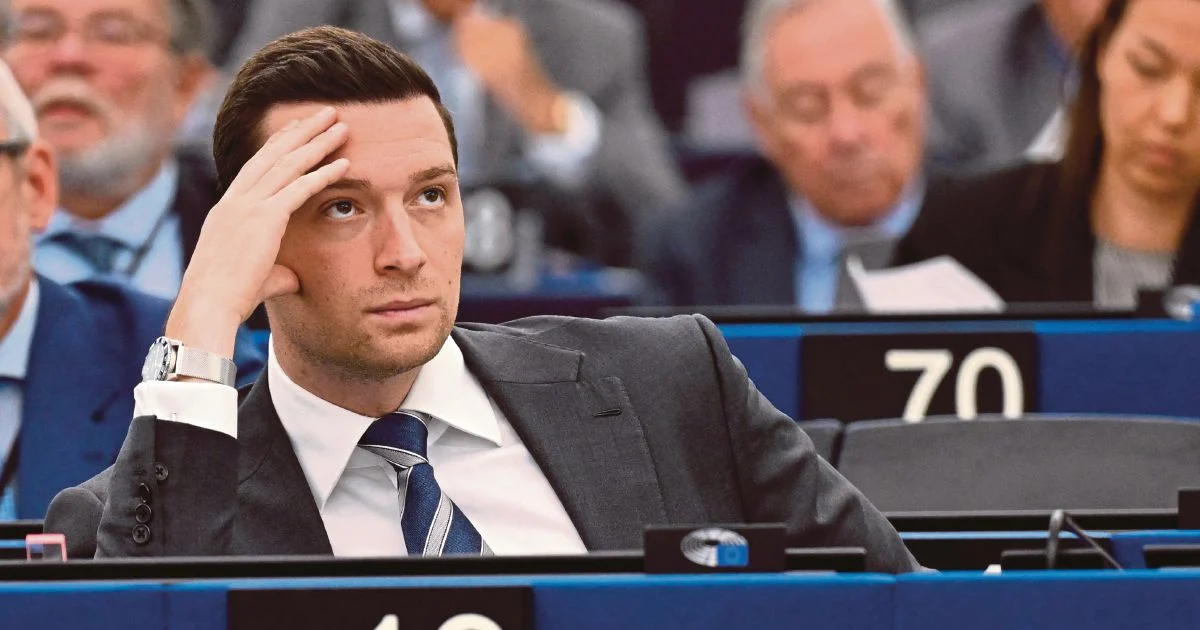
A prominent French anti-corruption authority initiated steps this week to examine claims that Jordan Bardella, a major contender in France's far-right political movement, may have been employed in a position that did not involve actual work at the European Parliament. The allegations target a period in Bardella's earlier career when he is said to have received remuneration for an assistant role that was largely ceremonial or nonexistent, a practice that would constitute financial fraud against European institutions. Bardella's party has issued firm denials of the accusations and dismissed suggestions of impropriety in his employment arrangements.
The investigation request represents a significant development for Bardella, who has steadily risen through the ranks of France's far-right National Rally party and is widely regarded as a potential successor to party president Marine Le Pen. His profile has grown considerably in recent years, positioning him as one of the most influential figures in contemporary French right-wing politics. The corruption allegations, if substantiated, could undermine his political credibility and complicate his party's strategic positioning ahead of future electoral contests, particularly given the sensitivity surrounding political funding and institutional integrity in France.
European Parliament positions involving assistant roles have been subject to increasing scrutiny following various controversies involving multiple political groups and national delegations. These positions, ostensibly created to support individual Members of the European Parliament with administrative and legislative work, are funded by the European institutions' budget. Critics argue that such appointments sometimes serve as vehicles for political patronage rather than legitimate employment, allowing parties to provide income to supporters or family members without meaningful labour being performed. The controversy surrounding assistant positions reflects broader concerns about oversight and accountability within European institutions.
The watchdog's decision to pursue an investigation underscores growing public concern about how publicly funded positions in Brussels are allocated and monitored. The European Parliament has implemented various transparency measures in recent years, yet concerns persist that enforcement mechanisms remain insufficient to prevent misuse. For Malaysian observers interested in governance standards, the controversy illustrates challenges that multi-layered institutional structures face in ensuring accountability across borders and jurisdictions, particularly when individual member states have considerable discretion in staffing decisions.
Bardella's situation must be understood within the context of recent political developments in France, where trust in institutions has fluctuated considerably. The far-right National Rally has built electoral momentum by positioning itself as an outsider movement critical of establishment politics and alleged corruption. Ironically, investigations into the party's own figures risk undermining this messaging and forcing the organization to address uncomfortable questions about internal governance. The party's categorical denial of the allegations suggests it plans to maintain this defensive posture rather than engage substantively with the accusations.
The timing of the investigation's announcement carries political significance in France, where presidential and parliamentary elections follow predictable cycles. Any formal findings against Bardella could reshape calculations within the political establishment and influence voter behaviour, particularly among constituencies sensitive to questions of integrity and institutional propriety. French political observers will be closely monitoring how the investigation unfolds and whether it produces substantive evidence supporting or refuting the initial allegations.
For Southeast Asian readers assessing European political developments, the Bardella controversy highlights how far-right movements across the democratic world frequently employ similar rhetorical strategies while sometimes exhibiting comparable governance challenges. This pattern suggests that critiques of institutional integrity resonate across different political contexts, yet enforcement of accountability standards varies significantly depending on institutional strength and political will. The investigation into Bardella's employment therefore serves as a test case for European institutional capacity to police its own members impartially.
The European Parliament itself faces pressure to demonstrate that it operates with genuine independence when investigating allegations involving prominent political figures. Questions about whether institutions can effectively police themselves without appearing politically motivated or biased create dilemmas for oversight bodies. The watchdog's willingness to proceed with its investigation despite predictable controversy suggests a commitment to institutional integrity, though observers will assess whether any eventual findings prove credible and appropriately consequential.
As France contemplates its political future and debates the proper role of outsider movements in democratic governance, the Bardella investigation represents more than a routine corruption probe. It encapsulates fundamental questions about accountability, institutional trustworthiness, and the credibility of anti-establishment political forces that campaign on platforms criticizing elite privilege and corruption. Whether the investigation ultimately vindicates Bardella or substantiates the allegations, the process itself will likely shape perceptions of both the far-right movement and the institutions investigating its members.

