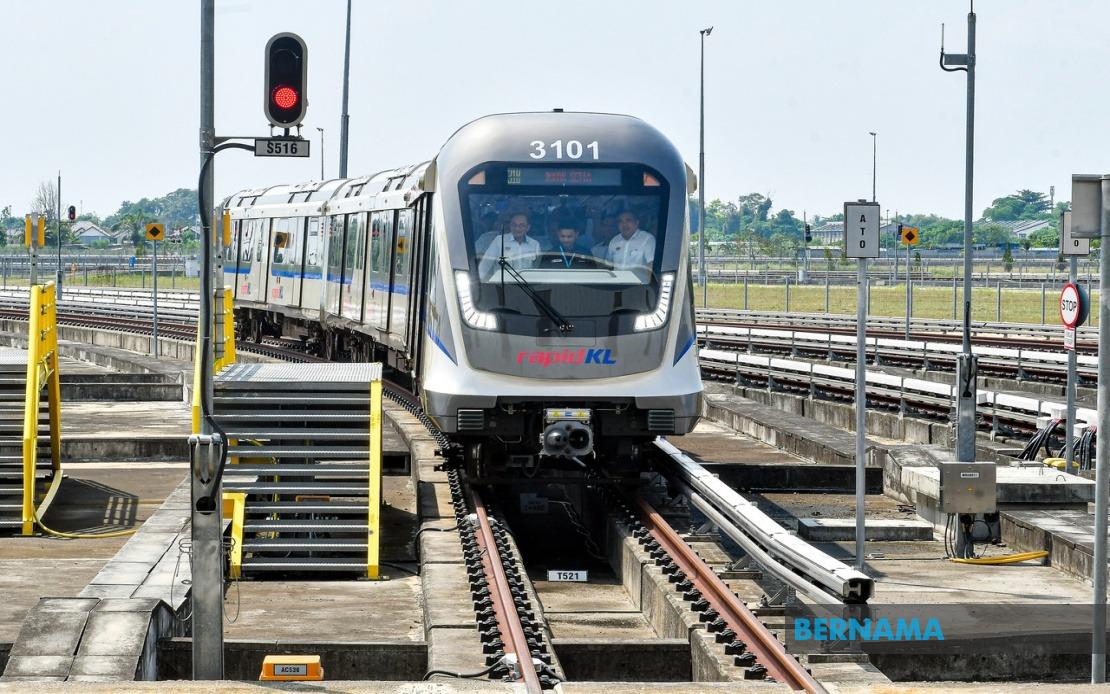
The announcement of complimentary travel on the Light Rail Transit 3 Shah Alam Line for an entire month has struck a chord with commuters navigating Malaysia's increasingly congested transport landscape. Beginning June 29 and extending through July 31, passengers will enjoy free rides on the newly launched service, marking a strategic effort by the government to popularise the modern rail link and provide relief to cost-conscious travellers. Prime Minister Datuk Seri Anwar Ibrahim introduced the scheme, which also encompasses feeder bus services operated by Prasarana Malaysia Berhad along the corridor.
For students in particular, the initiative addresses a genuine financial squeeze that has become more acute in recent years. The university sector represents a substantial portion of the line's anticipated user base, with many students previously dependent on either parental financial support or the escalating expense of e-hailing services to reach campus. Universiti Teknologi MARA student Arissa Ahmad Khairul, pursuing a journalism degree, characterises the free fare programme as a meaningful intervention that acknowledges the budgetary constraints facing tertiary education cohorts. She points to the broader convenience equation, noting that travelling from Kepong to UiTM Shah Alam via Bandar Utama becomes not merely cheaper but also faster than alternative commuting methods, compressing travel time alongside transport expenditure.
The psychological dimension of the promotional period deserves emphasis. Beyond the immediate financial benefit, the month-long window functions as a low-risk trial period during which commuters can assess whether rail transit genuinely fits their mobility patterns and lifestyle requirements. Media professional Yamin Ahmad recognises this aspect, describing the initiative as a shrewd tactic that removes the psychological barrier to experimentation. When potential passengers can test a new service without monetary penalty, they gain tangible evidence of whether time savings and comfort improvements justify a behavioural shift away from private vehicle usage or ride-hailing platforms. This experiential education often proves more persuasive than promotional messaging alone.
The transport economics underlying this policy reveal important strategic thinking. Malaysia's urban centres, particularly the Klang Valley, face persistent challenges with traffic congestion and environmental degradation linked to private vehicle dominance. Public transit adoption represents a policy priority that successive administrations have championed, yet consumer behaviour change requires more than infrastructure investment. By eliminating fare barriers temporarily, the government removes an immediate objection and creates conditions whereby cost-benefit calculations favour rail over private alternatives. For students using e-hailing services that can cost between RM10 and RM20 daily, a month of free LRT travel represents genuine savings that accumulate into meaningful monthly amounts.
UiTM's campus geography amplifies the line's strategic importance. The university educates approximately 42,000 students, yet only roughly 13,500 reside in on-campus accommodation, leaving nearly 29,000 dependent on commuting from surrounding districts. Students originating from Kuala Lumpur and Subang Jaya, substantial catchment areas, now possess a viable public transport corridor that simultaneously reduces expenditure and mitigates dependency on ride-hailing services increasingly criticised for contributing to urban congestion. Mohamad Adib Hazim Mohamad Razali, representing the student body, highlights this transformative potential, emphasising that the new station fundamentally reconfigures accessibility for the sprawling commuter population constituting the majority of the institution's enrolment.
The feeder bus component of the initiative merits particular consideration within Southeast Asian urban transport contexts. Integration between rail rapid transit and bus networks remains underdeveloped across the region, often creating fragmented user experiences and false economy in last-mile connectivity. By extending the free fare promotion to Prasarana-operated feeder services, the policy addresses this integration challenge directly. Commuters accustomed to point-to-point e-hailing now encounter a seamless alternative combining rail comfort with flexible bus accessibility, potentially establishing habits that persist beyond the promotional period.
From a competitive standpoint, the Shah Alam Line operates within a marketplace where e-hailing platforms have achieved near-ubiquity and where driving remains deeply embedded in Malaysian transport culture. The free fare initiative effectively neutralises price competition during a critical adoption window, allowing the rail operator to demonstrate superior attributes including speed, comfort, predictability, and environmental credentials without the complication of simultaneous price negotiation. Commuters making direct comparisons between LRT travel and ride-hailing platforms during this period obtain unambiguous data about journey times and reliability, information that shapes long-term transport decisions regardless of whether fares revert to standard levels afterward.
The policy also reflects broader concerns about transport affordability within Malaysia's economic context. Inflation, rising fuel costs, and the expansion of ride-hailing services have collectively increased transport expenses for middle and lower-income households, disproportionately affecting student populations and young urban professionals. A month of free rail access, while limited in temporal scope, provides measurable relief during a period when many students conclude semester examinations and prepare for holiday travel, aligning policy timing with genuine demand patterns.
Looking forward, the free fare period establishes crucial baseline data regarding patronage patterns, peak usage times, and demographic composition of the ridership. Transit authorities can utilise this information to optimise service frequency, schedule adjustments, and feeder connectivity in subsequent months. More importantly, commuters who discover the Shah Alam Line's genuine utility during the promotional period often become permanent adopters, particularly if the experience transforms their transport calculus. The initiative therefore functions simultaneously as consumer stimulus, behavioural research, and market repositioning for rail transit within Malaysia's increasingly contested urban mobility landscape.

