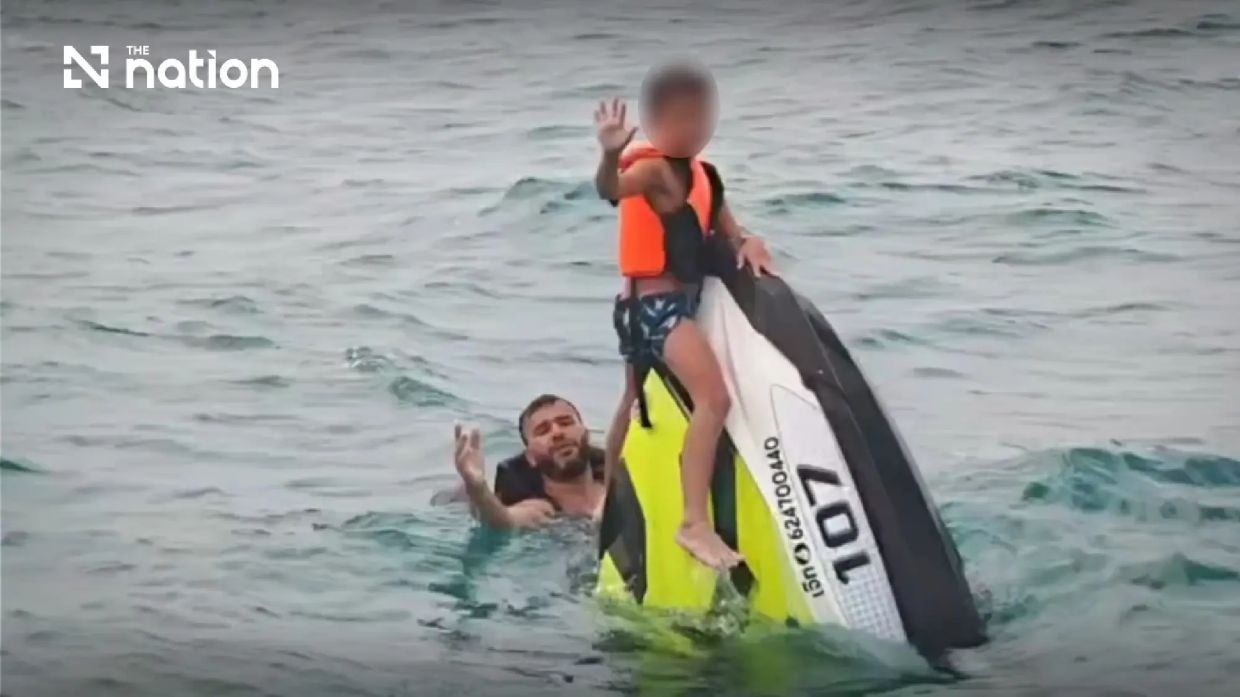
A harrowing rescue operation unfolded off one of Southeast Asia's most popular beach destinations when a French family was found drifting in the waters surrounding Koh Samui on Friday morning, having spent more than 16 hours battling the elements after their rented jet ski overturned. The father, aged 50, and his two young sons—ages five and seven—were eventually pulled to safety in a recovery that authorities said could have ended far more tragically had discovery been delayed any further. All three were brought ashore and taken for medical evaluation, though they were released from hospital shortly after initial assessment, according to Amorn Chomchoey, the local government official coordinating the response.
The ordeal began in the late afternoon when the family rented a jet ski from a local operator on Thursday around 5pm local time. Initial investigations suggest the vessel overturned after operating for slightly more than fifteen minutes, raising questions about what caused such a rapid catastrophe. The father subsequently claimed to rescuers that he possessed considerable experience operating jet skis, yet circumstances surrounding the capsizing remain under investigation. Amorn's office noted that the family exhibited severe dehydration and salt water ingestion during their extended exposure, with medical staff observing they appeared particularly exhausted and pale, especially the younger children.
Alerts came through when the family failed to materialise at the agreed return time, prompting the rental operator to contact local maritime rescue authorities and provincial officials. This timely notification proved crucial, as the extended search window that followed resulted in the discovery of the overturned vessel and its occupants at approximately 10am on Friday. Rescue footage captured by the Koh Samui district office reveals the dramatic state of the craft—nearly completely submerged with only a triangular bow section remaining above water. The imagery shows one of the boys perched atop the exposed portion while his father remained in the water nearby, both wearing life jackets that almost certainly contributed to their survival.
However, emerging accounts suggest the situation may have been more preventable than initially indicated. The jet ski operator informed local media that the family appeared to have ventured beyond the designated operational zone specified within their rental agreement, potentially indicating a breach of safety protocols that could have contributed to their predicament. Whether this departure from the agreed area directly precipitated the capsizing remains unclear, but it underscores the importance of adhering to rental conditions designed to maintain water safety. Such incidents highlight the tension between tourists' desire for adventure and the boundary-setting measures established to protect both visitors and rescue resources.
Koh Samui occupies a prominent position within Thailand's tourism economy, drawing millions of international visitors annually who are attracted by its reputation for relatively tranquil waters and comprehensive resort infrastructure. The island's family-friendly designation makes incidents such as this particularly significant, as they expose potential vulnerabilities in equipment maintenance, operator oversight, and tourist compliance with safety regulations. The recovery was executed with professional efficiency by Thai maritime services, with rescue personnel visible in footage actively providing reassurance and practical assistance during the retrieval operation.
The resilience displayed by the family—particularly the young children—under extreme stress proved remarkable, and their survival owed considerable debt to the life jackets they wore and the alertness of the rental operator who initiated rescue protocols. Medical personnel expressed relief that the prolonged seawater exposure had not resulted in more severe complications, though all three individuals would require close monitoring for potential delayed effects including salt-water aspiration risks. The boys' ability to endure such a traumatic experience demonstrated physical and psychological fortitude that belied their tender ages.
Authorities have not yet concluded their investigation into whether equipment failure, operator error, or environmental factors precipitated the capsize. The incident raises broader questions about jet ski rental regulations in Thailand's tourism hubs, where the balance between economic opportunity and visitor safety sometimes tilts toward commercial interests. The family's decision to remain in Thailand and continue their holiday despite the traumatic experience speaks to their determination not to allow the incident to overshadow their travel plans, though it remains unclear what precautions they subsequently adopted regarding water-based activities.
For Malaysian and regional tourists considering similar activities, the incident serves as a potent reminder of the importance of rigorous adherence to safety briefings, proper equipment verification, and strict compliance with designated operational zones. While Koh Samui's waters are generally characterized as safer for water sports than many Southeast Asian alternatives, complacency regarding maritime hazards can prove fatal, particularly for families with young children. The swift intervention by Thai rescue authorities ultimately prevented tragedy, but the incident illustrates that preparedness and caution remain essential prerequisites for water-based recreation in tropical environments.

