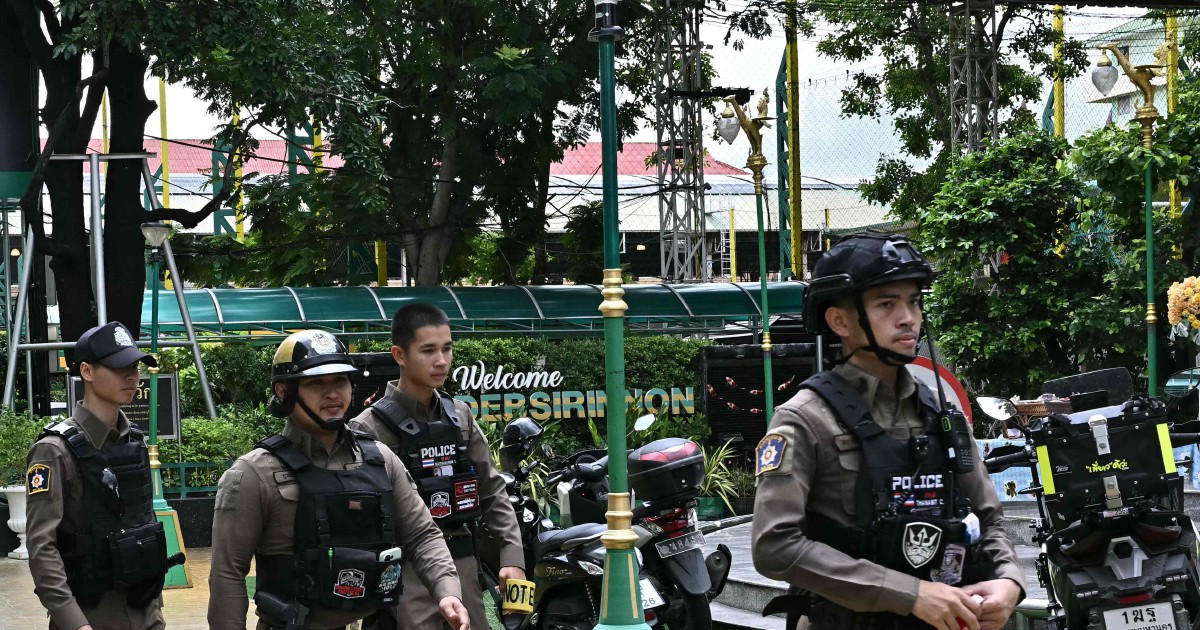
At least eleven French citizens have been in Thai police custody since the beginning of the summer season following arrests connected to a substantial cannabis seizure, according to information disclosed by law enforcement sources to international news agencies this week. The detentions represent a troubling pattern in which tourists travelling to Southeast Asia become entangled in drug-related offences, often with severe legal consequences in host nations where narcotics laws are notoriously stringent.
The arrests occurred as authorities uncovered multiple kilograms of cannabis concealed within the travellers' baggage at various points during the summer months. Thai drug enforcement units, working across multiple locations, systematically intercepted the shipments and took the individuals into custody. The sheer volume of contraband spread across multiple arrests suggests this was not a series of isolated incidents involving individual users, but rather a more coordinated operation involving multiple participants.
Thailand maintains some of the strictest drug laws in the Asia-Pacific region, with penalties for trafficking and possession significantly harsher than those in Western countries. Individuals convicted of cannabis offences face lengthy prison sentences, substantial fines, and the prospect of years in Thai detention facilities. The situation carries particular weight for foreign nationals, who often navigate unfamiliar legal systems and struggle to secure adequate legal representation without substantial financial resources.
The involvement of French citizens in this operation raises questions about whether criminal networks are deliberately recruiting European tourists as drug mules, exploiting assumptions that holiday travellers might attract less suspicion at border checkpoints. The strategy of offering free or heavily subsidised holidays to participants in exchange for transporting small quantities of drugs is a well-documented tactic used by international smuggling operations targeting the European market. Victims often remain unaware of the criminal nature of their arrangement until arrested at their destination.
For Malaysia and other Southeast Asian nations, this incident underscores the persistent vulnerability of the region to international drug trafficking networks. As a major transit hub for air and maritime routes connecting Europe, the Middle East, and Asia, Malaysia frequently encounters similar cases involving foreign nationals attempting to move contraband through its borders. The arrest patterns in Thailand suggest that criminal organisations continue to exploit gaps in enforcement and the relative ease of moving goods through airport terminals and transit zones.
The French government is likely coordinating with Thai authorities to provide consular assistance to its detained nationals, a standard diplomatic procedure when citizens face serious charges abroad. However, the effectiveness of such intervention remains limited in Thailand, where judicial independence and foreign pressure have minimal influence on sentencing outcomes. Embassy officials can facilitate communication, arrange legal counsel, and monitor fair trial standards, but cannot alter the fundamental application of Thai law.
This case also illustrates the broader challenge facing Southeast Asian countries attempting to balance tourism development with drug enforcement. Thailand's tourism industry generates substantial national revenue, yet maintaining rigorous narcotics controls remains a government priority. The arrests demonstrate that authorities will pursue such cases regardless of a suspect's nationality or the potential diplomatic friction that might result.
For Australian, British, and other Western travellers planning visits to Thailand, Malaysia, Singapore, and Indonesia, these detentions serve as a stark reminder of the risks associated with carrying any controlled substances. Even minimal quantities deemed insignificant by Western standards can trigger severe penalties under Southeast Asian law. The gap between permissive attitudes toward cannabis in parts of Europe and the zero-tolerance approach across much of Asia creates dangerous misunderstandings among tourists.
The eleven French detainees now face a lengthy legal process that will determine their ultimate fate. If convicted, they may serve many years in Thai prisons, substantially longer than equivalent sentences they might receive in France. Their cases will likely attract media attention in France, potentially raising awareness among French citizens about the genuine risks of involvement in drug trafficking, whether as willing participants or unwitting couriers.
Law enforcement agencies across Southeast Asia continue developing intelligence-sharing mechanisms to identify smuggling networks operating across borders. The coordination demonstrated in the French nationals' arrests reflects improving cooperation between Thai police and international partners. However, the sheer volume of goods transiting the region daily means that enforcement remains partially reactive, with authorities discovering operations only after contraband reaches borders or airports.
Criminal networks will continue adapting their tactics to exploit perceived vulnerabilities and shifting enforcement priorities. For Malaysian authorities and regional counterparts, sustained vigilance and intelligence work remain essential to dismantle the organised structures enabling such operations. The case of the detained French nationals illustrates how individual travel decisions connect to transnational criminal enterprises whose reach extends far beyond their geographic origin.

