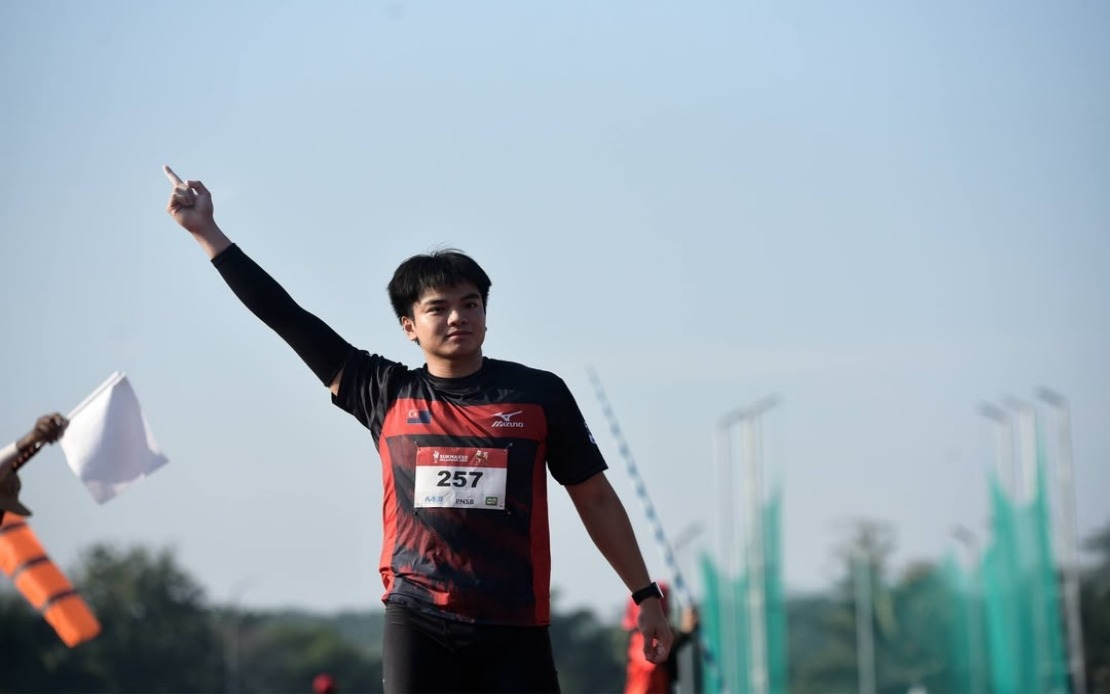
An 18-year-old javelin thrower from Johor has rewritten the Malaysia Games record books at the Selangor 2026 edition, launching the javelin 64.44 metres on his second attempt at the Universiti Putra Malaysia Sports Centre. The achievement by Chai Kai Le eclipsed a benchmark that had stood for more than two and a half decades, surpassing Sarawak's Kho Mei Kuan's 62.33-metre mark set during the 2000 Games held in Penang. This breakthrough underscores the depth of athletic talent emerging across Malaysia's states and the continuing evolution of field events at the continental level.
Kai Le's path to the top of the podium reveals an unconventional trajectory that began in a school gymnasium rather than a track. As a younger student, he was an accomplished badminton player whose technical proficiency caught the attention of an observant educator. This teacher recognised something beyond shuttle court performance—a natural explosiveness and arm speed that suggested untapped potential in throwing sports. The suggestion to transition to javelin proved fortuitous, setting in motion a chain of events that would culminate in national recognition and record-breaking achievement during his teenage years.
The transition from badminton to javelin occurred during his Standard Six year, a formative period when many young athletes are still exploring their sporting identities. Rather than treating the shift as a distraction, Kai Le embraced the new discipline with genuine enthusiasm. His early years were marked by careful observation of established competitors and participation in open competitions, experiences that built both technical knowledge and psychological resilience. Watching senior athletes compete at higher levels instilled an ambition that proved durable through subsequent years of training and competition.
Behind this young athlete's ascent lies the steadfast commitment of his father, Chai Yin Huan, whose financial and emotional support has been instrumental throughout the journey. The elder Chai has demonstrated unwavering dedication by financing treatment and recovery protocols whenever injuries have surfaced, purchasing necessary equipment replacements, and absorbing the various costs associated with competitive athletics. Notably, this paternal backing operated without the expectation of elite achievement; the father's primary concern was his son's wellbeing and his commitment to performing at his best, values that shaped Kai Le's approach to training and competition.
The past twelve months have tested this young thrower's resilience considerably. While pursuing his studies at Bukit Jalil Sports School as a pre-university student, Kai Le has battled persistent physical challenges including chronic back discomfort and injuries affecting his right shoulder and elbow. These conditions remain incompletely resolved, yet he has continued training and competing despite the pain and functional limitations they impose. This determination proved significant during the Indonesia Open earlier this year, where he achieved a personal best and national under-20 record of 65.65 metres, demonstrating that injury management and technical development can progress simultaneously.
The SUKMA record achievement gains additional significance when contextualised within the broader trajectory of Kai Le's competitive development. The fact that he has already exceeded the record—having thrown 65.65 metres internationally—suggests the current Games performance may represent a conservative execution rather than maximum capacity. This raises questions about his potential ceiling and the realistic targets he might pursue in subsequent years. The cushion between his SUKMA winning throw and his existing personal best indicates considerable room for further progression, particularly as he matures physically and accumulates more years of competitive experience.
Looking forward, Kai Le has articulated ambitious objectives that extend beyond domestic competition. He has identified 70 metres as his next substantial target, a threshold that would position him favourably for qualification to the 2027 Southeast Asian Games. To support this pursuit, he has arranged a month-long training programme in Japan scheduled for early next year, reflecting the strategic approach taken by Malaysian athletics development in recent years. International exposure and coaching collaboration have become increasingly central to preparing athletes for regional and continental competition at the highest levels.
The significance of Kai Le's achievement extends beyond individual accomplishment. His emergence as a record-breaker in javelin contributes to Malaysia's ongoing development of field event competitors, an area where the nation has historically concentrated significant investment and attention. The success of young athletes like him demonstrates the effectiveness of talent identification systems and structured development pathways, particularly when combined with family support and institutional backing through schools specialising in sports. His trajectory from casual badminton player to Games record-holder within a relatively compressed timeframe suggests that systematic talent development produces tangible returns.
For Malaysian sports administration and coaching infrastructure, Kai Le's progression offers encouraging indicators about the pipeline of emerging talent. His willingness to train through injury, his receptiveness to coaching guidance, and his clearly defined progression targets reflect the professional approach increasingly evident among younger athletes in the system. The combination of local coaching expertise and planned international exposure positions him well for sustained improvement. His story also resonates with younger athletes considering athletics, illustrating that pathway changes and unconventional beginnings need not constrain ultimate achievement.
The broader context of SUKMA 2026 increasingly reflects Malaysia's sports maturation, with younger generations setting new benchmarks across multiple disciplines. Kai Le's record represents not merely a statistical achievement but evidence of generational advancement in athletic capability and training methodology. As he pursues his 70-metre target and Southeast Asian Games qualification, his journey will likely inspire continued investment in javelin and field events more broadly. His narrative—from schoolboy badminton player to national record-holder—encapsulates the transformative power of talent identification, family support, institutional frameworks, and individual determination that characterises contemporary Malaysian sport at its best.

