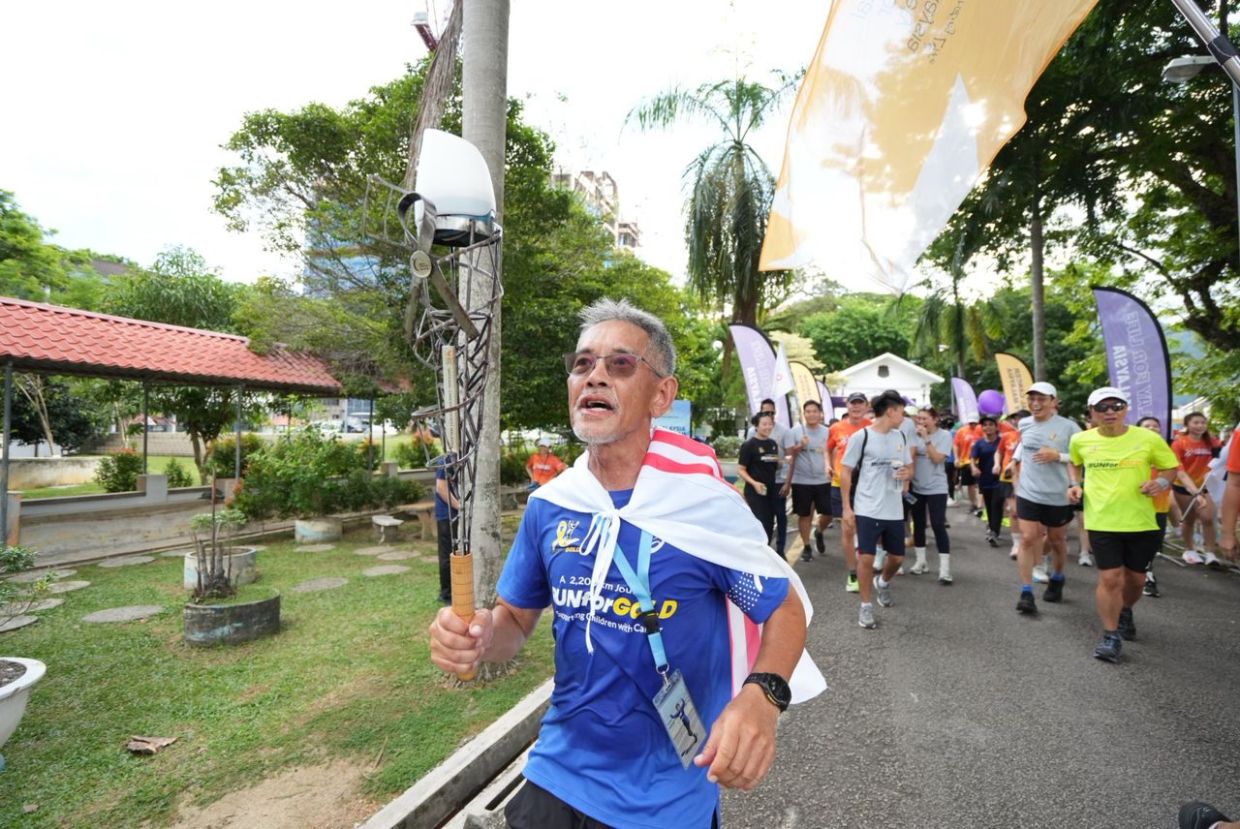
Retirement typically signals a season of rest and reflection, yet for SG Lim, a 66-year-old former civil engineer from Penang, the milestone became a doorway to unexpected purpose. When his wife Goh Joo Lee succumbed to cancer in 2024 at the age of 63, Lim faced the disorienting challenge of reimagining life without her constant presence. Rather than surrendering to inertia, he embarked on an odyssey across Peninsular Malaysia that would transform his private sorrow into a movement benefiting one of society's most vulnerable populations.
The months immediately following Goh's death saw Lim traversing multiple continents in search of solace. Time spent with his two adult children in Australia, cherished moments with his mother and siblings in Malaysia, and periods of introspection in Hong Kong became the fabric of his early grieving process. Yet these travels, while therapeutic, gradually revealed an emptiness that required deeper meaning. When asked to characterise his departed spouse, Lim's response distilled decades of marriage into two profound words: loving and caring. His memories paint a portrait of a woman whose compassion extended beyond her immediate circle—even whilst hospitalized and battling her own terminal illness, she purchased flowers for a stranger in an adjacent ward, seeking to brighten the existence of someone she would never know.
Goh's artistic inclinations left lasting digital traces across social media, where her pop-up creations and handmade designs remain archived testament to her creative spirit. These digital remains became anchors for Lim during his grieving process, tangible reminders of her talents and the unique imprint she had left on those around her. This contemplation of her legacy proved catalytic. Reading Laurence Carter's book illuminated a path forward—the possibility of channeling personal loss into collective good through sustained physical exertion across his home country. Lim reached out to Carter directly for guidance, and the concept crystallized into something concrete and purposeful.
The National Cancer Society Malaysia (NCSM) embraced his vision, providing institutional support that elevated a personal memorial run into a structured fundraising initiative. Christened "Run For Gold," the campaign married Lim's determination with a specific mission: generating awareness and financial resources for Malaysian children confronting cancer diagnoses. The naming itself reflected aspiration—both the precious metal and the metaphorical golden potential within every child afflicted by this devastating disease.
Preparation demanded meticulous discipline. Following his completion of the Sydney Marathon in August, Lim systematically increased his running volume while adapting his body to Malaysian climatic extremes. He reconstructed his daily rhythms around 5am starts, subjected himself to midday heat exposure to build tolerance, incorporated strength conditioning to protect against accumulated wear, and developed technical skills in video editing to document his expedition for online audiences. This multi-dimensional preparation extended beyond physical conditioning—it represented an intellectual and emotional commitment to seeing the endeavor through its inevitable challenges.
The actual journey unveiled dimensions that transcended personal memorial. During his inaugural visit to a children's oncology ward coordinated by NCSM, Lim confronted the raw reality of pediatric cancer. The juxtaposition of fragile young bodies with the haunted expressions of their guardians crystallized his purpose in visceral terms. This wasn't abstract charity work; it was direct engagement with the consequences of a disease that robs families of futures. The encounter reinforced what he suspected during sleepless nights of planning: that his legs could literally carry weight that others bore emotionally.
Human connection materialized unexpectedly during his passage through Pahang. A retired educator and his spouse encountered Lim and discovered resonance with his mission. Unable to contribute financially, they offered something more intimate—their physical presence and sustained advocacy. The couple joined him across multiple state boundaries, running alongside him through Johor and Melaka before accompanying him for the triumphant final stretch into George Town. What struck Lim most profoundly was their demonstrated tenderness toward each other, a mirrored reflection of the partnership he had lost, amplifying both his sense of missing Goh and his gratitude for their solidarity.
The three-month odyssey traversed 2,200 kilometers across eleven states and federal territories, each kilometer representing both personal penance and collective purpose. The final 80-kilometer segment into Penang carried particular emotional weight—a homecoming of sorts, where the journey that had consumed his recent months would reach its symbolic terminus. When Lim crossed the finish line in George Town, his first articulated thought escaped unbidden: "Darling, we made it!" The exclamation captured the dual nature of his accomplishment—a personal achievement for his departed wife and a collective victory for the cause he had championed.
The welcoming committee that greeted him transcended the gathering of a single runner's support network. Family, childhood classmates, friends, and complete strangers converged to acknowledge not merely miles covered but emotional terrain traversed. The crowd represented something his wife's example had always embodied—a community capable of recognizing another's pain and responding with witness and celebration. In honoring Goh's memory through sustained physical commitment and fundraising advocacy, Lim had inadvertently created a social space where grief could be collectively acknowledged and transformed into actionable care for children he would never meet but whose futures he had materially impacted.
For Malaysian readers contemplating how personal tragedy might generate broader impact, Lim's trajectory offers both inspiration and practical model. His journey demonstrates that retirement need not signal withdrawal from meaningful engagement with society's pressing challenges. The Run For Gold campaign continues accepting donations and awareness participation, fundamentally shifting how individual loss might be metabolized into systemic support for vulnerable populations. By wedding his runner's discipline to his heart's deepest wound, Lim transformed grief into geometry—lines traced across a nation's geography that will translate into survival rates, treatment access, and hope for families confronting childhood cancer diagnoses.

