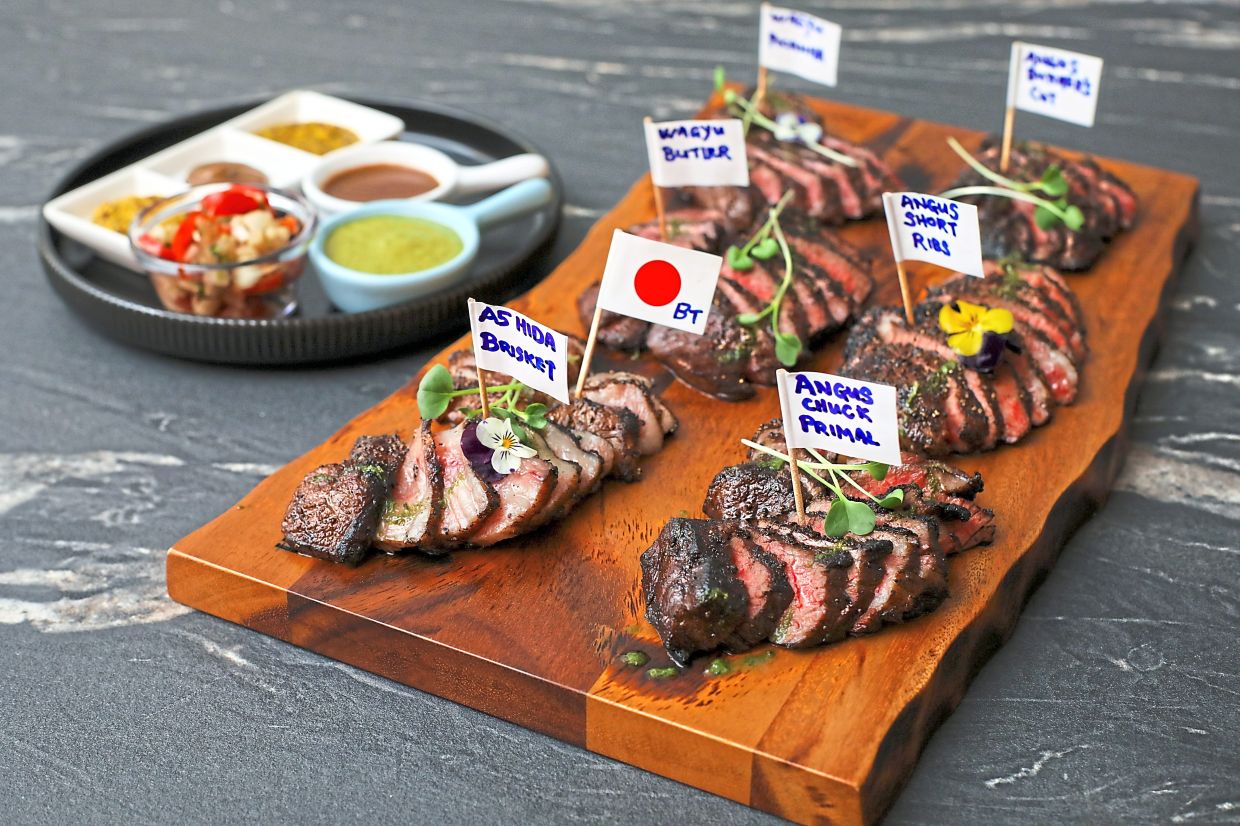
At Meat Feds in Petaling Jaya, chef Yenni Law demonstrates a skill increasingly rare in Malaysian kitchens: the precise butchery of secondary beef cuts. With meticulous knife work, she separates sinew from silver skin and fat, a technique that demands both expertise and patience. Law's mastery of this craft earned her and co-founder Shelly Saw recognition from Malaysia Book of Records this year for featuring 20 different secondary cuts on a single restaurant menu—a remarkable achievement that underscores a fundamental shift in how Malaysia's dining industry views beef beyond the celebrated trinity of striploin, tenderloin and ribeye.
Malaysia ranks as Southeast Asia's largest beef consumer, yet the market has remained stubbornly focused on prime cuts, the most tender and expensive portions that comprise merely 8% to 10% of any animal's total yield. The remaining 80% to 90% of the carcass—encompassing cuts like flat iron from the shoulder, flank from the abdominal muscles, rump from the hindquarters, hanging tender from the diaphragm, chuck primal from the shoulder and neck, and picanha from the top rump cap—historically disappeared into minced meat, burger patties and processed sausages. This waste of potential reflected a disconnect between supply and consumer awareness, where diners never experienced what these cuts could deliver on the plate.
The turning point has emerged gradually but perceptibly across the Klang Valley's mid-range and upscale restaurants. This transformation owes substantially to coordinated industry initiatives by entities such as Meat & Livestock Australia, which establishes meat standards for international markets, and local distributors like Lucky Frozen Sdn Bhd. Through seminars, educational events and master butcher classes, these organisations have repositioned secondary cuts from afterthoughts to culinary protagonists. Law credits these learning opportunities, noting that attending professional butchery sessions allows her team to refine trimming techniques and validate processing methods. Such events function simultaneously as marketing vehicles and knowledge transfer platforms, fundamentally altering how chefs perceive secondary cuts' potential.
The strategy mirrors successful market transformation precedents internationally. During the 1980s, Norway's fisheries authorities launched an intensive campaign to introduce Norwegian salmon to Japan, where chefs had largely dismissed the fish as unsuitable for traditional cuisine. Decades later, salmon sushi dominates Japan's sushi markets—a testament to how systematic education and targeted promotion can reshape culinary perceptions and practices. Valeska V, Meat & Livestock Australia's Southeast Asia regional manager, articulates this broader philosophy: as chefs and consumers grow more sophisticated, they increasingly embrace alternatives beyond the obvious. Prime cuts appeal through simplicity and guaranteed tenderness, but secondary cuts reward technique and understanding with distinctive flavour and textural complexity.
Economics amplify this culinary revolution. Secondary cuts command prices 20% to 60% below prime cuts—potentially savings of hundreds of ringgit per serving. This differential has sharpened considerably as global pressures have reshaped beef markets. Prime cuts have appreciated approximately 30% over recent months due to worldwide beef scarcity and elevated oil prices, while secondary cuts experienced only marginal 10% increases. Desmond Chong, head chef at the woodfire grill restaurant Ignis KL, now stocks three to four secondary cuts monthly, a decision driven partly by practical economics and partly by market realities that have forced menu innovation. James See, business development director at Lucky Frozen Sdn Bhd, frames this diversification as essential resilience-building against beef inflation, emphasising that honouring the whole carcass ensures Malaysian cuisine benefits from stable supplies rather than vulnerability to global scarcity.
Yet the culinary case extends beyond mere cost efficiency. Secondary cuts deliver flavour and textural profiles distinctly different from prime varieties. At Law's restaurant, diners experience a spectrum ranging from butcher's cut through chuck primal, brisket, picanha and short rib—each offering varying degrees of bovine intensity and textural complexity, from tender to chewy to bouncing. At Ignis, charcoal-fired short ribs and flat iron steaks emerge with beautifully charred exteriors and silken interiors that feel equally sumptuous as prime cuts without excessive opulence. This textural and flavour diversity represents genuine culinary opportunity rather than compromise.
Implementing this shift demands significant chef investment. Secondary cuts present a steep learning curve that prime cuts do not. They typically contain substantially more sinew, silver skin and fat requiring precise identification and removal—exactly the challenge Law navigates daily. Distinguishing fat from sinew demands visual discernment and repeated practice; some fat appears deceptively sinew-like, necessitating genuine expertise to process correctly. This knowledge barrier explains why secondary cuts remain uncommon despite their advantages, and why Meat & Livestock Australia's educational initiatives prove so crucial.
The broader context positions this development as particularly significant for Southeast Asian food markets. Malaysia's position as the region's largest beef consumer grants disproportionate influence over how neighbouring countries approach beef consumption and sourcing. As Malaysian chefs embrace secondary cuts and develop sophisticated preparations, they model alternatives that challenge wasteful prime-cut-only paradigms. This has implications for agricultural sustainability, reducing waste while celebrating the full animal. It also democratises quality beef dining, enabling diners across various income brackets to experience premium beef preparations at accessible price points.
The momentum building across Malaysian kitchens reflects genuine industry maturation. When young chefs train under mentors like Law, who has anchored her entire restaurant concept around secondary cut mastery, industry norms shift. When established restaurants like Ignis deliberately allocate menu space to secondary preparations, market signals change. When Meat & Livestock Australia invests in ongoing education, professional standards rise. Collectively, these developments indicate that secondary beef cuts will increasingly define Malaysian fine dining rather than remaining its periphery.

