Eighteen-year-old Auni Batrisya A. Rahman Siyutti has turned personal tragedy into determination, enrolling at TVET MARA Seberang Perai Utara to pursue a Diploma in Electrical Engineering after losing both parents. The youngest of six siblings from Kampung Bukit Serdang, Air Panas Pengkalan Hulu in Perak, Auni Batrisya represents a growing number of Malaysian youth who are turning to technical and vocational education to secure their futures despite overwhelming personal circumstances. Her journey from hardship to opportunity illustrates both the vulnerabilities facing orphaned children and the potential of Malaysia's vocational training ecosystem to offer meaningful alternatives.
Auni Batrisya's path to TVET MARA reflects the unpredictable nature of opportunity in Malaysia. Her father, A. Rahman Siyutti, died from a heart attack in 2015 when she was a child, leaving her mother as the sole provider for six children. That fragile stability shattered in December 2021 when her mother, Salbiah Ahmad, succumbed to a lung infection. The losses might have derailed her education entirely, yet instead they strengthened her resolve to build a secure future. Her initial plan involved applying for assistance to acquire a laptop through the National Information Dissemination Centre (NADI) in Pengkalan Hulu, having already secured admission to Politeknik Sultan Abdul Halim Muadzam Shah (POLIMAS) in Jitra, Kedah. This persistence caught unexpected attention.
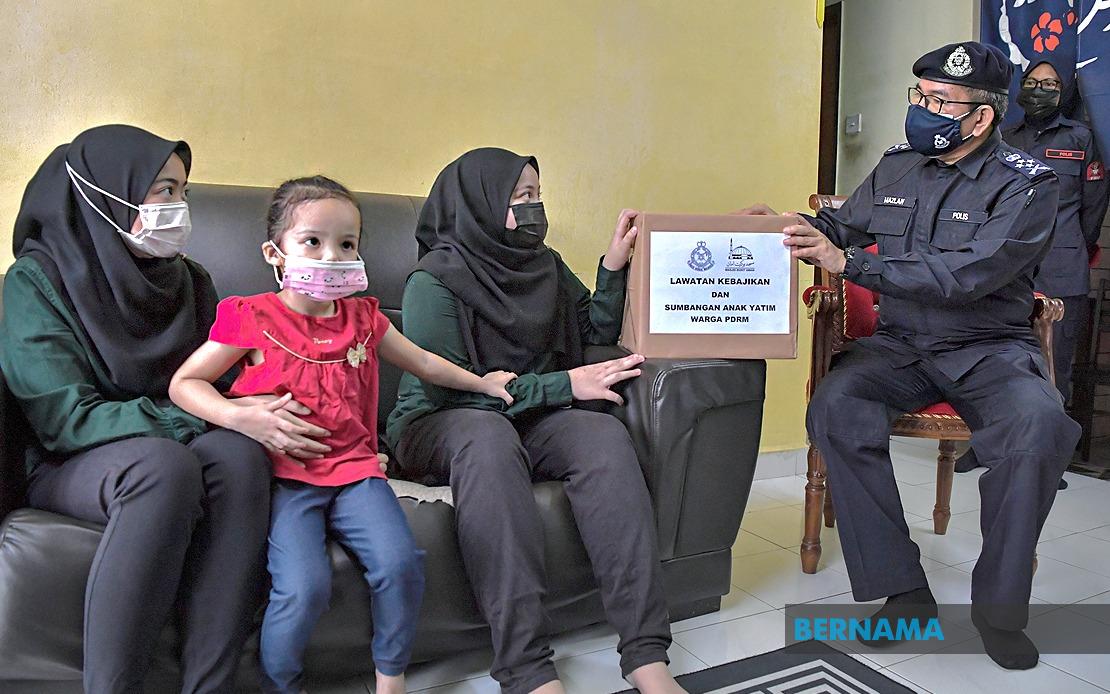
The turning point came through Majlis Amanah Rakyat (MARA) chairman Datuk Dr Asyraf Wajdi Dusuki, who learned of Auni Batrisya's circumstances and intervened decisively. Rather than simply referring her to existing programs, Asyraf Wajdi directly offered her a place at TVET MARA Seberang Perai Utara and went further by agreeing to serve as her foster father. This personal commitment signals a broader institutional recognition that orphaned students require not just educational placement but sustained mentorship and emotional support to succeed in technical training. The arrangement demonstrates how individual leadership within Malaysia's vocational education sector can bridge gaps that formal programs alone might leave unfilled.
For Auni Batrisya, the opportunity represents far more than academic advancement. A career in electrical engineering offers genuine economic mobility—she has been informed that entry-level salaries in the TVET field typically range between RM4,000 and RM6,000 monthly, a substantial income that would transform her family's circumstances. Her explicit goal is to repay her siblings' sacrifices, particularly that of her second brother Mohd Zuhri, 36, who along with other family members has supported her education through these years of loss. This intergenerational reciprocity reflects values deeply embedded in Malaysian society, where education is frequently viewed not as individual advancement but as a pathway to collective family welfare.
Mohd Zuhri has observed firsthand his youngest sister's resilience and describes her as remarkably determined despite her circumstances. This characterization proves crucial to understanding why her story resonates: Auni Batrisya was not selected because of sympathy alone, but because she demonstrated the work ethic and focus required to succeed in technical disciplines. TVET programs, increasingly recognized across Southeast Asia as essential to economic development, demand practical commitment and consistent performance. Her enrollment suggests that Malaysia's vocational institutions can identify and nurture talent that might otherwise remain underdeveloped in traditional educational streams.
The choice of electrical engineering as her field reflects broader shifts in Malaysia's labor market priorities. As the nation pursues its transformation toward higher-value manufacturing and renewable energy sectors, skilled electrical engineers remain in significant demand. Technical vocational training in electrical engineering addresses a genuine skills gap that continues to hamper industrial competitiveness. Young people entering this field can expect not just employment but career progression opportunities, particularly as Malaysia develops its smart manufacturing and green energy infrastructure. Auni Batrisya's ambition therefore aligns with national economic imperatives.
Her registration at TVET MARA Seberang Perai Utara in Tasek Gelugor represents a concrete step toward realizing these possibilities. The timing proves significant as Malaysia continues expanding its TVET capacity following recent policy emphasis on vocational pathways. Unlike university-bound peers, Auni Batrisya enters a program designed to deliver workplace-ready skills within a shorter timeframe, allowing faster transition to employment and income generation. For someone in her circumstances—supporting younger siblings and managing family finances—this acceleration matters enormously.
The Asyraf Wajdi intervention also highlights institutional gaps worth considering. While Malaysia possesses numerous support mechanisms for disadvantaged students, including scholarship programs and financial assistance schemes, the personal dimension of mentorship often determines whether such opportunities translate into genuine success. Orphaned students face not merely financial constraints but psychological and logistical challenges that bureaucratic support alone struggles to address. The foster arrangement, therefore, serves functions beyond the merely symbolic—it provides daily guidance, advocacy within institutional systems, and the kind of institutional knowledge that allows marginalized students to navigate educational bureaucracies effectively.
Looking forward, Auni Batrisya's success will carry implications beyond her personal trajectory. If she completes her diploma and establishes a career, she becomes a living example of TVET's transformative potential, potentially inspiring other disadvantaged youth to pursue technical training rather than abandoning education. Conversely, if barriers emerge—whether financial, academic, or personal—her experience would illuminate systemic failures requiring policy attention. The outcome matters for understanding whether Malaysia's vocational education ecosystem can genuinely serve as a social mobility mechanism for its most vulnerable citizens.
Her explicit intention to remain connected to her family and community, rather than pursuing education as escape, also distinguishes her narrative. Many success stories emphasize geographic mobility and social climbing, but Auni Batrisya articulates a vision where engineering skills enable her to strengthen family bonds and contribute locally. This orientation suggests that TVET education can serve not just as individual economic advancement but as a tool for distributed prosperity within communities facing persistent disadvantage. As Malaysia grapples with regional inequalities and youth unemployment, stories like hers offer both hope and challenge: hope that capable young people can indeed access meaningful futures, and challenge to ensure such opportunities extend systematically rather than depending on individual advocacy.
The months ahead will prove decisive. Auni Batrisya must navigate diploma coursework in a technical field while managing ongoing family responsibilities and processing years of accumulated grief. Her success requires not only her determination but continued institutional support and the sustained mentorship Asyraf Wajdi has committed to provide. Should she persist and graduate into employment, she will join a growing cadre of technically skilled Malaysians helping drive the nation's industrial transformation. The education she begins now at TVET MARA Seberang Perai Utara may ultimately benefit not only her own family but the broader Malaysian economy increasingly dependent on such skilled professionals.