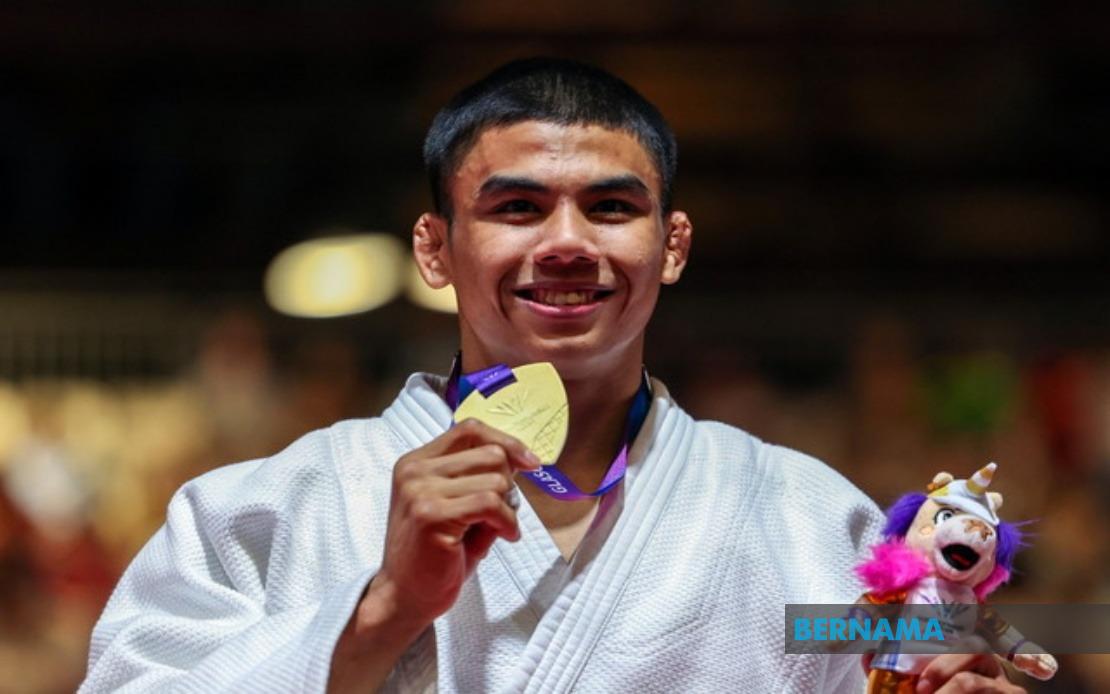
At just 21 years old, Amir Daniel Abdul Majeed is learning that the transition from elite athlete to mentor carries its own distinct brand of pressure. The Commonwealth Games gold medallist, currently serving as assistant coach of the Penang judo squad competing at SUKMA Selangor 2026, has discovered that standing on the sidelines watching young competitors navigate their bouts creates far greater anxiety than the intensity he once experienced on the mat. This shift in perspective reveals a critical juncture in the careers of many Malaysian athletes, where the expertise gained through years of personal competition suddenly becomes channelled toward developing the next generation of champions.
When Amir stepped into the coaching role at this year's games, he brought with him the lived experience of competing at the highest levels, having trained and battled alongside many of the athletes now under his guidance. That unique position as both former peer and current mentor creates a complex emotional landscape. He emphasises that the responsibility now extends far beyond personal performance management. Where previously he needed to focus solely on his own preparation, technique, and mental fortitude during competition, he must now orchestrate the development and performance of thirteen different athletes, each with their own strengths, weaknesses, and psychological needs. The multiplication of this responsibility—managing not one competitor but an entire squad—has proven more psychologically demanding than anticipated.
The reward, however, comes from witnessing tangible progress in these young judokas. Amir speaks with evident satisfaction about having observed many of his current charges develop from their earliest training days through to competitive maturity. This longitudinal perspective of their growth journey creates a different form of investment in their success, one that transcends the immediate competitive outcome. Throughout the three-day SUKMA campaign at IDCC Ideal Convention Centre in Shah Alam, Amir's contributions to coaching proved instrumental in shaping Penang's impressive final tally: three gold medals, one silver, and five bronze. The collective achievement saw Penang finish jointly at the top of the medal standings alongside Johor, a result that reflects the quality of his coaching input alongside that of his colleagues on the technical staff.
Beyond his immediate responsibilities at SUKMA, Amir is navigating another significant career moment. Officials are expected to announce this week whether he will represent Malaysia at the Aichi-Nagoya 2026 Asian Games in Japan, following a selection meeting scheduled during the current period. His participation in these games carries considerable strategic importance for his longer-term athletic aspirations. Amir views the Asian Games not merely as another competition, but as a crucial stepping stone toward his ultimate goal of Olympic participation. The calibre of international competition that materialises in Aichi-Nagoya far exceeds what he typically encounters in regional Southeast Asian tournaments, offering quality opposition that directly correlates with improved technical and tactical development.
The Japanese host nation's judo tradition means the Aichi-Nagoya Games will attract some of the world's most accomplished practitioners of the sport. For Amir, securing selection and maximising competitive bouts at this level would provide invaluable exposure to the styles, techniques, and strategic approaches that dominate global elite competition. This experience becomes particularly important as he simultaneously balances his coaching responsibilities, given that exposure to high-level opposition often translates into enhanced coaching insights when working with younger athletes. The knowledge he gains from fighting top international opponents at the Asian Games will inevitably inform how he guides his Penang charges through their own development pathways.
Looking further ahead, Amir's competitive calendar naturally converges with Malaysia's hosting of the Southeast Asian Games in 2027. The SEA Games Malaysia 2027 will represent a significant home advantage, and as a medal-winning athlete at Commonwealth level, expectations will likely intensify considerably. The progression appears logical: Asian Games experience in 2026 serving as preparation for peak performance at the SEA Games the following year. This two-year window effectively creates a period of sustained high-level competition that aligns with the periodisation principles long established in elite sports development. The combination of competing internationally while simultaneously coaching at home reflects the dual-track career path increasingly common among Malaysian athletes in their twenties, where coaching roles offer financial stability and personal development while competitive participation continues.
The psychological distinction Amir articulates between athlete and coach responsibilities extends beyond mere workload. When competing, an athlete internalises pressure and channels it into personal motivation. When coaching, an individual must absorb the collective emotional needs of multiple young competitors whilst maintaining the stability and composure necessary to provide reliable guidance. This maturity in perspective—recognising that coaching pressure differs fundamentally from competitive pressure rather than merely representing an addition to it—suggests Amir possesses the emotional intelligence increasingly demanded of coaches operating in high-performance environments. His willingness to engage thoughtfully with this transition, rather than treating coaching as a secondary activity until his competitive career ends, indicates a potentially lengthy coaching contribution ahead.
The SUKMA Games themselves serve as an important testing ground for emerging coaching talent within Malaysia's sports system. These games provide visible proof of coaching effectiveness and allow young mentors like Amir to build credibility before progressing to national or international roles. Penang's joint-top finish validates his contribution and likely strengthens his position within the state's judo development programme. For Malaysian sports observers, Amir's career trajectory—from young competitor to Commonwealth gold medallist to emerging coach—maps onto a broader question about how the country develops its coaching infrastructure as current athletes retire from elite competition.
The dual role Amir occupies also reflects practical economic realities in Malaysian sports. Few athletes can sustain themselves purely through competition once they move beyond the highest-earning international tournaments. Coaching roles, particularly in well-structured state programmes like Penang's, provide the income stability necessary to continue pursuing competitive goals. This integrated approach—where coaching and competing coexist rather than following sequentially—increasingly characterises the career patterns of accomplished Malaysian athletes across multiple disciplines. It suggests a maturing sports ecosystem where elite athletes contribute immediately to national development systems even whilst maintaining their own competitive aspirations.
As confirmation awaits regarding his Asian Games participation, Amir faces the practical question of managing both roles simultaneously. Should he travel to Japan to compete, his absence from coaching duties would require careful planning. Yet such challenges represent normal operational complexities in developing sports systems. His presence at SUKMA as both competitor-turned-coach demonstrates how experienced athletes can serve multiple functions within Malaysia's sports apparatus. The next week will reveal whether international competition fits alongside his growing coaching commitments, but either outcome positions Amir as a meaningful contributor to Malaysian judo's trajectory. Whether ultimately as competitor, coach, or both, his evolution from mat competitor to mentor signals the continued depth of talent development within Malaysian sports.

