Suresh Sallay's career trajectory mirrors that of many accomplished military professionals in South Asia. The retired Sri Lankan major general built international credibility as a counterterrorism specialist, delivering lectures at the Pentagon on suicide terrorism and addressing the United Nations on how social media fuels radicalisation and extremism. Yet in February, this same figure found himself detained under anti-terrorism legislation, accused by his own government of engineering the deadliest civilian attack in Sri Lankan history. The transformation from trusted security expert to alleged mastermind encapsulates the extraordinary narrative shift surrounding the Easter bombings of April 21, 2019.
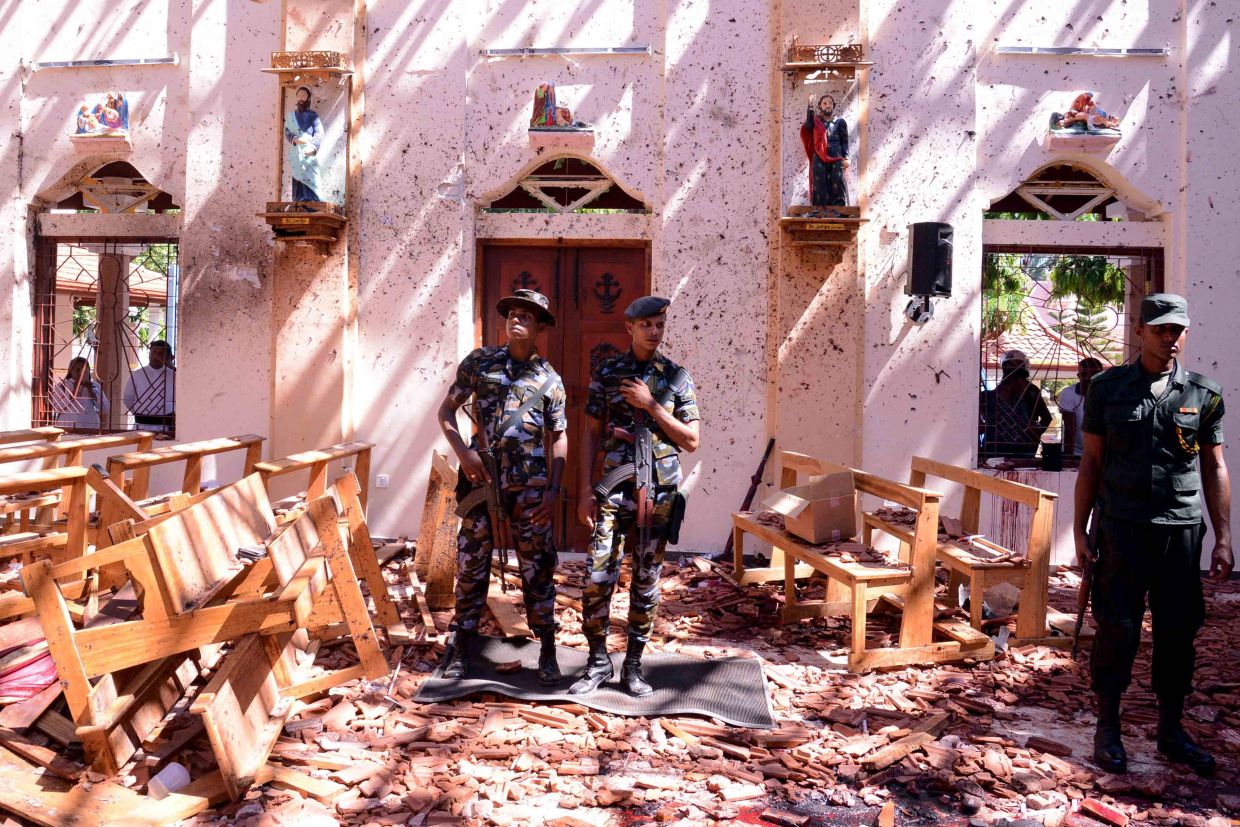
The attacks themselves remain seared into Sri Lanka's collective memory. Three churches and three luxury hotels were struck in a coordinated offensive that claimed 279 lives and wounded over 500 others. The death toll included 45 foreigners—Australians, British, Chinese, Danish, Dutch, Japanese and American nationals—many of whom were holidaymakers. The initial government account attributed the violence to Islamist militants inspired by Islamic State ideology, with seven suicide bombers carrying out the operation. However, the official narrative has undergone a profound transformation in recent years, shifting from a straightforward militant attack to allegations of a calculated conspiracy involving state actors seeking to manipulate political circumstances.
The turning point in this reinterpretation came with mounting evidence of government involvement in intelligence failures or, more provocatively, deliberate negligence. Indian intelligence services had transmitted warnings about potential threats before the bombings occurred, yet these alerts were apparently disregarded by Sri Lankan authorities. Investigations revealed that the bombers maintained connections with personnel from at least two state intelligence agencies, raising uncomfortable questions about institutional complicity. These findings prompted investigators to pivot toward a more sinister hypothesis: rather than representing an intelligence breakdown, the attacks may have been facilitated or encouraged by elements within the security apparatus for political purposes.
Public Security Minister Ananda Wijepala became the first government official to formally articulate this accusation when he told parliament in June that Sallay was the "mastermind" who had conspired with and "strategically directed" Islamic extremists to carry out the attacks. Wijepala claimed that merely three weeks before the bombing, Sallay had met with Muslim men to gather information about potential target locations. These allegations, while dramatic, remain unproven. Sallay has not been formally charged with any offence and consistently denies involvement, with his legal proceedings continuing through the court system. His position resembles that of another detainee—Muslim human rights lawyer Hejaaz Hizbullah, whom Sallay himself had arrested in 2020 on suspicion of masterminding the Easter attacks. Hizbullah spent 22 months in custody before authorities released him having failed to substantiate their claims.
The competing narratives about the bombings reflect deeper anxieties about Sri Lanka's political culture and the methods employed by powerful factions. Critics have suggested that the violent campaign served a calculated electoral purpose. Channel 4 reported in 2023 that according to a whistleblower, the attacks were permitted to proceed to boost Gotabaya Rajapaksa's presidential campaign, which centred on a hardline pledge to eliminate Islamist extremism. The logic followed a familiar pattern in South Asian politics: manufacturing a security crisis to justify expanded executive power and position a leader as indispensable to national safety. Rajapaksa, who had previously commanded military operations against Tamil separatists during the 1983-2009 civil conflict, possessed precisely the security credentials that fear-driven voters might find reassuring.
The hypothesis gains disturbing plausibility when examined alongside Sri Lanka's documented history of intelligence services cultivating militant proxies. During the civil war, successive Rajapaksa administrations openly funded jihadist groups ostensibly to gather intelligence on Tamil rebel movements. While government officials have acknowledged this arrangement, they maintain that these militants subsequently betrayed their handlers and executed the Easter bombings independently. Investigators have countered with evidence suggesting the alleged plot was to deliberately sow chaos, thereby enabling Rajapaksa to position himself as the singular leader capable of restoring order through decisive military action. This interpretation transforms the attacks from a tragic intelligence failure into a deliberate political operation with catastrophic human consequences.
Sallay's background illuminates how deeply complex Sri Lanka's security establishment actually is. As a Muslim married to a Buddhist woman with a Catholic mother who has petitioned the Pope for his release, he embodies the island's religious diversity despite Muslims representing only ten percent of the population. His professional trajectory encompassed assignments at Sri Lankan diplomatic missions in France and Malaysia, alongside advanced study at India's prestigious National Defence College and universities in India and Britain. These credentials positioned him as a sophisticated international operator. Yet his rise to prominence came through the Rajapaksa system, which appointed him to lead the State Intelligence Service following Gotabaya's 2019 election victory—the first military officer to hold that position.
The irony that Sallay himself weaponised the legal apparatus against alleged terror suspects now turns upon him. His detention of Hizbullah in 2020 on comparably dubious charges established a precedent for prolonged detention without proof, a tactic now being applied to his own case. This cycling of accusations between figures within the same security ecosystem suggests something more complex than a straightforward terror investigation. Rather, the case appears to reflect factional struggles within Sri Lanka's power structure, with competing intelligence services and political interests deploying terror allegations as instruments against rivals. For regional observers in Malaysia and Southeast Asia, where concerns about surveillance state overreach and weaponised legal systems resonate deeply, Sallay's detention offers a cautionary study in how national security frameworks can become tools of factional political warfare.
The implications for Sri Lanka extend beyond a single prosecution. The Easter bombings claim on national psyche remains fresh, particularly for the country's Christian minority and the families of victims. Yet if the bombings were not an intelligence failure but an intelligence operation, this revelation would represent a profound betrayal by institutions entrusted with national security. Public confidence in the security apparatus faces collapse if such allegations prove substantiated. Conversely, if Sallay's prosecution represents a politically motivated vendetta using unsubstantiated charges, it signals that Sri Lanka's legal system can be corrupted to eliminate inconvenient figures from the intelligence community. Either scenario darkens the country's governance trajectory.
The July 10 court hearing represents a crucial juncture. Without concrete evidence, the case risks appearing as a settling of scores within the security establishment rather than legitimate justice. For Malaysia and other Southeast Asian democracies grappling with balancing security and accountability, the Sallay case demonstrates how easily counterterrorism investigations become entangled with political motivation. The challenge lies in establishing genuine transparency mechanisms that can distinguish between legitimate security concerns and manufactured accusations designed to eliminate rivals. Until such mechanisms exist, figures like Sallay—and indeed ordinary citizens caught in security investigations—remain vulnerable to prosecution based on narrative convenience rather than credible evidence.

