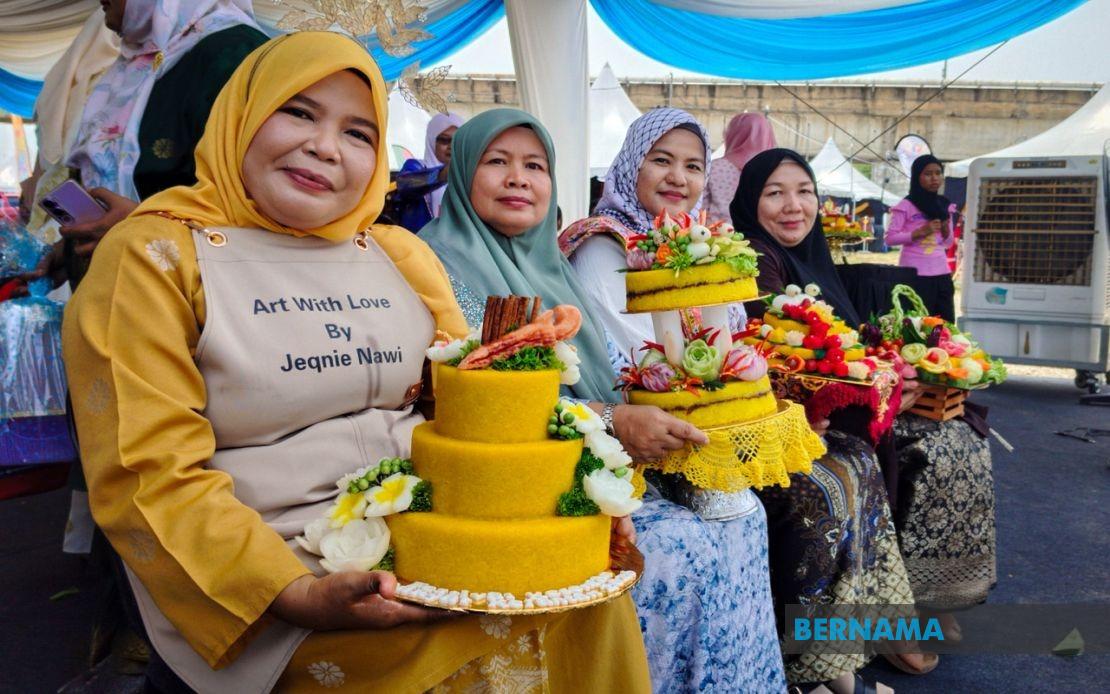
Nortiny Nawi's decision to leave her marketing position at a resort four years ago has blossomed into a flourishing culinary enterprise that now anchors her household income. Operating from her residence in Kampung Gong Cokoh in Pasir Puteh, the 46-year-old has tapped into a growing niche market for decorative pulut kuning arrangements, the vibrant turmeric-infused glutinous rice delicacy that holds deep cultural significance across Malaysia's East Coast.
The transformation of her long-standing passion into a sustainable livelihood reflects broader economic shifts in rural Malaysia, where traditional skills and artisanal crafts increasingly offer viable alternatives to conventional employment. Nortiny's trajectory demonstrates how cultural food traditions can be elevated and monetised in ways that preserve their authenticity while meeting contemporary demand for elaborate table presentations at significant social gatherings.
Demand for her creations has accelerated substantially, with bookings arriving almost daily. Each arrangement commands a price between RM100 and RM280, determined by the weight of glutinous rice used and the intricacy of designs customers commission. This pricing structure suggests a market willing to pay premium rates for bespoke, handcrafted items—a phenomenon increasingly observed in Southeast Asia's emerging middle class, which values artisanal products over mass-produced alternatives.
Nortiny's client base spans diverse constituencies across Kelantan, encompassing private individuals organising wedding feasts and birthday celebrations, educational institutions, and government agencies. Her capacity to accept up to six orders daily, contingent on design complexity, indicates both the scalability of her operation within current constraints and the potential ceiling she will reach without expanding her workspace. This production capability places her among serious cottage industry operators rather than hobbyists.
Her culinary journey began decades earlier during adolescence, though serious pursuit only commenced after leaving formal employment. During her resort tenure, she spent leisure moments observing kitchen operations and learning from professional chefs—a form of informal apprenticeship that gradually deepened her technical knowledge. This patient accumulation of skills over years illustrates how exposure and curiosity can eventually crystallise into expert-level competence.
The creative dimension of her work centres on intricate vegetable carving, particularly using white radish to fashion floral embellishments adorning the pulut kuning arrangements. Her festival-winning submission—an eight-kilogramme creation showcasing elaborate radish carvings—earned top prize at the Kelantan Folk Arts Festival in Tok Bali, validating her artistic credentials within her professional community and providing market validation beyond customer testimonials.
The operational challenges Nortiny navigates reveal the demanding realities of artisanal food production. Unlike confectionery items that tolerate advance preparation and refrigeration, pulut kuning demands same-day preparation conducted on a compressed timeline. Her typical workday commences at 3 am, beginning with steaming the glutinous rice, followed by kneading, cooling, and shaping phases. This punishing schedule demands physical stamina and unwavering commitment that transcends standard employment obligations.
Despite the exhausting routine, Nortiny attributes sustained motivation to her profound attachment to the craft itself. Customer satisfaction and compliments regarding her work generate psychological rewards that financial compensation alone cannot provide. This intrinsic motivation distinguishes passionate entrepreneurs from those pursuing ventures purely for income generation, often correlating with business longevity and quality standards that resist compromise during periods of high demand.
Her growth trajectory positioning the business for expansion into larger premises reflects confidence in sustained market appetite for her offerings. This expansion impulse suggests ambitions extending beyond subsistence-level income toward genuine enterprise development. Scaling operations could involve hiring assistants, increasing production capacity, and potentially developing branded product lines or catering services for institutional clients.
Nortiny's success story carries implications for rural economic development policy throughout Malaysia, particularly in states like Kelantan where agricultural livelihoods face structural pressures. Her experience demonstrates how traditional culinary skills, when combined with entrepreneurial initiative and quality focus, can generate meaningful employment without requiring migration to urban centres. This retention of talent and economic activity within rural communities strengthens local economies while preserving cultural practices embedded in food traditions.
The broader significance extends to understanding how women in provincial Malaysia increasingly construct economic independence through skills-based enterprises. Her entry into business ownership through cultural craftsmanship rather than formal credentials reflects alternative pathways to economic empowerment available to those positioned outside conventional employment hierarchies.

