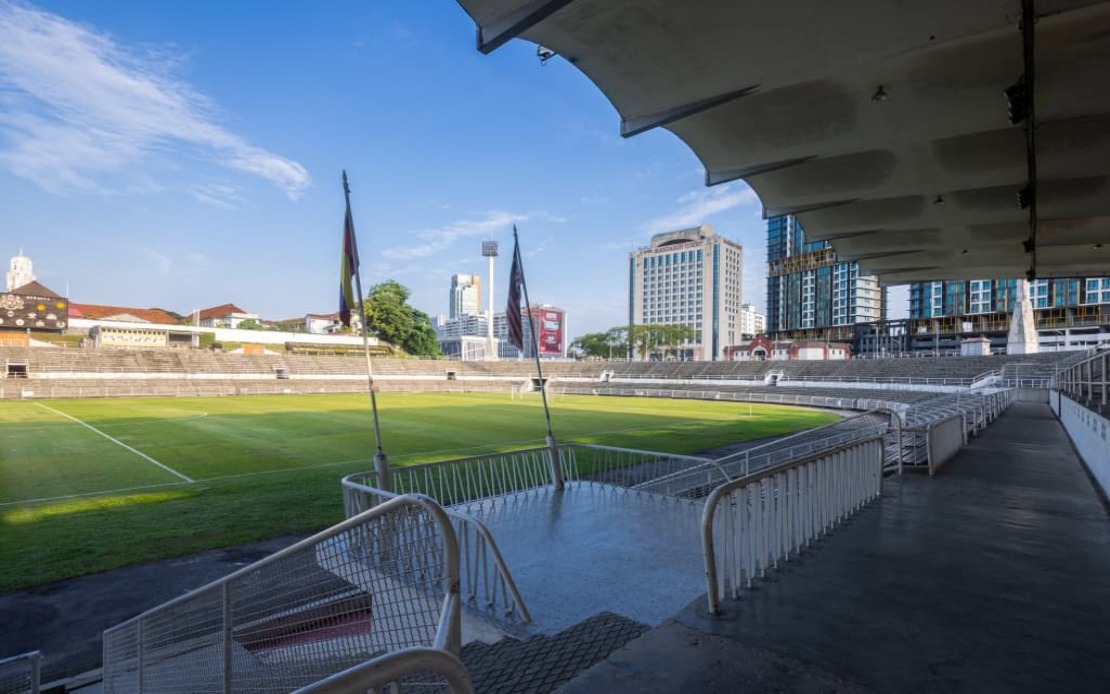
When Tunku Abdul Rahman Putra Al-Haj proclaimed "Merdeka!" seven times at Stadium Merdeka on August 31, 1957, those words transcended a ceremonial moment—they ushered in a new nation freed from colonial subjugation. Nearly seven decades later, that revolutionary spirit persists, though its physical expression has relocated. Today, Dataran Putrajaya hosts the nation's grandest independence commemoration, embodying Malaysia's transformed landscape and forward-looking identity while maintaining connection to the foundational sacrifice that independence represents.
The migration of National Day celebrations from Stadium Merdeka to Putrajaya reflects far more than administrative convenience. It charts Malaysia's own narrative arc—from the colonial-era stadium where independence was declared, through Dataran Merdeka in the city centre, to Putrajaya, the administrative nerve centre established in 1995 as Malaysia's federal capital. This geographical progression encapsulates the nation's evolution from anti-colonial struggle to developmental achievement, each venue serving as a physical marker of a distinct era in the Malaysian journey.
Putrajaya's role as host venue has solidified significantly. This year marks the tenth occasion the administrative hub has hosted the national-level celebration, having previously served this purpose in 2003, 2005, 2018, 2019, 2020, 2021, 2023, 2024, and 2025. The Cabinet's April 2025 decision to designate Putrajaya as the permanent venue for national-level National Day celebrations through 2027 suggests this arrangement is no longer temporary but represents an intentional recalibration of how Malaysia commemorates its founding moment.
Yet this venue transformation raises legitimate questions about intergenerational understanding. How might younger Malaysians, divorced from direct connection to Stadium Merdeka's symbolic weight, internalize the magnitude of the independence struggle? Academics addressing this concern argue that the shift need not diminish historical memory. Prof Dr Sarjit Singh Gill, Chairman of the National Unity and Progressive Society Cluster at the Malaysian Professors Council and Professor of Anthropology and Sociology at Universiti Putra Malaysia, contends that the two locations function as complementary rather than competing historical symbols. Stadium Merdeka evokes particular resonance among Malaysia's eldest citizens—those aged 70 and above who retain lived memories or family narratives of independence—while Putrajaya represents a purposefully designed administrative centre embodying the nation's technological and developmental aspirations.
For continuity of patriotic feeling across generational divides, Prof Gill identifies two indispensable elements that must anchor every National Day observance. First, celebrations must explicitly acknowledge the sacrifices and diplomatic acumen of founding leaders who secured independence through negotiation and consensus rather than violent rupture—a distinctly Malaysian pathway to sovereignty. Second, they must celebrate the nation's racial and religious diversity as fundamental to Malaysia's identity, reinforcing unity across lines of ethnicity and faith. His own participation in the 1990 "Berjaya" parade underscores his conviction that young people's active involvement remains essential for cultivating authentic, durable patriotism rather than ceremonial obligation.
Putrajaya's selection carries compelling practical advantages beyond symbolic value. The Event Management and Innovation Unit of the Management Services Division at the Ministry of Communications emphasizes that modern infrastructure and accessibility constitute primary reasons for Putrajaya's continued selection. The federal capital's connectivity through the Mass Rapid Transit network, water taxi services, and shuttle bus networks provides superior alternatives to private vehicle dependency, facilitating logistical management for the tens of thousands who attend. This accessible architecture democratizes participation, enabling Malaysians across economic strata to access the celebration without the congestion and pollution associated with Stadium Merdeka's downtown location.
The thematic architecture of contemporary celebrations also attempts to bridge historical memory and future orientation. The 2026 National Day and Malaysia Day theme—"Malaysia MADANI: Kesejahteraan Dinikmati" (Malaysia MADANI: Enjoying Prosperity)—deliberately illustrates the progression from independence struggle to prosperity-building through national development and population welfare. This framing positions independence not as a concluded historical event but as a continuous project requiring each generation's commitment. Rather than nostalgia alone, the celebration invites participants to consider their role in sustaining and enriching the independence that predecessors won.
Attracting younger Malaysians requires more than rhetorical frameworks; it demands experiential engagement grounded in contemporary sensibilities. This year's celebration incorporates creative and technological elements designed explicitly for postmodern audiences. Performances such as "Gema Inovasi MADANI" (Echoes of MADANI Innovation) and "Rentak MADANI, Paluan Tradisi" (MADANI Rhythms, Traditional Beats) blend musical innovation with cultural roots. A particularly striking visual element involves 1,500 schoolchildren forming human graphic formations, directly incorporating youth as active participants rather than spectators. These compositional choices acknowledge that younger Malaysians process patriotism differently than their predecessors, requiring sensory and participatory dimensions beyond traditional ceremonial formats.
Personal testimonies illustrate how venue transformation shapes individual engagement with national commemoration. Muhammad Nasrul Nasir, a 30-year-old Administrative Assistant in Finance at the Federal Territories Department, exemplifies this generational bridge. His attendance at last year's Dataran Putrajaya celebration with family and friends generated what he describes as meaningful, lasting memory, particularly through witnessing skydiving performances—a spectacle absent from earlier Stadium Merdeka-era celebrations. Significantly, his engagement has deepened beyond passive spectatorship; this year he participates in the parade as a representative of his agency, transforming from audience member to active celebrant. This progression from observer to participant suggests that accessible, well-conceived venues and contemporary performance elements successfully cultivate deeper patriotic investment.
Muhammad Nasrul's reflection on the celebration's role in reinforcing awareness of past heroes and their sacrifices demonstrates that venue change need not diminish historical consciousness. Rather, when celebrations incorporate both reverent recognition of independence pioneers and contemporary cultural expressions, they invite younger generations to feel themselves part of a continuous national project. The spectacle and accessibility of Putrajaya's celebrations do not erase Stadium Merdeka's historical significance; instead, they create psychological and physical space where historical memory and contemporary aspiration coexist.
Looking forward, Malaysia faces the challenge of maintaining intergenerational patriotic coherence as demographic reality ages founding-era witnesses into history. Putrajaya's infrastructure, technological integration, and accessibility position it well as a permanent celebration venue. Yet the conceptual work of connecting youth participation to historical struggle requires constant reinforcement. As long as celebrations explicitly honour founding leaders' diplomatic achievements, celebrate the nation's diversity as foundational strength, and invite youth into active ceremonial roles, the venue's location becomes secondary to the patriotic substance being transmitted.
The journey from Stadium Merdeka's historic cry of independence to Putrajaya's contemporary celebrations does not represent abandonment of historical memory but rather its maturation and adaptation. Each generation must discover independence's meaning within its own contemporary context. Younger Malaysians engaging with National Day at Putrajaya—experiencing accessible transportation, innovative cultural performances, and opportunities for direct participation—may internalize patriotism differently than their predecessors, but no less authentically. The spirit that animated Tunku's declaration persists not through unchanging ritual but through deliberate, thoughtful reimagining of how Malaysia articulates its founding promise and future aspirations to each emerging generation.

