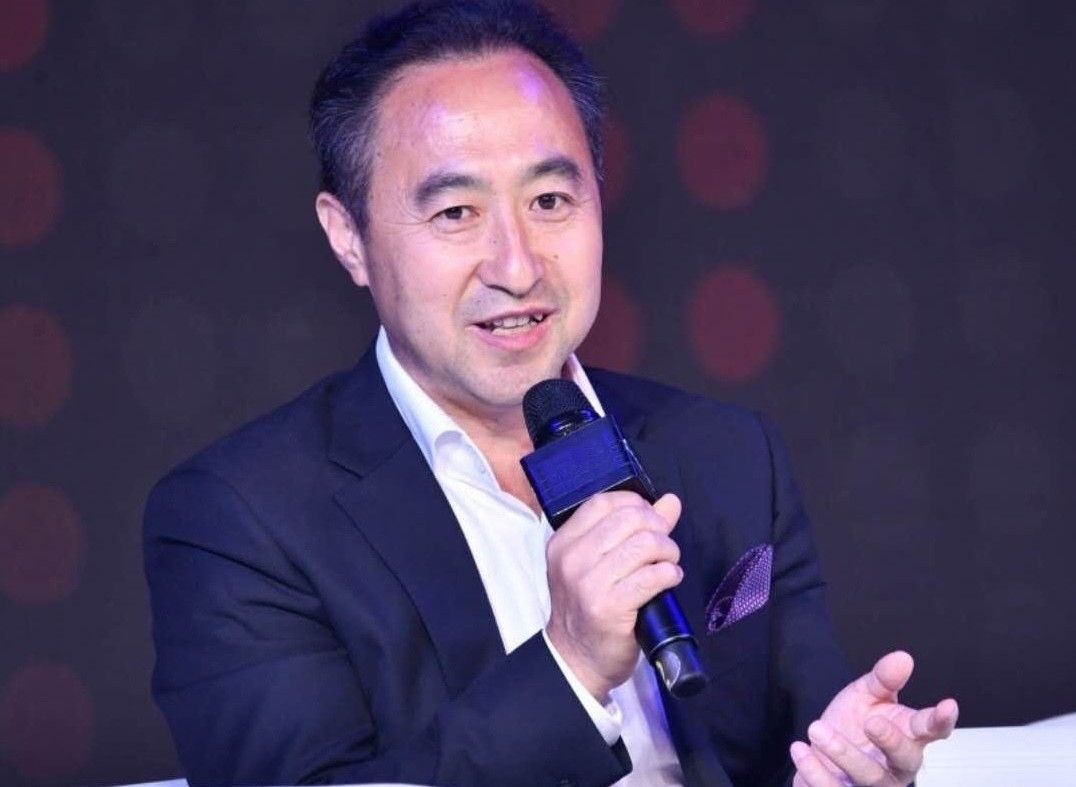
CJ Wang's journey from provincial schoolteacher to billionaire industrialist traces an unlikely arc through the evolution of consumer technology in Asia and beyond. The 55-year-old Chinese entrepreneur, who abandoned an academic career in 1994 to pursue his engineering ambitions, has assembled a corporate empire worth US$10.4 billion through a combination of pioneering innovation and strategic acquisition. His story offers a distinctive perspective on how emerging-market entrepreneurs can compete globally, a lesson particularly relevant for Southeast Asian business leaders navigating cross-border expansion.
Wang's early life in Yantai, a port city in Shandong province, provided the formative experience that would shape his entrepreneurial vision. Growing up, he participated in the decidedly unglamorous but essential task of preparing soy milk—the cornerstone of Chinese breakfast culture—by manually operating his uncle's large stone mill alongside household chores. This childhood immersion in a repetitive, labour-intensive process planted the seed for what would eventually become his defining contribution to consumer appliances. Rather than viewing the task as merely a domestic necessity, Wang's engineering mindset recognised an opportunity to mechanise and industrialise a process that millions across Asia performed daily. This ability to identify friction points in everyday life and imagine technological solutions would become his signature approach to business.
After completing his electrical engineering degree at Beijing Jiaotong University, Wang followed the conventional path expected of someone from his background, entering the teaching profession like his parents before him. However, the constraints of classroom work increasingly chafed against his ambitions. In a recent interview with Time—his first with international media—Wang reflected on this period with candour, explaining that teaching represented family tradition rather than personal calling. He harboured grander aspirations, a desire to build something substantial and chart an independent course rather than inhabit a predetermined role. This tension between filial duty and entrepreneurial hunger ultimately resolved itself decisively in 1994 when Wang resigned from his teaching position to pursue his engineering passion full-time.
The timing of Wang's entrepreneurial leap proved fortuitous. With a deep conviction that soy milk and fried dough sticks would remain indispensable components of Chinese breakfast culture, he dedicated himself to perfecting an electric soy milk maker. While his initial prototype fell short of commercial polish, it represented a genuine technological breakthrough—the first machine of its kind anywhere in the world. That same year, Wang established Joyoung, the kitchen appliance company that would serve as his primary wealth generator for the next quarter-century. The company's growth trajectory was remarkable: by 2004, Joyoung had sold over one million soy milk makers, and the brand gradually expanded its product portfolio to encompass blenders, rice cookers, and other affordable, dependable household appliances that resonated with Chinese consumers.
For more than twenty years, Wang concentrated on building Joyoung into a market-leading appliance manufacturer within China, establishing the company on the Shenzhen exchange. However, by the late 2010s, his strategic horizon had expanded considerably. Wang recognised that while Joyoung commanded respect domestically, the brand possessed virtually no footprint in Western markets where household appliance consumption represented an even larger commercial opportunity. Rather than attempting to build brand awareness and distribution infrastructure from zero in unfamiliar territories, Wang identified a more efficient path: acquiring an established Western player with proven market traction. His target became SharkNinja, an American home appliance company that had already cultivated a substantial following through innovative vacuum cleaners and kitchen blenders.
Wang's acquisition of SharkNinja through his private equity vehicle in 2017 represented a sophisticated business manoeuvre that extended beyond simple financial engineering. His analysis of SharkNinja's operations revealed significant untapped potential alongside considerable limitations. While the company's product quality and design impressed him, Wang identified several critical weaknesses: a relatively constrained product range compared to the appliance market's full spectrum, a marketing approach excessively dependent on traditional television infomercials and chronically underdeveloped in emerging digital channels, and manufacturing reliance on a small cohort of Chinese suppliers that constrained operational flexibility. Crucially, Wang persuaded the company's existing chief executive Mark Barrocas to remain in leadership, signalling his respect for the company's existing management culture while positioning himself to introduce operational improvements from Joyoung's playbook.
Under Wang's stewardship and through the structural framework of JS Global Lifestyle Co.—his holding company that went public in Hong Kong in 2019—SharkNinja underwent a comprehensive operational transformation. The company broadened its product offerings significantly, modernised its sales architecture to embrace social media platforms and contemporary distribution channels, and elevated its internal research and development capabilities. This infusion of strategic direction and capital created an ideal environment for innovation and rapid scaling. SharkNinja began launching products designed with explicit attention to viral social media potential, particularly on platforms like TikTok where user-generated content drives adoption among younger demographic cohorts. The company's organizational structure evolved to encompass two primary brands: Shark, focused on vacuum cleaners and beauty products, and Ninja, concentrated on kitchen appliances—a portfolio architecture that facilitated targeted marketing and brand positioning.
The commercial fruits of this transformation became increasingly evident throughout the 2020s. SharkNinja's direct listing on the New York Stock Exchange in 2023 marked a watershed moment, establishing the company as a publicly traded giant in the American home appliance sector. Wang's stake in SharkNinja remained substantial, comprising approximately 35% ownership as of May 2026, while his holding in JS Global Lifestyle represented 52% of that publicly listed entity. These positions, combined with various other investments, contributed to Wang's US$10.4 billion net worth according to Bloomberg's billionaires index as of August 2026. In 2024, Wang earned recognition as Hong Kong's second-highest-paid director, receiving a total compensation package exceeding HK$520 million, reflecting both his corporate positions and the significant value he has created for stakeholders.
Wang's personal profile remains notably understated for someone of his considerable wealth and influence. Colleagues and associates describe him as soft-spoken and substantially private, characteristics that have allowed him to operate largely outside the celebrity entrepreneur spotlight that characterises many business personalities. His extracurricular interests appear modest: golf and premium Macallan whisky represent documented pursuits, suggesting a preference for quality and refinement rather than ostentatious display. However, Wang recently departed from his customary reticence to grant an extended interview to Time magazine, his first substantive conversation with international media. This strategic shift reflects conscious calculation rather than personality change, driven by broader geopolitical considerations affecting Chinese entrepreneurs and their American investments.
Wang's decision to publicise his narrative proactively responds to the intensifying scrutiny surrounding Chinese investment and business interests in the United States. As US-China trade tensions have escalated and political suspicion of Chinese capital and influence has deepened, Wang recognised that his continued silence invited potentially damaging speculation about his background, motivations, and business practices. By positioning himself ahead of this curve and controlling the discourse around his own story, Wang aims to neutralise unfounded assumptions and establish a coherent public record. In his interview, he articulated this rationale explicitly, observing that little substantive information about him existed in the public domain and that proactive transparency might mitigate unnecessary conjecture. This approach reflects sophisticated understanding of the contemporary geopolitical environment in which Chinese entrepreneurs must now operate when pursuing significant American investments and business holdings.
Wang's trajectory offers instructive lessons for Southeast Asian entrepreneurs contemplating global expansion strategies. His willingness to abandon conventional career progression in pursuit of a specific technological vision, combined with his pragmatic acquisition strategy rather than organic market entry, demonstrates how emerging-market innovators can compete against established Western incumbents. The transformation of SharkNinja from a television infomercial company into a digitally-native, socially-integrated consumer brand under Chinese ownership suggests that capital and expertise flowing from Asia can enhance rather than diminish the quality and market relevance of American consumer products. However, Wang's increasingly public posture also highlights the political complexities that now accompany success at the intersection of Chinese entrepreneurship and American commerce, a challenge that regional business leaders will increasingly confront.

