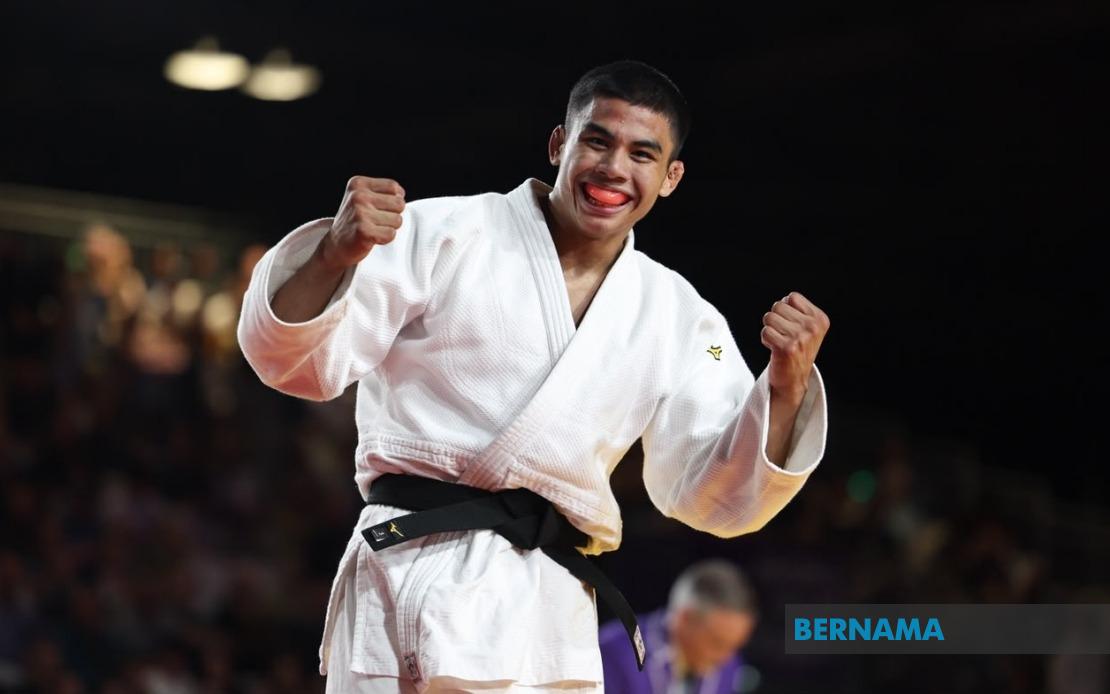
Amir Daniel Abdul Majeed has carved his name into Malaysian sporting history as the nation's first judoka to capture Commonwealth Games gold, defeating South Africa's Timothy Meuwsen in the under-81 kilogramme final at Glasgow 2026. The 21-year-old's victory at the Scottish Event Campus delivered Malaysia's eighth gold medal at these Games, representing a watershed moment for the country's judo programme and validating a talent that has been nurtured since childhood.
What sets Amir Daniel's triumph apart from merely athletic accomplishment is the thread of psychological resilience that has characterised his life since early childhood. His mother, Yeoh Suatkhim, traces this steely determination to an incident when her son was just four years old. The young Amir Daniel possessed a habit of thumb-sucking that proved resistant to conventional parenting approaches. Rather than continuing to struggle, Yeoh recognised an opportunity to harness her son's natural inclination toward goal-setting. She presented him with a simple bargain: a desired storybook in exchange for breaking the habit permanently. The result was immediate and decisive. Within a single day, Amir Daniel had abandoned thumb-sucking entirely, prioritising the reward of a book over a deeply ingrained behaviour.
For Yeoh, this childhood episode encapsulated a fundamental truth about her son's character that would persist into adulthood. She observed that whenever Amir Daniel committed to achieving something, he possessed an almost unflinching dedication to its completion. This quality transcended mere willpower or momentary motivation; it represented a deeper psychological orientation toward sustained effort and goal realisation. In describing her son's approach, Yeoh emphasises that not every child possesses the capacity for such unwavering commitment, suggesting that Amir Daniel's competitive advantage stemmed partly from innate temperament and partly from familial values emphasising discipline and perseverance.
Amir Daniel's introduction to competitive sport occurred at age five when he began training in judo under national coach Md Nashriq Md Nassir. This early exposure proved transformative, providing structure and mentorship during formative years. Coach Nashriq's influence extended far beyond technical instruction on the mat; he emerged as a trusted custodian of the athlete's broader development. Yeoh credits the coach with cultivating discipline while safeguarding Amir Daniel's educational commitments, a particularly significant achievement given the demanding nature of elite athletic training.
The relationship between athlete and coach involved a particular arrangement whereby Md Nashriq would establish agreements with Amir Daniel regarding academic performance, particularly before major examinations. Once these agreements were formalised, Amir Daniel's commitment to honouring them proved absolute. Yeoh notes with gratitude that her son's coach functioned as an architect of character development rather than merely a technical specialist, ensuring that pursuit of sporting excellence never came at the expense of intellectual growth or personal integrity. This holistic approach reflects an increasingly important philosophy in Malaysian sports development, where concerns about young athletes sacrificing education for athletic advancement remain valid.
Amir Daniel's pathway to Glasgow 2026 extended through Birmingham 2022, where he captured a bronze medal in the under-73 kilogramme category. That earlier Commonwealth Games experience provided invaluable exposure to major international competition and helped calibrate expectations for future campaigns. His progression from bronze to gold across successive Games demonstrates systematic improvement and the capacity to elevate performance under pressure—hallmarks of genuine sporting talent that transcends momentary achievement.
The Glasgow triumph assumes particular significance for Southeast Asia and the broader Commonwealth, where judo remains comparatively underdeveloped relative to other combat sports like badminton and wushu. Malaysia's investment in judoka development has historically yielded modest returns internationally, making Amir Daniel's breakthrough achievement a validation of recent programme initiatives and coaching infrastructure. His success creates a potential catalyst for increased grassroots participation and may attract greater financial investment toward talent identification and athlete support systems across Malaysia's judo federation.
Yeoh's philosophy regarding childhood development emphasises early engagement with structured physical and intellectual activities. She deliberately exposed both her eldest child, Nur Yasmeen, and Amir Daniel to diverse experiences designed to maintain engagement and broaden experiential foundations. This approach reflects emerging research suggesting that athletic excellence often correlates with multifaceted childhood experiences rather than narrow, single-sport specialisation. Her parenting model provides a template that Malaysian parents and sporting organisations might consider when developing young talent in an era where overdevelopment and burnout increasingly concern experts.
Looking beyond Glasgow, Amir Daniel harbours aspirations toward Olympic competition, a natural progression for an athlete now commanding respect at Commonwealth level. Yeoh articulates her family's vision of continued progress while maintaining the balanced approach that has characterised her son's journey. She envisions Amir Daniel not only pursuing higher international objectives but also contributing to the development of fellow judokas, suggesting ambitions transcending purely personal achievement. This commitment to broader community benefit reflects values that distinguish truly exceptional athletes from those merely chasing medals.
The Commonwealth Games success arrives at a propitious moment for Malaysian judo. As regional sporting talent increasingly internationalises and competition intensifies, breakthrough performances at major competitions become recruitment tools for younger athletes considering career paths. Amir Daniel's achievement provides concrete proof that Malaysian judokas can compete successfully on the Commonwealth stage, potentially inspiring the next generation of practitioners. His journey from childhood determination through strategic mentorship to international gold demonstrates that systematic athlete development, combined with individual psychological resilience, can produce results rivalling more established sporting nations.
Amir Daniel's Glasgow 2026 gold medal represents far more than a single athletic accomplishment. It validates a philosophy of education-centred athletic development, demonstrates the transformative power of consistent coaching mentorship, and proves that Malaysian sport possesses both the talent and systems capacity to produce world-class champions. As he contemplates Olympic ambitions while continuing his studies, Amir Daniel embodies the balanced excellence that modern sporting achievement increasingly demands—a fitting legacy for a young champion whose determination was first tested not in a judo dojo but in a four-year-old's promise to his mother.

