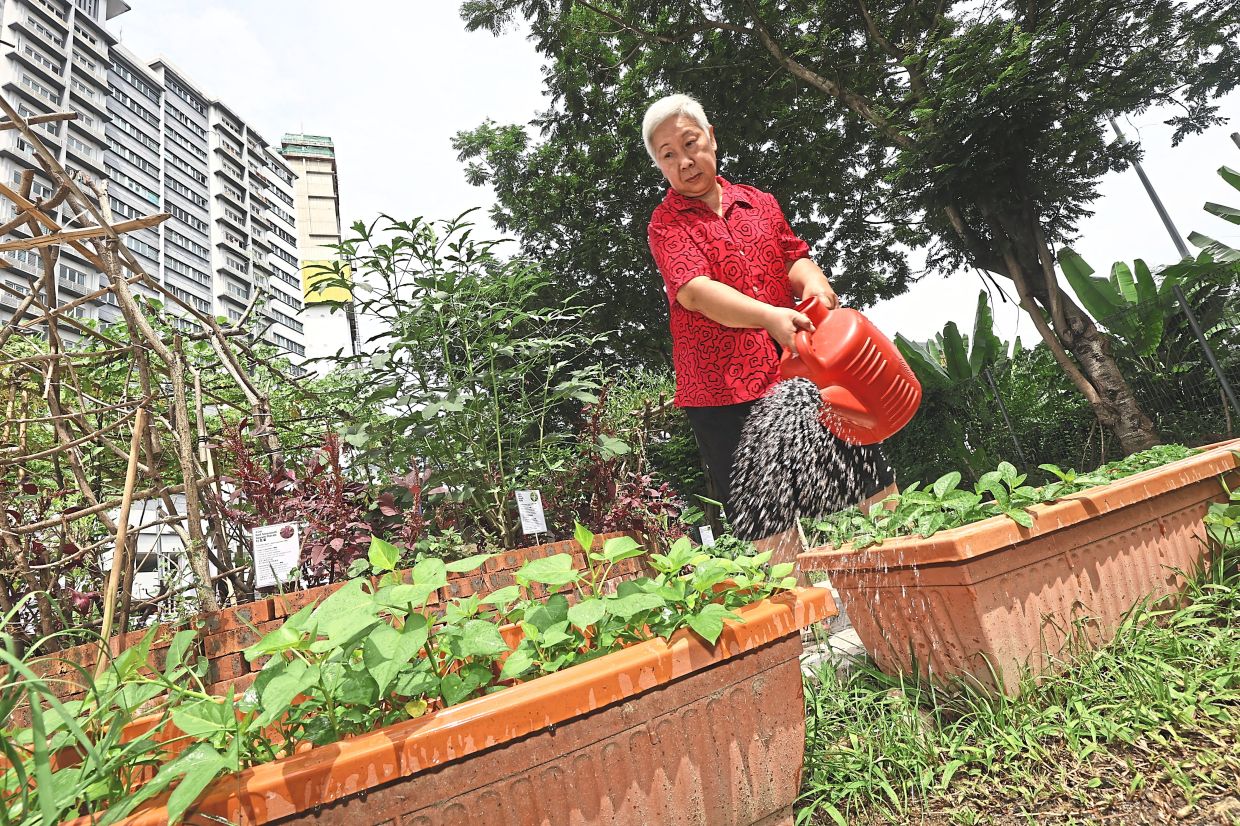
What was once an overgrown, neglected corner has blossomed into a vibrant community asset: the newly launched 1Razak Mansion Food Forest in Kuala Lumpur now stands as a living testament to what collaborative urban development can achieve. The transformation of this patch of abandoned land—located behind 1Razak Mansion and previously choked with untended trees and vegetation—into a carefully cultivated garden brimming with herbs, vegetables, fruit-bearing plants and flowers represents a significant shift in how Malaysian residential communities can address the needs of their ageing populations.
The project, spearheaded by social enterprise PWD Smart FarmAbility with backing from the residential management corporation and active participation from residents themselves, was formally inaugurated recently. At the launch event, Minister in the Prime Minister's Department (Federal Territories) Hannah Yeoh drew attention to a critical demographic reality: approximately 80% of 1Razak Mansion residents are senior citizens, a composition that demands intentional programming designed to support both their physical vitality and psychological health. While the community already offers structured physical activities such as tai chi classes, the minister underscored that mental wellbeing deserves equal priority in planning for elderly populations—a perspective increasingly recognised by public health experts and policymakers throughout Southeast Asia.
For residents like Alice Fernandez, 64, the food forest represents far more than simply a garden. The space addresses multiple dimensions of quality of life simultaneously, functioning as both therapeutic outlet and practical resource. Fernandez explains how the opportunity to tend plants offers purposeful activity that can meaningfully occupy time and, crucially, reduce living expenses through self-harvested produce. Beyond these tangible benefits, she emphasises the psychological value of connecting with nature and cultivating mental peace—luxuries that become precious when confinement to home threatens wellbeing. The contrast with the site's previous incarnation proves striking; the area was once so uninviting, positioned near refuse facilities and devoid of appeal, that residents actively avoided it. Now beautified and accessible, the transformed space has become an attraction that encourages even those with limited mobility to venture outdoors and engage in gentle movement.
Fernandez's engagement reveals how community initiatives can seamlessly integrate into daily routines. Her habit of visiting the food forest after morning jogs, combined with spontaneous maintenance visits during free time, demonstrates the organic participation such projects can inspire. This pattern of behaviour—where residents develop genuine ownership and investment in shared spaces—stands in marked contrast to top-down recreational programming that often fails to generate authentic enthusiasm among beneficiaries.
Behind the scenes, Thieeben Sivabalasingam, 38, played a crucial operational role throughout the project's development phase. Working alongside founder Dr Billy Tang Chee Seng, he managed complex logistics during construction, coordinating material deliveries and overseeing infrastructure installation. His account of witnessing the land transformation—from initial clearing through to the beautifully arranged final garden—captures the scale of effort required. Sivabalasingam's perspective on the project's value emphasises a psychological dimension particularly relevant to elderly populations: the importance of having daily activities that provide purpose and motivation. Beyond nutritional benefits, he recognises that structured, meaningful engagement with the environment can fundamentally improve wellbeing by giving residents reasons to wake with anticipation and invest energy in their immediate surroundings.
The initiative's appeal extends beyond immediate residents. Jenny Wong, 70, and her husband KC Wong, 76, from the neighbouring Razak City Residences, travelled to the launch event expressly to witness the project and explore its potential application within their own community. Their observation that the garden offers simultaneously practical benefits—vegetable cultivation—and emotional rewards through hobby development highlights the multifaceted appeal of such initiatives. KC Wong's explicit hope that similar programmes could be replicated in adjacent residential complexes suggests growing recognition among older residents themselves that community-based projects address genuine needs.
Dr Billy Tang Chee Seng, the 60-year-old founder of PWD Smart FarmAbility, envisions the food forest as merely the foundation for more ambitious community development. Current plans transcend simple food production, encompassing structured educational programmes designed to impart practical skills and formal qualifications to participating residents. Simultaneously, the initiative aims to introduce younger community members to scientific principles and sustainable agricultural methodology, creating intergenerational learning opportunities.
These expansion plans include constructing a central facility to house a kitchen hub, where residents can learn culinary techniques using harvested ingredients, transforming raw produce into prepared meals. The addition of microscopy equipment will enable children to study soil composition and microbial ecosystems, embedding scientific literacy within agricultural activity. Such comprehensive programming reflects a holistic understanding of community development that recognises how food systems can serve as entry points for broader learning and skill acquisition.
The 1Razak Mansion Food Forest exemplifies an emerging model of urban development increasingly relevant to Malaysian cities grappling with rapidly ageing populations and limited green space. By transforming neglected land into productive community assets, the project demonstrates how modest interventions, when thoughtfully designed and community-driven, can generate disproportionate returns in resident satisfaction, public health and environmental stewardship. As Malaysian society continues experiencing demographic shifts toward older populations, such initiatives provide concrete evidence that age-inclusive urban planning need not require massive capital investment—merely vision, coordination and genuine commitment to community wellbeing. The garden's success may well inspire similar transformations across Kuala Lumpur's residential landscape, establishing new standards for how property developers and residential managers can activate underutilised spaces for maximum community benefit.

