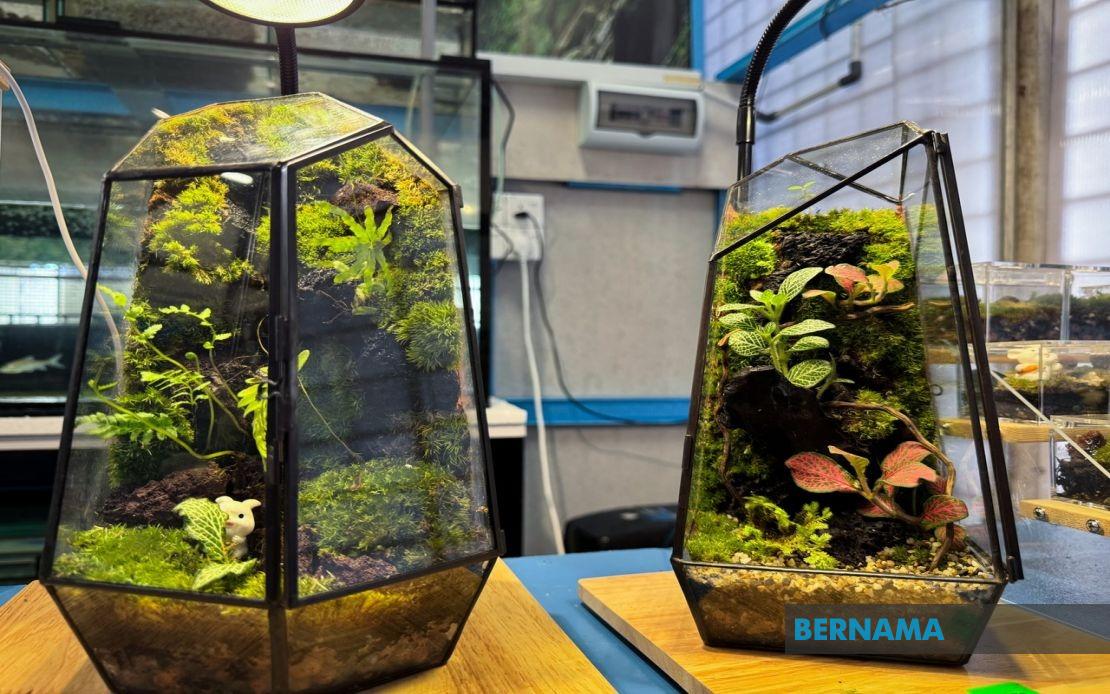
Muhammad Syukur Abdullah's journey into the world of terrariums began not in a classroom or through formal training, but through the simple act of searching YouTube for inspiration. The 21-year-old second-semester Aquaculture Technology Diploma student at Jeli Polytechnic discovered that what started as a casual hobby during his high school years has blossomed into a thriving creative enterprise. By combining recycled glass containers with second-hand materials, he now crafts intricate miniature garden designs that have captured the attention of customers across Malaysia, demonstrating how digital resources and entrepreneurial spirit can transform a passion into a sustainable income stream for young Malaysians.
The Bukit Mertajam native's introduction to terrariums came through watching online tutorials, a method of learning that has become increasingly common among the younger generation seeking to develop new skills outside traditional educational frameworks. After multiple attempts and refinements, he successfully created his first terrarium, an achievement that sparked an enduring fascination with the craft. This initial success prompted him to pursue formal horticultural education, enrolling in the Aquaculture Technology Certificate programme at Jerantut Community College in Pahang in 2022. During his two years there, he accumulated foundational knowledge about plant biology and cultivation techniques that would prove invaluable in ensuring the longevity and health of his creations.
His educational progression continued when he transitioned to Jeli Polytechnic, where he is currently studying for his diploma. However, his learning extended beyond classroom walls when he undertook a five-month industrial training placement at Gardenroad Aquatic in Shah Alam, Selangor. This hands-on experience exposed him to professional-grade terrarium-making methodologies and industry standards, significantly enhancing his technical capabilities and instilling greater confidence in his craft. The combination of academic learning, practical internship experience, and self-directed study through digital platforms demonstrates a multifaceted approach to skill development that increasingly characterizes successful young entrepreneurs in Southeast Asia.
Under Muhammad Syukur's direction, the Green Vista Club was established at Jeli Polytechnic, with guidance from Aquaculture Technology lecturer Zalina Che Manan. The club serves as both a knowledge-sharing platform and a community hub for students interested in plant cultivation and terrarium design. Beyond simply producing merchandise, the club actively engages in educational outreach, including sessions with kindergarten teachers to promote horticultural awareness among young children. This dual focus on commercial production and community education demonstrates a maturity in his approach to business that extends beyond profit maximization to include social contribution.
The financial aspect of Muhammad Syukur's enterprise has evolved substantially since its informal beginnings on social media platforms. His terrariums now command prices ranging from RM10 for basic designs to RM570 for premium creations, with an average monthly production capacity of five to ten units. The pricing structure reflects the complexity and customization involved in each piece, factors that directly correlate with production time ranging from one hour for simpler designs to an entire day for elaborate compositions. His online presence includes active engagement on Facebook Marketplace and a dedicated TikTok account under the handle syukx._., through which he markets his work to a digitally-savvy demographic.
Muhammad Syukur has developed expertise in three distinct terrarium categories, each requiring different technical knowledge and artistic sensibility. Waterless landscapes represent the first category, requiring careful attention to soil composition and plant selection for moisture control. Aquascapes constitute the second type, featuring entirely underwater environments that demand understanding of aquatic plant biology and water chemistry. The third category, paludariums, represents the most technically complex option, incorporating both terrestrial and aquatic elements such as integrated waterfall features. This diversification in product offerings allows him to cater to varied customer preferences and market segments while continuously challenging himself creatively.
The foundational construction of each terrarium involves layering techniques developed through experimentation and professional training. The base comprises clay balls topped with black soil mixed with dry moss, a combination designed to maintain optimal humidity levels while allowing proper water retention for sustained plant growth. Once this foundation is established, Muhammad Syukur begins the design phase, incorporating elements such as wood, stones, and moss to create the desired aesthetic composition. Spiderwood has become his preferred natural material due to its exceptional durability and resistance to mold, critical factors in ensuring terrarium longevity in Malaysia's humid tropical climate.
The plant selection process demonstrates his deep understanding of horticultural requirements within the closed terrarium environment. He typically employs species such as fittonia, various fern varieties, and miniature bonsai specimens, each chosen for their compatibility with high-humidity conditions and slow growth rates appropriate for confined spaces. Customer preferences heavily influence design direction, with available styles encompassing forest-themed compositions, diorama scenes, Japanese-inspired layouts, and Iwagumi stone arrangements. The diorama style has emerged as particularly popular among customers, likely because its fantastical aesthetic appeals to the emotional and imaginative dimensions that draw consumers to miniature garden art.
Quality assurance constitutes an essential phase in Muhammad Syukur's production process, with each completed terrarium undergoing a one to two-week monitoring period before delivery. During this interval, he observes plant adaptation and adjusts environmental conditions as necessary to ensure optimal establishment within the enclosed ecosystem. The long-term maintenance of finished pieces requires customer attention to humidity levels and lighting conditions, with watering typically needed once or twice weekly depending on environmental factors. This after-sales guidance exemplifies a customer-centric business philosophy that builds brand loyalty and encourages repeat purchases through comprehensive support.
Despite his commercial success and growing reputation within terrarium enthusiast circles, Muhammad Syukur confronts the universal challenge faced by young entrepreneur-students: balancing academic responsibilities with business operations. Managing customer orders, production schedules, and delivery commitments while maintaining satisfactory academic performance requires sophisticated time management and prioritization skills. The stress of juggling these dual responsibilities occasionally threatens to compromise either his studies or customer satisfaction, necessitating careful planning to ensure neither aspect suffers neglect.
The geographical constraints of Malaysia's vast territory have imposed limitations on business expansion. Muhammad Syukur has deliberately refrained from offering interstate delivery services due to legitimate concerns regarding product fragility during transit. Terrariums, with their delicate plant compositions and enclosed glass containers, face significant damage risk when transported across long distances on Malaysian roads and highways. This self-imposed boundary, while limiting market reach, reflects a commitment to delivering quality products and maintaining customer satisfaction rather than pursuing rapid growth that might compromise his reputation. Future expansion into interstate markets would require developing specialized packaging solutions or establishing regional distribution partnerships.
Muhammad Syukur's story resonates within the broader context of Malaysia's growing youth entrepreneurship movement and the increasing accessibility of business opportunities through digital platforms. His success illustrates how traditional horticultural knowledge, combined with modern digital marketing and social media platforms, can create viable income streams for young Malaysians still pursuing formal education. The terrarium industry itself represents a fascinating intersection of environmental consciousness, aesthetic appreciation, and agricultural knowledge, appealing to the demographic of urban Malaysian consumers seeking connection with nature within space-constrained residential environments. As he continues his polytechnic studies, Muhammad Syukur embodies the contemporary entrepreneurial student who refuses to compartmentalize learning and business, instead weaving both into a cohesive personal and professional identity.

