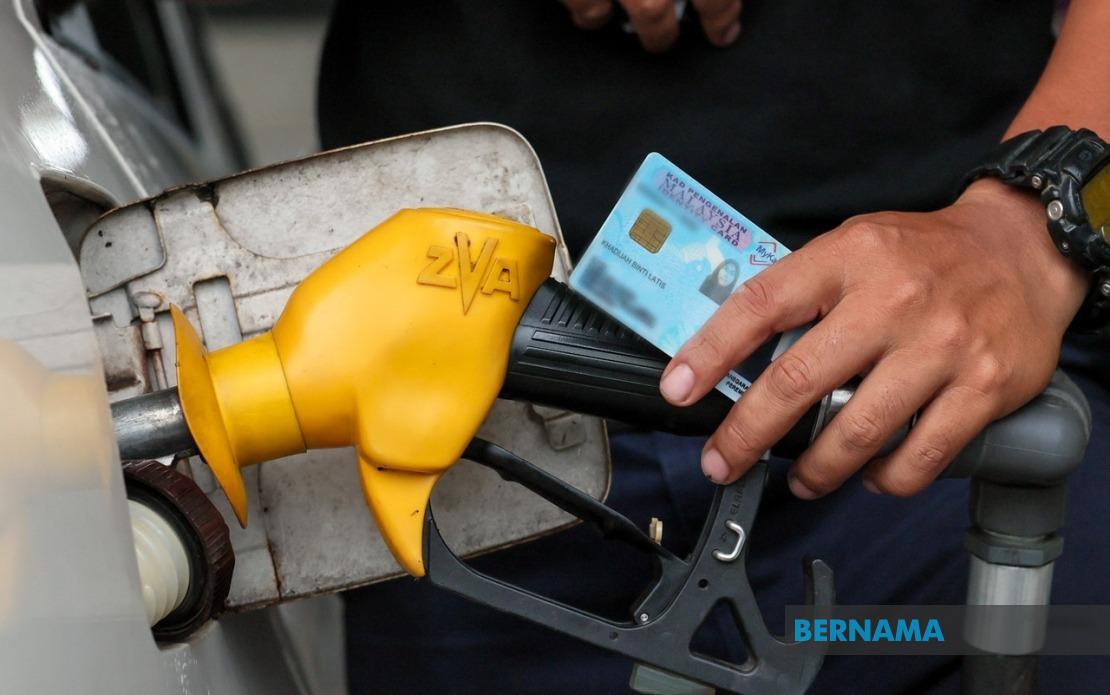
Prime Minister Datuk Seri Anwar Ibrahim announced during the 2026 National Day address in Putrajaya that the government has restored the monthly Budi MADANI RON95 subsidy quota to 300 litres, reversing a previous reduction to 200 litres. The decision takes effect from September 1 and will extend to more than 16 million subsidised fuel users nationwide. Additionally, diesel-powered pickup truck and jeep owners—numbering over half a million—will receive access to up to 400 litres of BUDI Diesel monthly under the same initiative.
The rationale behind this expansion centres on providing households with enhanced flexibility to manage transport expenses, a critical concern in an environment where fuel costs represent a substantial portion of discretionary spending. Herniza Roxanne Marcus, an economics lecturer at the Faculty of Business and Management at Universiti Teknologi MARA Sabah branch, emphasises that the benefit will prove particularly meaningful for households in the B40 and M40 income brackets—those earning below average and moderate incomes respectively—who depend predominantly on personal vehicles for mobility. These groups face an acute vulnerability to fuel price fluctuations because petrol and diesel expenditure consumes a comparatively larger slice of their monthly income compared to higher earners.
Regional geography shapes the urgency of this policy adjustment. In states like Sabah, limited public transportation infrastructure and sprawling distances between residential and commercial centres create genuine reliance on private vehicles for both employment access and routine errands. Marcus elaborates that the extra 100-litre monthly allowance could relieve pressure on fuel spending, freeing up funds that households might redirect toward food security, schooling fees, and other essential expenditures. This ripple effect—where savings in one category enable spending in others—forms a crucial mechanism through which the subsidy expansion addresses cost-of-living pressures beyond the transport sector alone.
While Marcus cautions that the measure should not be interpreted as a panacea that will directly suppress inflation rates, she contends that it serves a meaningful role in constraining transportation cost pressures and diminishing the likelihood that fuel price movements will cascade into broader price increases across the economy. When transport costs rise substantially, logistics companies and delivery services often pass incremental expenses to consumers through higher prices on goods and services; the subsidy quota increase creates a buffer against such transmission. The expansion thus functions as a stabilising mechanism that protects purchasing power by preventing secondary rounds of price escalation.
The policy also reflects a delicate equilibrium between fiscal sustainability and social protection. Marcus notes that the government's capacity to fund subsidies remains bound by overall budgetary constraints, meaning the quota restoration does not necessarily signal dramatically improved government finances. Rather, it demonstrates the administration's willingness to recalibrate subsidy levels in response to shifting global conditions and domestic consumption patterns. The previous reduction in quotas occurred amid volatile international energy markets and geopolitical tensions that threatened global oil supplies; as market conditions stabilise and energy risks moderate, policymakers gain room to reassess what level of support households require.
Real-world testimonials underscore the concrete impact of this decision on working Malaysians. Rozainah Abdul Rahim, a 36-year-old journalist who drives extensively for professional assignments, had struggled to manage her monthly fuel consumption within the 200-litre allowance. Her routine involves daily vehicle use for reporting work combined with weekly travel spanning Port Dickson in Negeri Sembilan and Kuala Lumpur for family obligations. Frequency of quota exhaustion forced her to purchase additional fuel at market rates, eroding the value of the subsidy programme. The restoration to 300 litres addresses her genuine transportation needs and eliminates the financial strain of purchasing unsubsidised fuel mid-month.
The expansion carries particular significance for workers in dispersed employment patterns who cannot rely on mass transit alternatives. Many Malaysians working in industries such as sales, delivery, construction, and field-based services operate schedules and routes that make public transport impractical or impossible. For these workers, the additional fuel quota represents direct relief from cost-of-living pressures that their employment patterns necessarily create. The policy thus acknowledges that Malaysia's economic geography and labour market structures generate heterogeneous transportation demands that uniform public transit systems cannot adequately serve.
From a macroeconomic perspective, the subsidy expansion carries implications for Malaysia's inflation trajectory and household consumption patterns. By preserving real purchasing power among households most sensitive to price changes, the government supports consumer spending capacity at a time when demand-side pressures could otherwise weaken. This becomes particularly important if growth momentum faces headwinds from external factors such as regional trade tensions or global economic slowdowns. Maintaining discretionary spending among B40 and M40 households sustains demand for retail goods and services that employ millions of Malaysians in commerce and hospitality sectors.
The diesel component targeting pickup truck and jeep owners specifically addresses a distinct demographic—small business operators, tradespeople, and self-employed workers whose commercial activities depend on vehicle access. These individuals operate at the margins of the formal economy, generating employment and economic activity without access to large corporate subsidies. The 400-litre monthly diesel quota recognises their role in the broader economy and ensures that rising fuel costs do not force reductions in their productive capacity or service availability.
Looking forward, the quota expansion demonstrates that Malaysia's approach to fuel subsidies remains responsive to household welfare concerns rather than rigidly ideological. Future adjustments will likely depend on evolving global energy prices, domestic fiscal performance, and assessment of how effectively the subsidy programme targets genuine need. The government appears committed to using subsidies strategically to protect vulnerable populations rather than maintaining uniform rates regardless of economic circumstances. This targeted approach allows policymakers to sustain social protection while preserving space for other budgetary priorities such as healthcare, education, and infrastructure investment.

