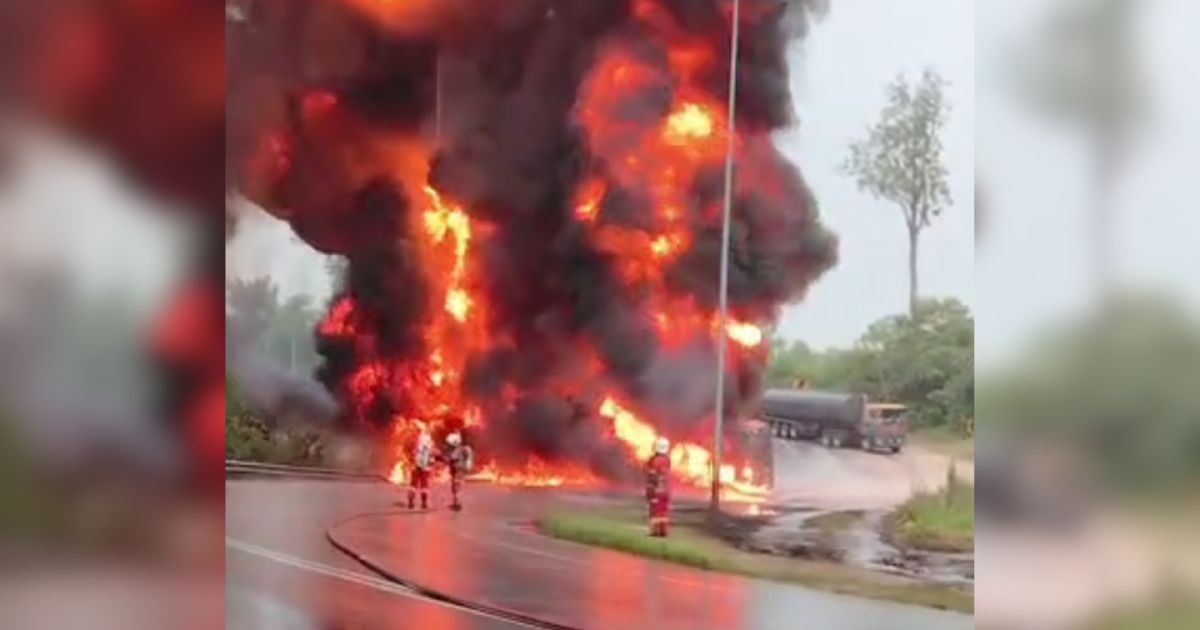
A fuel tanker driver involved in a deadly collision on the Temerloh-Triang highway has been taken into police custody as authorities investigate circumstances surrounding the incident that resulted in the deaths of a mother and son. The remand order, granted for a four-day period, will enable investigators to gather and examine evidence from the accident scene and conduct detailed interviews with the detained driver.
The tragedy unfolded at kilometre marker 9 along Jalan Temerloh-Triang near Kampung Lebak, a junction point in Pahang that experiences regular commercial traffic due to its proximity to industrial and agricultural zones. This particular stretch of road has been the site of numerous accidents over the years, many involving large commercial vehicles navigating the relatively narrow highway during peak periods. The heavy presence of fuel tankers and other freight lorries along this route reflects the region's importance as a logistics corridor connecting the interior districts with coastal centres.
The deaths represent a significant tragedy for the local community and have prompted official attention to road safety protocols on rural highways. Fatal collisions involving commercial vehicles often trigger broader discussions about driver fatigue regulations, vehicle maintenance standards, and enforcement of weight restrictions. Each such incident raises questions about whether existing safeguards adequately protect civilian motorists from the inherent risks posed by heavy vehicles on shared roadways.
The remand period granted to the driver allows police to conduct a thorough investigation into multiple potential contributing factors. Investigators will examine whether mechanical failure of the tanker might have played a role, inspect maintenance records, and review the driver's work schedule to determine if fatigue was a factor. Witness statements from other road users and residents living near the accident site will be compiled to establish an accurate sequence of events leading to the collision.
For families affected by fatal road accidents in Malaysia, the investigation and remand process represents the beginning of what is often a prolonged legal journey. Beyond the immediate shock of losing loved ones, families must navigate the criminal justice system while simultaneously dealing with insurance claims and potential civil suits. The remand of the driver does not automatically indicate guilt but rather reflects the magistrate's assessment that continued custody is necessary to prevent tampering with evidence or potential flight.
The Temerloh-Triang corridor serves as a vital transportation route for Pahang's interior regions, connecting agricultural communities with markets and industrial areas with distribution hubs. The regular movement of fuel tankers and other hazardous material vehicles along this highway underscores the necessity of stringent safety oversight. Regulatory bodies tasked with monitoring commercial vehicle operations face the perpetual challenge of balancing transportation efficiency with public safety imperatives.
This incident is likely to reignite discussions within Malaysian transport and highway management circles regarding adequate infrastructure improvements for routes regularly traversed by heavy vehicles. The road authority may reassess signage, speed enforcement mechanisms, and lane markings at problematic junctions. Additionally, the case may prompt a review of driver training requirements, particularly for operators of large tankers carrying hazardous materials.
The circumstances surrounding the collision will be scrutinized by transport safety advocates and road user groups, who have long advocated for stricter enforcement of existing regulations governing commercial vehicle operations. Speed limiters, mandatory rest breaks, and regular vehicle inspections are measures often cited as essential safeguards. However, implementing such measures consistently across a large transportation sector remains a persistent challenge for authorities.
As the investigation proceeds, the public attention focused on this case may have beneficial spillover effects for road safety awareness more broadly. Media coverage of fatal accidents, while sometimes criticized for sensationalism, does contribute to public consciousness about risks associated with highway travel and the importance of defensive driving practices. For ordinary motorists sharing roads with commercial vehicles, such incidents serve as grim reminders of the vulnerability inherent in mixed-traffic highway environments.
The four-day remand period will likely be extended if investigators determine that additional time is necessary to complete their inquiries. Police statements released during or after the investigation may provide crucial information about the accident's cause, whether technical failure, human error, or environmental factors contributed most significantly to the tragedy. These findings will be important not only for the immediate legal proceedings but also for informing future safety policy discussions.
The loss of life in this collision represents a human tragedy that extends far beyond legal technicalities and statistical measures. The mother and son killed in the accident were members of the community with families, friends, and networks of people now affected by their sudden deaths. Their passing serves as a sobering reminder of the serious consequences that can result from lapses in vehicle maintenance, driver vigilance, or safety oversight on Malaysian highways.

