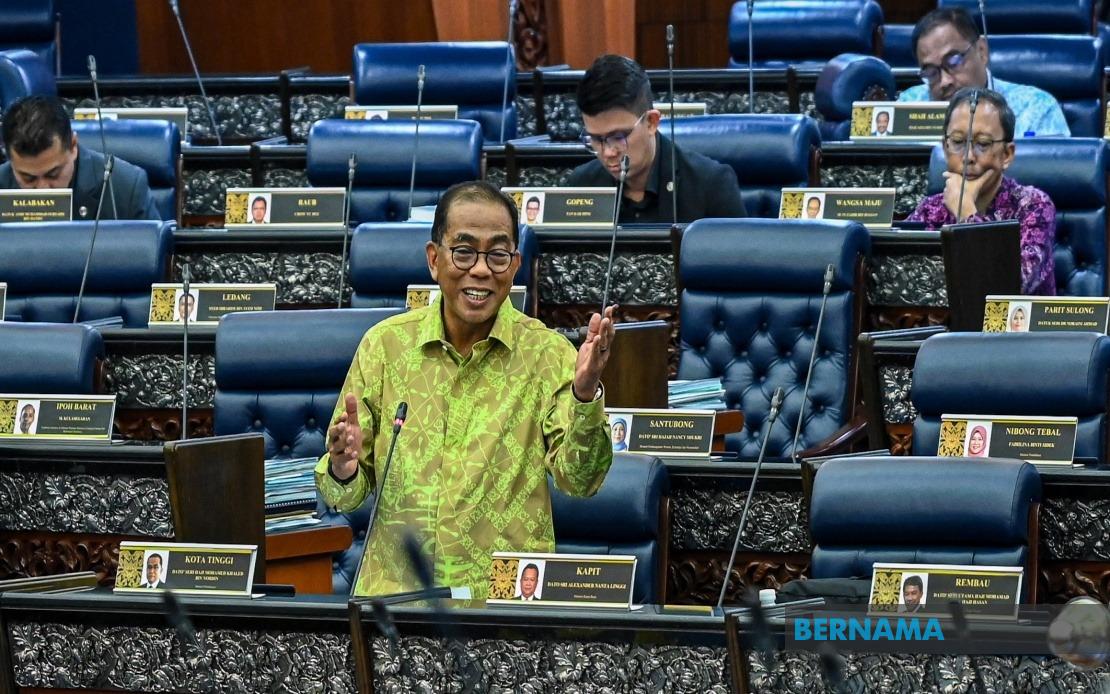
A comprehensive investigation into the fatal grenade explosion that killed two Malaysian Armed Forces personnel at Hobart Camp Firing Range in Gurun, Kedah, is expected to reach its conclusion by July 23, Defence Minister Datuk Seri Mohamed Khaled Nordin announced in Parliament this week. The incident, which occurred on June 16 during a Combat Enhancement Training exercise, claimed the lives of Lance Corporal Siti Khadijah Sungip and Sergeant Norazmi Abu Bakar, who sustained catastrophic injuries inside a training bunker and were pronounced dead en route to Sultan Abdul Halim Hospital in Sungai Petani.
The defence ministry's approach to the investigation reflects the complexity and sensitivity of the tragedy. Immediately after the incident occurred at approximately 10.57 am, the military established a Board of Inquiry that convened the following day. This initial investigation proceeded through established command channels, with findings first reviewed by 2nd Division Headquarters and subsequently examined by Army Western Field Command Headquarters. When the ministry received the detailed report on July 13, however, senior officials determined that the evidence required further substantiation to withstand scrutiny and support definitive conclusions about what triggered the fatal explosion.
Mohamed Khaled explained that the decision to extend the investigation timeline was deliberate and necessary. Rather than rushing to conclusions, the ministry determined that additional witness testimony would strengthen the board's findings and ensure all technical dimensions of the incident had been comprehensively evaluated. This measured approach seeks to answer not only what happened, but to establish the precise sequence of events, identify any procedural breakdowns, and rule out various potential causes. The emphasis on thorough examination reflects an institutional commitment to accountability when military lives are lost during training operations.
The tragedy underscores persistent concerns about safety protocols in live-fire and explosive training exercises across the region. Training accidents involving grenades and other ordnance represent a recurring hazard in military operations globally, but their occurrence within Malaysia's Armed Forces has prompted serious questions about risk management and supervisory procedures. The fact that an experienced supervising instructor was killed alongside a junior soldier suggests the explosion occurred under circumstances that may have overwhelmed standard safety measures, pointing to either an equipment malfunction or an unexpected procedural deviation.
In response to parliamentary scrutiny from Datuk Mohd Isam Mohd Isa, Mohamed Khaled provided details about immediate containment measures implemented across the military. Army Chief General Tan Sri Azhan Md Othman ordered an immediate suspension of all grenade-throwing exercises military-wide following the incident. Additionally, the 1st Squadron of the Royal Engineer Regiment, the unit involved in the accident, underwent comprehensive special inspection of all remaining grenades in its inventory. These swift actions demonstrate institutional recognition that the incident represented a critical safety failure demanding urgent systemic review.
Beyond immediate suspension of training activities, the defence ministry has outlined a series of structural improvements intended to prevent future tragedies. Installation of closed-circuit television systems at firing ranges will create permanent video records of training exercises, enabling detailed post-incident analysis and providing objective evidence of precisely what occurred during operations. Body-worn cameras for participating soldiers will capture real-time perspectives from personnel directly engaged in explosive handling and deployment. These technological additions reflect contemporary approaches to training oversight adopted by advanced militaries worldwide.
The introduction of a formal casting policy for ammunition and explosives represents perhaps the most significant procedural innovation emerging from the ministry's response. This system will establish documented service life parameters for ordnance, ensuring that grenades and other munitions do not degrade through age and environmental exposure in ways that could cause unexpected detonation or malfunction. Explosives, like all materials, undergo chemical and physical changes over time, and systematically tracking these lifecycles prevents the use of compromised ordnance in training scenarios. The policy essentially treats ammunition and grenades as managed assets requiring preventive replacement schedules.
For Malaysia's defence establishment, the incident has raised broader questions about the adequacy of current safety culture in high-risk training environments. The Malaysian Armed Forces employ thousands of personnel in roles involving explosives, ammunition, and live ordnance, and any single tragedy raises legitimate concerns about whether existing protocols sufficiently protect these soldiers. The parliamentary response, initiated by legislators representing constituencies with significant military presence, reflects genuine public concern about whether service members are exposed to unnecessary risk during peacetime training.
The broader Southeast Asian context makes this incident particularly significant. Nations across the region maintain substantial armed forces engaged in regular training exercises involving live ammunition and explosives. Standards and practices vary considerably, and accidents in neighbouring militaries have sometimes prompted regional discussions about training safety. Malaysia's transparent investigation and visible implementation of safety improvements help establish professional standards within the regional military community and demonstrate institutional accountability to families of the deceased and the broader public.
The psychological impact on personnel who witnessed the explosion or knew the deceased soldiers should not be underestimated. Military organisations worldwide have increasingly recognised that such incidents create trauma within units and can affect operational readiness if not addressed through proper support mechanisms. The ministry's comprehensive investigation and visible safety improvements serve partly to reassure remaining personnel that their concerns are being taken seriously and that leadership is committed to preventing recurrence.
As the investigation nears completion, significant questions remain about specific causation. The board of inquiry will need to determine whether the explosion resulted from defective ordnance, operator error, inadequate supervision, equipment failure, or some combination of factors. Each potential conclusion carries different implications for policy and training modifications. A finding of equipment failure would vindicate the new casting policy for ammunition. A finding of procedural breakdown would support the emphasis on camera monitoring and documentation.
The families of Lance Corporal Siti Khadijah Sungip and Sergeant Norazmi Abu Bakar will likely view the complete investigation as partial closure, though no report can restore their lost loved ones. For the Malaysian military institution, the July 23 deadline represents an opportunity to demonstrate that even tragic incidents can catalyse meaningful improvements to systems and culture. The visible implementation of enhanced safety measures even before the formal report's release signals that senior leadership has already taken the investigation's preliminary findings seriously and is moving proactively to prevent future tragedies.

