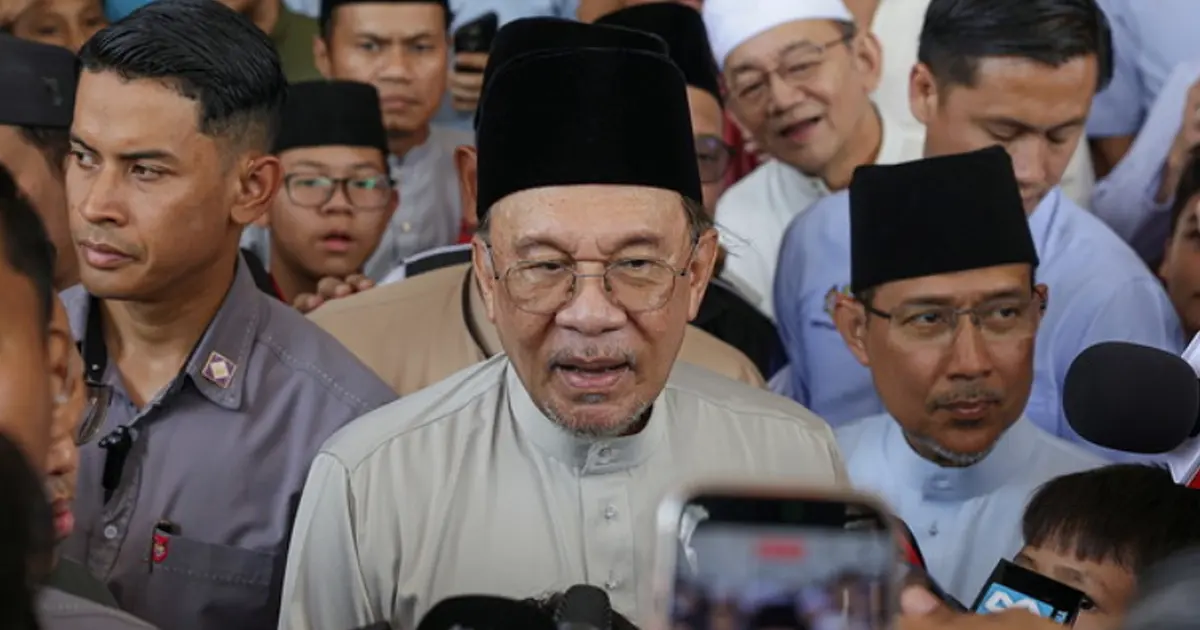
Prime Minister Anwar Ibrahim has publicly affirmed that the full Royal Commission of Inquiry report examining Tabung Haji's operations and governance has been released to the public without any modifications or redactions. The statement represents a significant moment for government transparency, as the inquiry had drawn considerable public attention given the widespread concerns surrounding the pilgrim fund's financial management and corporate governance practices over several years.
The release of the complete RCI report underscores the government's commitment to openness in addressing institutional failures at Tabung Haji, Malaysia's largest Islamic financial institution dedicated to facilitating pilgrimages to Mecca. The absence of censorship or editorial intervention, as confirmed by Anwar, signals that the administration intends to allow the full scope of the inquiry's findings to reach public scrutiny without selective disclosure. This approach contrasts with historical precedent in Malaysia, where sensitive government inquiries have sometimes faced delays or partial publication.
Tabung Haji has faced mounting scrutiny in recent years due to a series of financial challenges and governance controversies. The fund, which manages contributions from millions of Malaysian Muslims preparing for the hajj, had experienced significant losses in certain investments and faced questions about internal controls and oversight mechanisms. The appointment of the RCI reflected growing public demand for a comprehensive and independent examination of how the institution managed its affairs and whether proper accountability structures were in place.
The decision to publish the report without editorial changes carries implications beyond mere procedural transparency. It acknowledges stakeholders' right to understand the specific details of institutional mismanagement or systemic weaknesses that the inquiry may have identified. For the millions of Malaysians who contribute to Tabung Haji as a form of savings and religious obligation, access to unfiltered findings provides crucial information about the safety and stewardship of their funds. The completeness of the publication also demonstrates confidence in the inquiry process itself, suggesting that the commission's methodology and conclusions can withstand public examination.
The RCI's investigation likely encompassed numerous dimensions of Tabung Haji's operations, potentially including investment decisions, internal governance structures, board oversight, compliance with regulatory requirements, and the handling of pilgrim fund contributions. An unflinching publication of these findings allows civil society, opposition politicians, financial analysts, and concerned citizens to form independent assessments rather than relying on summarised government statements or media interpretation of key points.
For the government's broader credibility agenda, this release represents an opportunity to demonstrate that institutional accountability remains a priority despite competing political pressures. In Malaysia's context, where concerns about transparency in government-linked institutions have persisted across administrations, such unredacted publication serves as a tangible commitment to reform principles that the current government has emphasised since taking office.
The timing and manner of the RCI report's release may also have implications for potential follow-up actions. A comprehensive, publicly available investigation provides a clear foundation for potential criminal investigations, civil suits, regulatory changes, or administrative restructuring at Tabung Haji. Stakeholders, including regulatory bodies, law enforcement agencies, and the judiciary, now possess the complete factual record necessary to determine appropriate responses to any wrongdoing the inquiry may have identified.
From a regional perspective, Malaysia's approach to publishing this sensitive institutional inquiry may set precedent for other Southeast Asian nations grappling with similar governance challenges in large government-linked funds and religious institutions. The transparency demonstrated here reflects evolving standards of institutional accountability across the region, where citizens increasingly demand access to comprehensive information about how their contributions and public resources are managed.
The confirmation by Anwar that no editorial changes or censorship occurred also implicitly addresses concerns that had circulated regarding possible pressure to soften findings or protect specific individuals implicated in any institutional failures. By explicitly stating the report's completeness and intactness, the Prime Minister preemptively counters narratives that might otherwise question the report's authenticity or reliability.
Moving forward, the published RCI report will likely catalyse broader discussions about governance reforms at Tabung Haji and other major Malaysian institutions. The document provides a comprehensive basis for stakeholder conversations, policy adjustments, and potential legislative amendments. For the millions of Malaysians with emotional and financial investment in Tabung Haji, the publicly available findings offer clarity about institutional challenges and the factual foundation upon which remedial actions should be considered.

