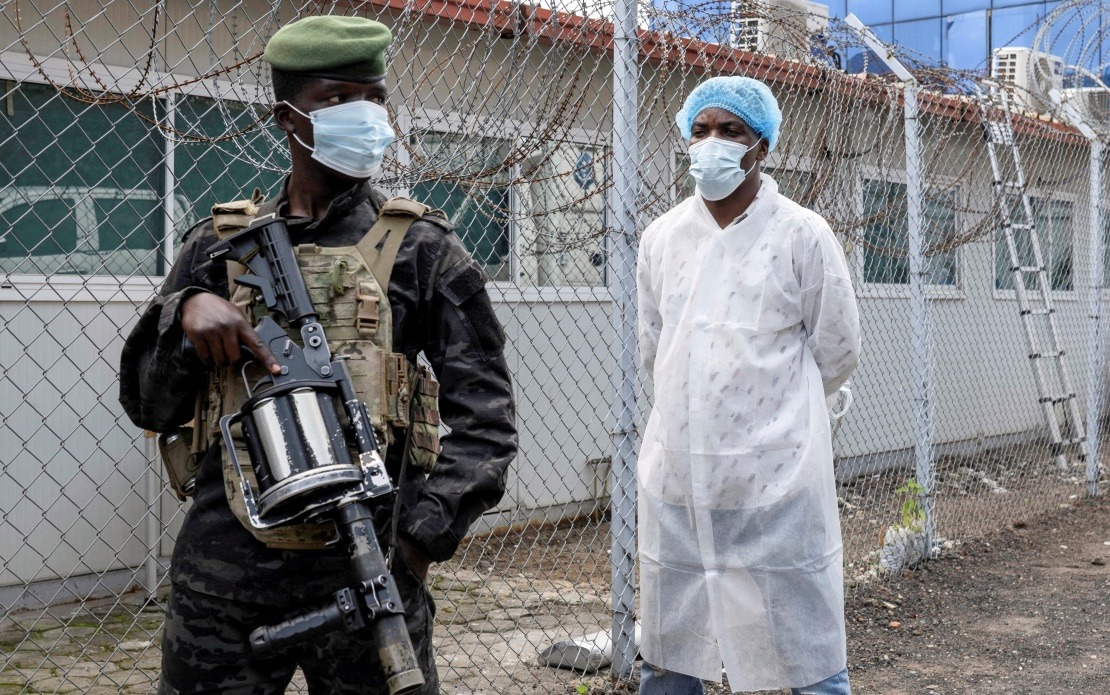
The Democratic Republic of Congo faces a critical public health challenge as traditional funeral practices are inadvertently becoming vectors for Ebola transmission, according to a warning from the United Nations migration agency. Since the current outbreak was officially declared on May 15, the nation has registered more than 2,100 confirmed cases with over 828 deaths recorded as of the latest Health Ministry update, representing a case fatality rate of 37.5 per cent. The rapid expansion of the epidemic across five provinces—Haut-Uele, Ituri, North Kivu, South Kivu and Tshopo—reflects how deeply rooted burial customs are complicating containment efforts in a region where honouring the deceased through community gatherings remains a fundamental cultural practice.
The practice of transporting infected bodies across provincial boundaries for burial in ancestral home communities has emerged as a significant epidemiological threat. The International Organisation for Migration noted that 105 bodies were intercepted during surveillance operations at border crossings and health zone entry points, though this figure likely represents only a fraction of bodies moved covertly through communities. This movement pattern creates multiple opportunities for virus transmission, as families and community members may come into contact with deceased bodies during transport, preparation for burial, and funeral ceremonies—all activities that carry substantial infection risk if proper protective equipment and safety protocols are not followed.
The outbreak has accelerated dramatically, growing by approximately 70 per cent over a two-week period with more than 40 new cases being reported daily on average, according to International Organisation for Migration Regional Director Frantz Celestin. This explosive growth rate places the current epidemic among the fastest-expanding Ebola outbreaks in recorded history. Medical charity Doctors Without Borders characterized this outbreak, caused by the Bundibugyo virus, as the third-largest Ebola outbreak on record and noted that it achieved this distinction in merely two months, underscoring the remarkable velocity of transmission and the challenge of mounting an effective response in a complex humanitarian environment.
Community resistance to safe burial protocols represents a fundamental obstacle to controlling transmission. Burial teams conducting operations in accordance with public health guidelines regularly encounter opposition from residents and, in disturbing instances, face direct physical attacks. A particularly troubling incident occurred last month in Bunia, the capital of Ituri province, when violence erupted at a cemetery where Red Cross volunteers were managing the funeral of an Ebola victim. According to local media accounts, youths attempted to forcibly open the coffin, resulting in serious injuries to four Red Cross workers. Such incidents reflect deep-seated mistrust of health authorities and resistance to Western-style burial practices that conflict with traditional customs, creating a dangerous environment for healthcare workers and perpetuating transmission risk.
The epidemiological context reveals that approximately 60 per cent of deaths have occurred in community settings rather than in health facilities, according to Celestin's assessment. This pattern indicates that detection systems are failing to identify cases early, surveillance networks are inadequate, and patients are not accessing treatment in timely fashion. The concentration of deaths outside formal healthcare settings means that potentially infectious individuals remain in their homes and communities longer, interacting with family members and neighbours without the benefit of clinical isolation or appropriate infection control measures. This dynamic creates a vicious cycle where undetected transmission continues unchecked within communities while official case counts lag behind the actual disease burden.
The geographical distribution of cases across five provinces demonstrates how the virus has escaped initial containment zones and established transmission chains in multiple distinct regions. The World Health Organisation reported that the number of affected health zones expanded from 36 to 42 in just one week, illustrating the relentless geographical spread. For Malaysia and Southeast Asian nations monitoring disease threats, this expansion pattern serves as a cautionary reminder of how quickly respiratory and contact-transmitted pathogens can establish themselves across large territories, particularly in regions with weak surveillance infrastructure and limited laboratory capacity for rapid case confirmation.
The Bundibugyo virus strain responsible for this outbreak presents additional complications compared to other Ebola variants. While less frequently documented than Zaire Ebola virus, Bundibugyo carries comparable mortality risk and has demonstrated its capacity to establish sustained transmission within populations. The selection of this particular viral strain in the outbreak location, combined with the cultural factors facilitating transmission through funeral practices, has created a uniquely challenging epidemiological scenario that standard response protocols may not fully address.
The implications for regional stability and cross-border health security are substantial. The Democratic Republic of Congo shares borders with multiple nations, and the presence of 105 intercepted bodies at surveillance points suggests that some infected individuals or their remains are reaching border regions. While immediate neighbours may have implemented border screening measures, the experience of previous Ebola outbreaks demonstrates that completely preventing cross-border movement of potentially infected persons is extremely difficult, particularly in regions where borders are porous and informal economic activity depends on regular movement of goods and people.
Response efforts must simultaneously address medical containment, community engagement, and cultural sensitivity if they are to succeed. Efforts to prevent body movement and enforce safe burial practices without meaningful community dialogue will likely encounter continued resistance. Effective interventions require partnering with religious and traditional leaders to develop modified burial practices that honour cultural traditions while minimizing transmission risk. Such approaches are labour-intensive and slow to implement but represent the most sustainable pathway to reducing transmission linked to funeral practices. The international community's ability to support these community-centred interventions while simultaneously scaling up clinical capacity will determine whether this outbreak follows the trajectory of recent West African epidemics or achieves more rapid control.

