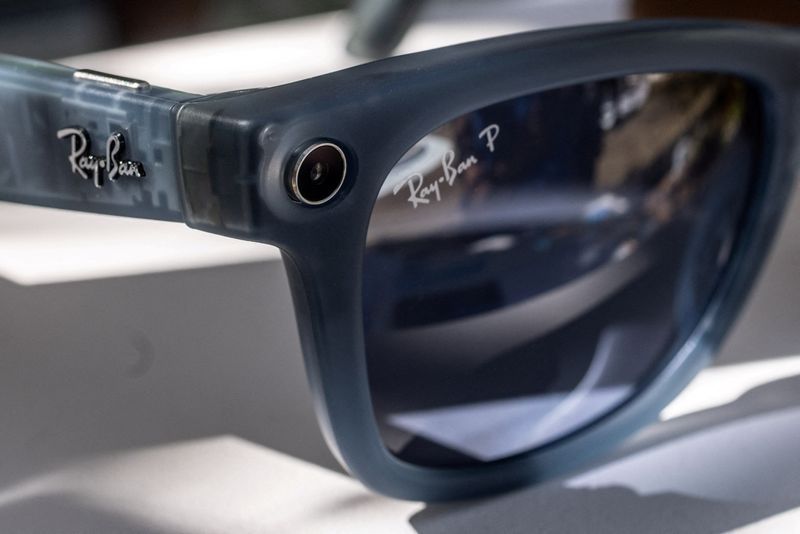
A prominent German digital rights organisation has escalated its campaign against Meta's artificial intelligence-enabled smart glasses by filing a formal criminal complaint with authorities, marking the latest regulatory pushback against the technology in a country where privacy protections are constitutionally enshrined. HateAid submitted its complaint to Frankfurt's digital crime prosecution unit on Wednesday, targeting not only Meta itself but also the spectacle companies and consumer electronics retailers distributing the Ray-Ban Meta Wayfarer device across German territory.
The complaint centres on allegations that these glasses violate Germany's federal digital data protection legislation, which contains specific prohibitions against the marketing and sale of communication devices capable of recording people without their knowledge or consent. HateAid's managing director, Josephine Ballon, articulated the organisation's fundamental concern: the devices create an environment where individuals have nowhere to shelter from potential filming, since the glasses appear indistinguishable from conventional eyewear yet possess sophisticated recording capabilities that could capture and disseminate footage online without a subject's awareness or permission.
Beyond Meta's corporate structure, the complaint names EssilorLuxottica—the parent company of Ray-Ban—alongside four major German retailers: Fielmann, Apollo-Optik, Mister Spex, and MediaMarkt. This broad scope reflects HateAid's strategy to hold the entire supply chain responsible for distributing what the organisation characterises as potentially harmful surveillance technology. Mister Spex indicated it had not received official notification of any complaint and asserted its commitment to privacy protection, though other defendants and the prosecution unit have not yet provided public statements.
Germany's approach to this technology must be understood within the nation's unique historical and constitutional context. The fundamental right to privacy and informational self-determination is deeply embedded in German law and jurisprudence, stemming partly from the country's experience with surveillance under totalitarian regimes. This cultural and legal foundation explains why smart glasses have triggered such swift and serious responses from advocacy groups and regulators compared to reactions in other jurisdictions. The Federal Network Agency, Germany's digital communications regulator, previously issued guidance in late 2023 acknowledging that connected devices enabling covert audio or video recording are prohibited under German law.
However, the regulatory position contains important nuances that complicate the straightforward case against Meta's devices. A Federal Network Agency spokesperson clarified on Wednesday that ownership, importation, and sale of smart glasses themselves are not categorically banned. Rather, the prohibition applies specifically when recording functions are not clearly visible to potential subjects—such as through an optical signal that alerts observers they are being filmed. This distinction creates a grey area: if manufacturers can demonstrate that recording is sufficiently indicated through the device's design or operation, they might argue compliance with existing regulations.
This regulatory ambiguity has prompted parallel action at state level. According to reporting from broadcaster SWR, a Hamburg-based state privacy protection agency has initiated legal proceedings specifically addressing smart glasses usage. Such state-level initiatives are common in Germany's federal system, where individual Länder possess substantial authority over privacy enforcement. The patchwork of federal and state-level interventions suggests that no comprehensive national framework yet exists to govern AI-enabled wearable recording devices, creating both legal uncertainty and opportunities for companies to argue that compliant usage is feasible under current rules.
HateAid's complaint also invokes a broader concern about image-based digital violence, which the organisation reports has been increasing substantially in recent years. The group has documented a troubling trend where such violations disproportionately target women, who face heightened risks of non-consensual recording and image-based harassment. Smart glasses, precisely because they blend seamlessly into everyday fashion and conceal their recording function from casual observation, represent an escalation of this threat. The technology essentially democratises covert surveillance by placing sophisticated recording equipment within reach of ordinary consumers rather than restricting it to professional operators.
For Malaysia and other Southeast Asian nations observing this German regulatory development, the case illustrates how advanced democracies with strong privacy traditions are grappling with technologies that challenge established legal frameworks. While Malaysia's Personal Data Protection Act and related regulations provide some guardrails, the emergence of smart glasses and similar ambient recording devices may expose gaps in regional privacy law. The German precedent demonstrates that technological innovation can outpace legislative capacity, leaving advocacy organisations and regulators to improvise within existing statute books rather than deploying purpose-built regulation.
Meta has not publicly responded to the complaint, and the timeline for prosecution unit review remains unclear. The company may argue that users can disable recording features or that the device's visual design sufficiently signals its capabilities. Alternatively, Meta might seek to clarify the legal status of its glasses in consultation with BNetzA, potentially leading to settlement or technical modifications. The complaint's ultimate success will likely depend on how courts interpret the requirement that recording functions be "clearly visible"—a subjective standard that could generate substantial litigation.
The broader significance of HateAid's action extends beyond Meta and Germany's borders. It signals that European regulators and civil society organisations are prepared to challenge technology companies through criminal and administrative channels when they perceive violations of established privacy norms. This willingness to pursue formal legal action, rather than relying on negotiation or market-based solutions, reflects the high stakes that privacy advocates perceive. As smart glasses and comparable recording technologies proliferate globally, similar complaints and regulatory actions will likely emerge in other jurisdictions, potentially creating fragmented international compliance requirements that technology manufacturers must navigate.

