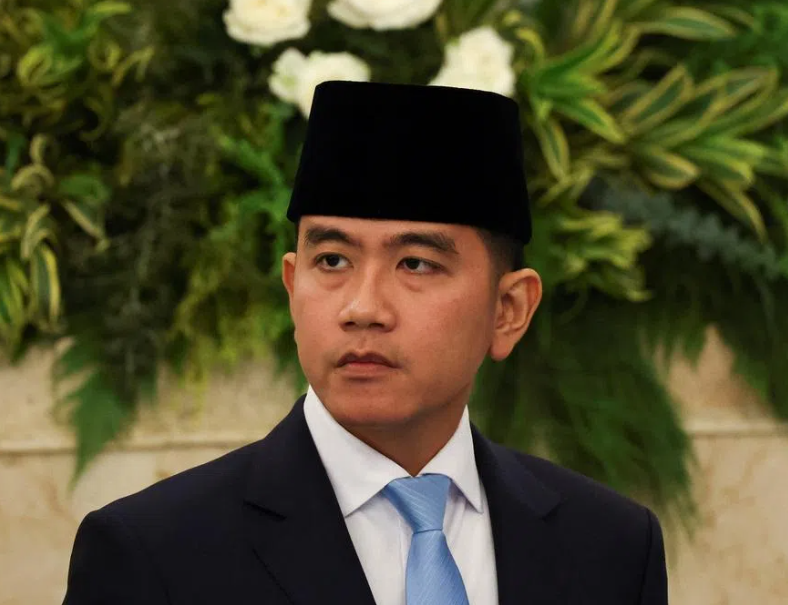
Vice-President Gibran Rakabuming Raka has intensified his visibility among Indonesia's student movement, recently hosting a closed-door meeting with university representatives who had been protesting against two of the government's most contentious programmes: the free meals initiative and the Red and White Cooperative scheme. The diplomatic initiative came just three days before Gibran invited five student leaders to join him on a working visit to eastern Indonesia on June 18, a symbolic move that underscored his eagerness to be seen as responsive to public concerns.
During the palace meeting, Gibran presented himself as receptive to student research and criticisms regarding both flagship programmes. Muhammad Abdi Maludin, a student leader from Bung Karno University, stated that the Vice-President had promised to audit the students' findings and relay them to President Prabowo Subianto. Such rhetoric painted a picture of a sympathetic government official willing to listen to younger voices. However, the narrative fractured almost immediately on social media, where observers questioned whether the selected students genuinely represented Indonesia's broader university community or constituted a carefully curated group designed to project the appearance of engagement without substantive dialogue.
The subsequent revelations about payments to attending students complicated matters further. In late June, local media reported that students who participated in the meeting had received money ranging from 2 million rupiah to 20 million rupiah from undisclosed sources. While the Presidential Palace stated it was investigating the claims, the timing and nature of these payments invited cynicism about whether the encounter represented authentic student-government dialogue or orchestrated political theatre. The lack of clarity surrounding the payments' origin and purpose fuelled suggestions that Gibran's outreach campaign, while superficially inclusive, operated on carefully managed terms.
Political analysts have interpreted Gibran's recent activism through the lens of Indonesia's 2029 presidential election cycle. At 38 years old, the eldest son of former president Joko Widodo has not publicly declared whether he intends to seek higher office, yet his calculated visibility among student activists suggests he is positioning himself for future political opportunities. Nicky Fahrizal, a researcher at Jakarta's Center for Strategic and International Studies, characterised Gibran's persona as that of a "communicative vice-president willing to engage with students and ordinary citizens," noting that such positioning creates political capital early in the electoral cycle. The student protests, which have intensified in recent months, offered Gibran an unexpected platform to demonstrate responsiveness and leadership qualities that might appeal to younger voters.
However, the substance behind Gibran's visibility remains questionable. Since assuming office alongside President Prabowo in October 2024, the Vice-President has struggled to establish a clearly defined operational role within the administration. Although he has been nominally linked to high-profile projects such as Papua's development and the new capital Nusantara, he has been largely sidelined from major policy decisions. Crucially, Gibran was not granted a major policy portfolio, leaving him without direct institutional authority over the very programmes he has been publicly engaging with. This structural constraint fundamentally limits his capacity to translate student concerns into government action.
The free meals programme and Red and White Cooperative initiatives remain firmly under the control of other institutional actors. The National Nutrition Agency, which oversees the meals scheme, reports directly to the president, while the cooperative initiative functions as a presidential priority programme coordinated across multiple ministries and agencies. Gibran's peripheral position means that his engagement with student critics operates more as an advisory or consultative function rather than as direct programme leadership. Irman Lanti, a political scientist at Padjadjaran University, observed that available evidence suggests Gibran has had minimal involvement in either initiative, with control appearing to rest primarily with military and police elements within the administration.
The free meals programme has faced genuine credibility challenges that provided Gibran with an opening to appear constructive. In June 2024, corruption allegations emerged regarding the National Nutrition Agency, culminating in the arrest of agency chief Dadan Hindayana and two former deputies on suspicion of procurement irregularities. During his visit to a primary school in East Nusa Tenggara, Gibran acknowledged these shortcomings and called for improved governance, while instructing officials to accelerate implementation in areas with adequate supporting infrastructure. Such gestures allowed him to demonstrate awareness of public grievances while remaining safely within his limited authority to make symbolic commitments.
Critical scholars argue that Gibran's recent manoeuvres constitute deliberate performative politics designed to manage public perception rather than drive substantive reform. Edbert Gani Suryahudaya of CSIS' Department of Politics and Social Change characterised the Vice-President's strategy as deliberately constructed to appease public anger, particularly given the intense scrutiny that has recently engulfed various government programmes and officials. However, Suryahudaya emphasised that such performative acts are unlikely to generate meaningful policy change. For Gibran, the calculation appears straightforward: maintain relevance and public attention through relatively low-cost engagement activities that create the appearance of responsiveness without requiring institutional restructuring or the difficult work of policy reform.
The careful curation of which students received invitations to the palace further suggests strategic rather than organic engagement. Critics noted that Gibran chose participants primarily from Bung Karno University rather than Indonesia's larger and more prestigious campuses such as the University of Indonesia or Bandung Institute of Technology. This selection pattern contradicted claims of seeking genuine representative dialogue, as it excluded voices from institutions with greater influence over public discourse and student movements. One social media commenter observed that inviting students from more prominent universities would have lent greater authenticity to the exercise, whereas the actual guest list appeared designed to control messaging while maintaining plausible deniability about the meeting's structured nature.
Looking forward, Gibran's trajectory within the Prabowo administration remains uncertain. He faces the challenge of establishing genuine policy influence while working within an institutional structure that has marginalised his authority. His pivot toward student engagement and public-facing advocacy suggests he has recognised that visibility and relationship-building may constitute his most viable pathway to political advancement in the near term. Whether such grassroots cultivation can translate into institutional power or electoral success in 2029 depends substantially on how public perception of his responsiveness evolves, and whether the government implements any student-proposed reforms that could be credibly attributed to his influence. For now, Gibran appears to be playing a longer game, building a public persona as an accessible and sympathetic voice within an administration increasingly challenged by youth-led activism and policy criticism.