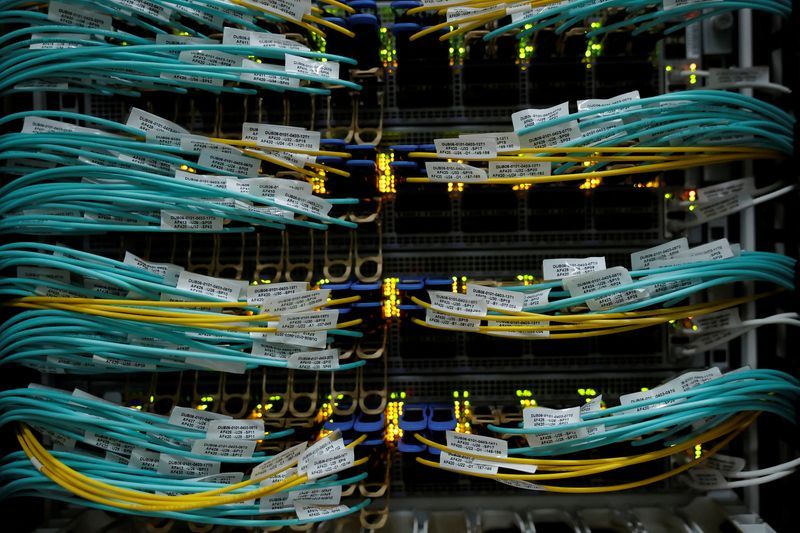
The rapid expansion of artificial intelligence infrastructure is colliding with the practical realities of resource constraints and community concerns, prompting a coordinated global response from governments intent on regulating the construction of new data centres. What began as scattered local resistance has crystallised into formal policy restrictions across multiple jurisdictions, signalling a fundamental shift in how authorities approach the relationship between technological advancement and infrastructure sustainability.
The scale of concern reflects the mounting pressure data centres place on regional resources. Electricity consumption, freshwater availability, physical space, and the cumulative burden on surrounding communities have emerged as the primary drivers of governmental action. The infrastructure required to power artificial intelligence systems operates at unprecedented scales, with individual facilities consuming electricity equivalent to small cities. Regulators now recognise that permitting data centres without comprehensive environmental assessment frameworks creates long-term vulnerabilities for their power grids and water systems.
New York's decision to implement a one-year construction moratorium on data centres utilising 50 megawatts or more represents a watershed moment in American regulation. By becoming the first U.S. state to enact such a comprehensive freeze, Governor Kathy Hochul's administration signalled that existing regulatory mechanisms are insufficient. During the freeze period, New York's Department of Environmental Conservation will withhold new discretionary permits while developing standards to properly evaluate the environmental consequences of data centre operations. This interim period will enable the state to establish benchmarks for grid compatibility, water usage, and community impact before allowing new projects to proceed.
Maine's political dynamics illustrate the complexity surrounding data centre policy. Governor Janet Mills vetoed bipartisan legislation that would have established an 18-month moratorium on facilities consuming more than 20 megawatts of power, which would have represented the first such measure in the nation. Although Mills expressed support for a moratorium framework, she objected to the bill's failure to include carve-outs for a specific project in the Town of Jay. This veto reveals tensions between statewide environmental protection and targeted economic development ambitions, demonstrating that data centre restrictions are rarely decided purely on technical grounds.
California's Monterey Park presents a striking example of grassroots mobilisation against data centre development. Residents voted in June 2026 to permanently ban data centres in the city, making it the first American municipality to achieve such a prohibition through direct ballot action. This decisive step followed years of escalating local opposition to a planned facility. The city's earlier actions—imposing a one-year moratorium in 2019 and subsequently banning new data centres or expansions until at least 2030 in April 2025—demonstrate how initial temporary measures can evolve into permanent restrictions when communities organise effectively against unwanted industrial development.
Europe's approach reveals different regulatory philosophies shaped by spatial constraints and interconnected grid systems. The Netherlands implemented a hyperscale ban through national government policy in 2022, concentrating large data centre facilities to two designated locations across the entire country. This geographically focused strategy aims to manage environmental impact by preventing sprawl while channelling investment to areas with appropriate infrastructure. However, the regulatory framework has proven adaptable; Microsoft secured approval in January 2026 for a project designed as three separate towers, each individually falling below the size threshold that would trigger the hyperscale designation. This development suggests that restrictions based on facility size may inadvertently incentivise architectural fragmentation rather than genuine reduction in resource consumption.
Ireland's experience demonstrates how electricity grid stability can override other considerations in data centre policy. The country's grid operator effectively imposed a de facto moratorium on new data centre connections around Dublin from 2021, recognising that facilities were collectively straining the country's electricity infrastructure. The freeze lasted until December 2025, when new connections resumed under revised conditions requiring facilities to generate their own on-site power. This transition from outright prohibition to conditional permission reflects a pragmatic acknowledgment that data centre development may be inevitable, but the burden of accommodating it can be transferred to individual operators rather than distributed across the national grid.
The implications for Southeast Asia are substantial, particularly for countries pursuing digital economy and artificial intelligence sector development. Malaysia, Singapore, and Thailand have emerged as attractive data centre destinations due to relatively lower operating costs and strategic geographic positioning. However, the global regulatory trend suggests these countries should develop comprehensive environmental and resource assessment frameworks before data centre construction accelerates further. The experiences of New York, Monterey Park, and Ireland indicate that reactive restrictions imposed after significant development occurs generate more community conflict than proactive standards established beforehand.
Singapore's particular vulnerability to electricity and water constraints makes the global moratorium trend especially relevant. As a city-state with limited land area and freshwater resources, any substantial expansion of data centre capacity requires careful coordination with existing industrial infrastructure. The island nation's experience managing competing demands for space and resources could provide valuable insights for policymakers evaluating data centre applications. Similarly, Malaysia's significant water resources make it attractive for data centres, but rapid development without appropriate environmental impact assessments could create long-term sustainability challenges.
The underlying tension in these regulatory responses reflects uncertainty about whether artificial intelligence infrastructure development aligns with long-term sustainability objectives. Governments are essentially asking whether the economic benefits of hosting data centres justify the resource consumption and environmental externalities. Some jurisdictions have concluded that the answer is no, at least under current operational models. Others, like Ireland, are attempting to continue development while shifting responsibility for environmental mitigation to individual operators. Southeast Asian policymakers must navigate this landscape carefully, neither rejecting potential economic opportunities nor repeating the infrastructure-straining mistakes now prompting restrictions elsewhere.
The global pattern of restrictions also raises questions about competitive disadvantage and carbon leakage. If some jurisdictions impose strict limitations while others remain permissive, data centre operators may simply relocate to less regulated regions. This dynamic could inadvertently concentrate data centre development in areas with weaker environmental protections, ultimately increasing global carbon emissions rather than reducing them. Coordinated international standards might prove more effective than unilateral restrictions, though achieving such agreement remains politically challenging.
Looking forward, the data centre sector faces a critical inflection point. The rapid expansion driven by artificial intelligence demand will eventually encounter hard physical limits in every jurisdiction—finite electricity generation capacity, available freshwater, and developable land. The current wave of restrictions represents early recognition of these constraints. Governments that establish clear, transparent frameworks for data centre development now may attract quality investment and maintain community support. Those that allow unregulated expansion only to impose emergency restrictions later risk creating backlash that excludes the sector entirely.

