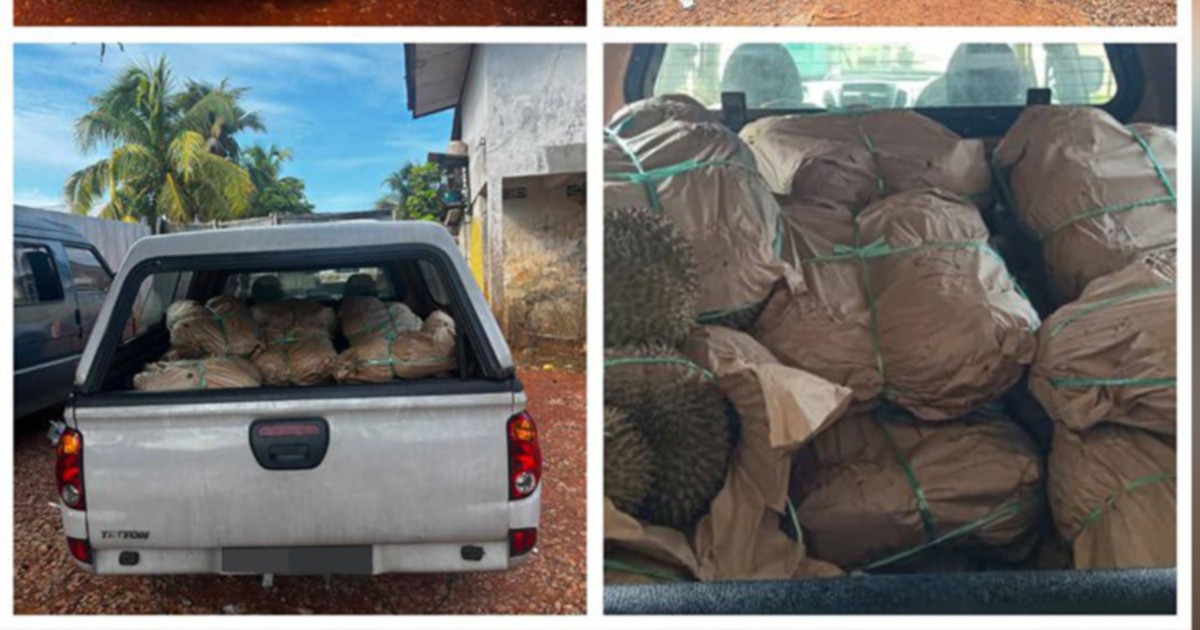
The General Operations Force has intensified its crackdown on contraband trafficking at illegal border crossing points, scoring a significant victory with the interception of a major durian smuggling operation near Rantau Panjang. In an operation conducted at the Abe Li Posmen illegal jetty yesterday, GOF personnel apprehended a 20-year-old man suspected of orchestrating the illicit transport of agricultural goods across maritime borders. The seizure included 350 kilogrammes of durians along with a four-wheel-drive vehicle, together valued at approximately RM50,000.
Durian trafficking has emerged as a persistent challenge for Malaysian border authorities, reflecting the substantial price differential between domestic markets and neighbouring countries where the prized fruit commands premium prices. The fruit's high value, combined with seasonal availability constraints, creates powerful economic incentives for smuggling networks to operate through unmonitored waterways and coastal corridors. The operation at Abe Li Posmen underscores how illegal jetties continue to serve as crucial nodes in transnational smuggling networks, functioning beyond the reach of conventional customs and excise monitoring systems.
The seizure highlights the critical importance of maintaining vigilant surveillance along Kelantan's extensive coastline, a region with numerous natural harbours and shallow-draft entry points that facilitate clandestine cross-border movement. The GOF, as the frontline agency tasked with border security and counter-smuggling operations, has progressively refined its intelligence gathering and rapid response capabilities to detect and intercept illicit shipments before they reach their intended destinations. The recovery of both the agricultural cargo and the transport vehicle simultaneously demonstrates the multi-layered approach now being employed to dismantle smuggling infrastructure rather than merely addressing individual transactions.
The choice of a relatively young suspect raises questions about recruitment patterns within smuggling organisations and the vulnerability of economically disadvantaged individuals to exploitation by larger criminal networks. The driver's age suggests a possible trend towards employing younger operatives who may face fewer legal consequences or possess greater physical mobility for high-risk operations. Understanding these recruitment dynamics becomes essential for authorities seeking to disrupt smuggling operations at their source rather than merely detaining peripheral participants in these illicit supply chains.
Illegal jetties such as Abe Li Posmen represent persistent blind spots in border management, often operating with tacit local knowledge that allows them to evade interdiction efforts. These unmonitored access points typically function during specific weather windows or tidal conditions that experienced smugglers have catalogued over years of operation. The GOF's successful operation at this location suggests improved intelligence coordination or perhaps heightened community reporting that has enabled authorities to narrow the window of opportunity for smugglers operating through such routes.
The economic dimensions of durian smuggling extend beyond simple profit margins; they reflect broader agricultural trade imbalances and regulatory frameworks that create price arbitrage opportunities. Malaysian durians, particularly premium varieties from the east coast, command substantial premiums in Thai and Vietnamese markets where supply remains constrained relative to demand. This structural price gap, combined with relatively modest cross-border enforcement capacity, perpetuates smuggling as an economically rational activity for risk-tolerant operators despite escalating enforcement efforts.
The GOF's enforcement operation carries significance for the broader agricultural sector, which faces ongoing losses to smuggling networks estimated at hundreds of millions of ringgit annually. These illicit activities undermine legitimate producers and exporters who comply with regulatory requirements, obtain necessary documentation, and pay applicable tariffs. Strengthening border enforcement therefore becomes an indirect subsidy for compliant market participants and helps preserve Malaysia's agricultural reputation in international markets where food safety and traceability standards are increasingly stringent.
Regional cooperation on border security remains essential for addressing transnational smuggling comprehensively. Durian trafficking typically involves coordination between Malaysian suppliers, transport operatives, and receiving networks across the Thailand-Malaysia border region. Unilateral enforcement successes like the Abe Li Posmen operation, while valuable for disrupting individual shipments, address only symptomatic manifestations of broader structural problems that demand regional policy harmonisation and coordinated intelligence sharing between customs and border agencies across Southeast Asia.
The vehicle seizure component of this operation carries strategic importance beyond the immediate value of the transport asset. Four-wheel-drive vehicles capable of accessing rough terrain and unprepared coastal access routes represent crucial enablers of smuggling logistics. Confiscating such assets reduces operational flexibility for smuggling networks and raises the capital investment required to maintain functional supply chains. This equipment-focused approach complements personnel interdiction and cargo seizure strategies in creating cumulative pressure that gradually erodes network viability.
Moving forward, maintaining pressure on illegal jetties and seasonal smuggling corridors will require sustained GOF deployment and ongoing technology investment in surveillance and interdiction capabilities. Community engagement in border regions becomes equally important, as local knowledge and reporting networks often provide earlier warning of suspicious activity than technological systems alone. The successful operation at Abe Li Posmen demonstrates that coordinated enforcement remains feasible, yet systematic reduction in smuggling activity demands institutional persistence and resource allocation extending well beyond individual seizure operations.

