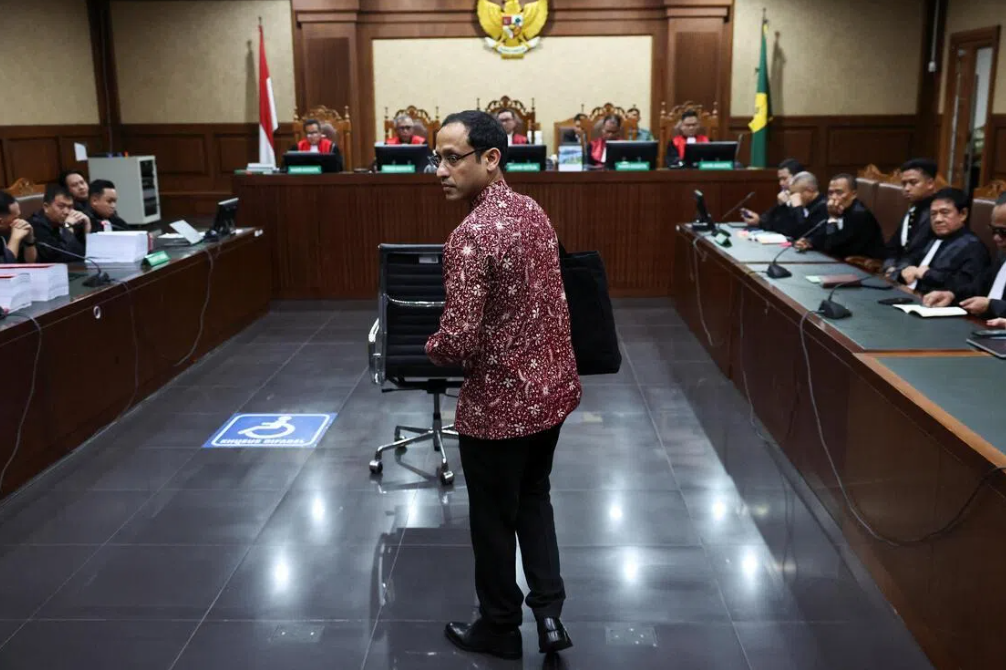
Indonesia's Jakarta Corruption Court has delivered a decisive verdict in one of the nation's most closely watched corruption trials, sentencing Nadiem Makarim, founder of ride-hailing giant Gojek and former education minister, to a decade in prison on Tuesday, June 30. The judgment concludes a legal saga that has captivated public attention and raised uncomfortable questions about how Indonesia treats talented professionals who transition from the private sector into government service. Beyond the prison term, Nadiem faces a 1 billion rupiah fine and must pay 809.6 billion rupiah in restitution, with an additional five years of imprisonment looming if he fails to settle the substantial financial obligation.
The case represents a stunning reversal of fortune for the Harvard-educated entrepreneur. When Nadiem entered former President Joko Widodo's cabinet in 2019, he embodied a particular vision for Indonesian governance—a young, globally-minded technology innovator who could modernise a bloated, tradition-bound bureaucracy. He had already achieved remarkable business success, transforming Gojek from a modest motorcycle-taxi application into Southeast Asia's first "unicorn" startup valued at approximately US$10 billion by the time he took office. His appointment seemed to signal that Indonesia was serious about injecting digital-age thinking into its government machinery. Yet the very digitalisation initiatives that defined his ministerial tenure would ultimately become the foundation for corruption charges filed against him in January 2026.
The Jakarta Corruption Court's five-judge panel found Nadiem guilty of abusing his ministerial authority, with Chief Judge Purwanto explaining that the evidence demonstrated "the manner and purpose by which the policy was taken were proven to contain an abuse of authority intended to unlawfully benefit certain parties." The judges determined that Nadiem had deliberately steered the Chromebook procurement policy and had acted with a concealed motive: strengthening Gojek's strategic relationship with Google, the technology company whose devices formed the heart of the programme. This determination of improper motive proved crucial to the conviction, with the judges characterising such conduct as "highly reprehensible" given his oath as a minister to serve the public interest.
The scandal centres on a massive programme to procure approximately 1.1 million Chromebook laptops between 2020 and 2022, a period when Indonesia's schools transitioned to pandemic-related remote learning. The prosecutors had initially pursued a harsher outcome, requesting an 18-year sentence, a 1 billion rupiah fine, and 5.6 trillion rupiah in restitution. They contended that the procurement inflicted approximately 2.18 trillion rupiah in losses to the state budget and that Nadiem personally gained roughly 809 billion rupiah through mechanisms involving PT Aplikasi Karya Anak Bangsa, Gojek's parent entity. Prosecutors further alleged that Google's investment decisions in Gojek's parent company had influenced the government's preference for Chromebook devices, an allegation Nadiem consistently refuted throughout the trial.
The defence mounted by Nadiem and his legal team emphasised that the Chromebook initiative served a legitimate public purpose during an extraordinarily disruptive period for Indonesian education. They argued the programme was executed in good faith to maintain educational continuity when schools nationwide faced unprecedented closures. Significantly, they noted that approximately 97 per cent of the 1.1 million devices had reached 77,000 schools by 2023, suggesting successful implementation rather than corruption-driven mismanagement. Nadiem personally denied receiving any financial benefit from the procurement, directly challenging the prosecution's assertions about personal enrichment. His attorneys further pointed out that ministry studies conducted in 2018, before Nadiem assumed office, had already identified Chromebook laptops as a potential solution for distance learning, questioning whether the decision truly represented an abuse of authority rather than a logical policy choice.
The prosecution's case relied partly on circumstantial evidence, including an August 2019 group chat message thread that prosecutors claimed revealed discussions about a Chromebook-focused digitalisation blueprint before Nadiem's formal cabinet appointment. Prosecutors also cited studies from 2018 indicating that Chromebook devices would prove ineffective in remote and rural regions lacking dependable internet infrastructure, implying that Nadiem should have recognised this limitation. However, this particular argument cuts in multiple directions: if ministry technicians had already flagged internet connectivity as a fundamental challenge years before the pandemic, why was no alternative infrastructure programme developed, and should that failure be attributed to a single minister's corruption or to broader systemic governance weaknesses?
The trial attracted remarkable public engagement, transcending typical corruption court proceedings. Dozens of Gojek drivers attended hearings to demonstrate solidarity with their company's founder, a gesture that highlighted the deep affection many Indonesians felt toward Nadiem and the entrepreneurial ecosystem he had helped construct. Court sessions were livestreamed and generated spontaneous social media campaigns for organised viewing parties, transforming the legal process into a quasi-cultural event. The court received multiple amicus curiae briefs supporting Nadiem's position, an unusual occurrence in Indonesia's judicial system. These manifestations of public support suggest that substantial segments of Indonesian society viewed the charges with scepticism or interpreted them as potentially reflecting political vulnerabilities in how the nation treats private-sector professionals who venture into government.
Nadiem's family background and personal narrative also shaped public perception of the case. His father, Nono Anwar Makarim, is a respected lawyer, while his maternal grandfather fought in Indonesia's independence struggle, positioning Nadiem within a lineage of service to the nation. During the trial's final stages, Nadiem deliberately framed the proceedings as transcending a technical dispute about procurement methodology, instead positioning it as a statement about Indonesia's capacity to attract talented professionals from outside the political establishment. In his defence plea delivered on June 23, Nadiem posed a pointed question to the judges: "Is this country still safe for us to serve?" He argued that younger Indonesians and the global diaspora were watching to determine whether meritocratic professionals could safely dedicate themselves to public service without facing trumped-up charges or politically motivated persecution.
The sentencing outcome, arriving at a middle ground between the prosecution's 18-year request and Nadiem's hoped-for acquittal, may itself communicate judicial ambivalence about the strength of the corruption allegations. The 10-year term represents a substantial punishment, yet it falls significantly short of what prosecutors sought, potentially signalling that the judges found the evidence of intentional abuse less compelling than the prosecution had framed it. The 809.6 billion rupiah restitution order approximates the alleged personal gain prosecutors cited, but the reduction from their initial 5.6 trillion rupiah demand suggests scepticism about the scope of damages claimed. This verdict may ultimately satisfy neither side entirely, yet it will inevitably shape how other talented entrepreneurs and technologists assess the risks of accepting ministerial positions in future Indonesian governments.
The case unfolds against a broader Southeast Asian backdrop where countries compete to attract top entrepreneurial talent into public service. Singapore, with its reputation for meritocratic governance and corruption-free administration, has long succeeded in recruiting accomplished private-sector professionals into cabinet roles. Vietnam, Thailand, and the Philippines have made varying efforts to introduce technocrats into government positions. Indonesia's handling of Nadiem Makarim will reverberate throughout the region's entrepreneurial ecosystem, signalling to ambitious business leaders whether crossing into public service constitutes a calculated risk or a potentially catastrophic career decision. Whether the verdict deters or encourages such transitions may ultimately matter more for Indonesia's governance capacity than the specific facts of the Chromebook procurement itself.
Nadiem's response to the verdict demonstrated dignity and continued faith in Indonesia's institutions, even while facing imprisonment. Through a statement released via his legal team's LinkedIn account on the eve of sentencing, he expressed gratitude to supporters and maintained that he believed in the judicial process despite the gruelling five-month trial. "After five months on trial, I still believe in justice," he wrote, a measured statement from someone facing the prospect of a decade-long prison sentence. His ability to maintain composure and publicly affirm confidence in the judiciary, even under extraordinarily adverse circumstances, perhaps offers a final commentary on the character that initially attracted Indonesia's leaders to recruit him into government. Whether this conviction ultimately represents genuine judicial accountability for ministerial corruption or a cautionary tale about the perils facing reformist outsiders in Indonesian politics will continue to be debated, but its implications for the nation's capacity to attract and retain talented professionals in public service appear unambiguously troubling.

