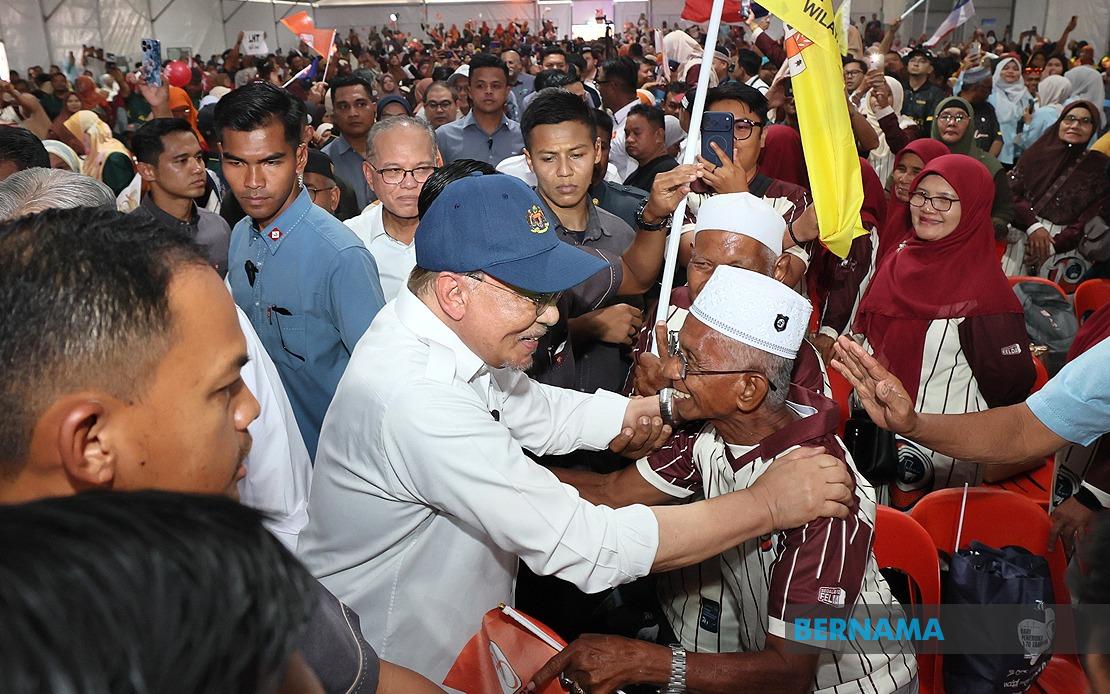
Prime Minister Datuk Seri Anwar Ibrahim has unveiled a comprehensive package of government initiatives aimed at revitalising Federal Land Development Authority (FELDA) communities across the country, underscoring the administration's pledge to improve living standards for the nation's agricultural settler population. The announcement came during FELDA Settlers' Day and the organisation's 70th anniversary celebration at Tun Abdul Razak Stadium in Jengka, Maran, highlighting the government's strategic focus on rural development and community welfare in a sector that remains integral to Malaysia's agricultural heritage.
The centrepiece of the initiative involves a RM15.85 million allocation dedicated to advancing digital literacy among settlers in 317 eligible FELDA settlements. This substantial investment acknowledges a critical gap in technological competency within rural communities and seeks to equip residents, particularly younger generations, with essential digital skills needed to navigate an increasingly technology-dependent economy. The programme represents recognition that digital exclusion poses a significant barrier to economic participation and personal advancement for FELDA settlers, many of whom work in geographically remote locations with historically limited access to training infrastructure.
Complementing this focus on digital empowerment, the government has committed RM10 million toward rehabilitating 370 primary and secondary schools operating within FELDA areas. Educational infrastructure remains fundamental to community development, and this funding addresses long-standing maintenance backlogs that have affected learning conditions for thousands of students in settler communities. School improvement initiatives directly impact educational outcomes and help retain families within FELDA settlements by signalling government commitment to quality public services in rural zones, thereby supporting intergenerational progress among settler families.
Healthcare provision in FELDA communities will be strengthened through an additional RM3 million allocation earmarked specifically for the FELDA MAYA Squad healthcare teams. These mobile and fixed health units provide critical medical services to geographically dispersed populations where commercial healthcare access remains limited. Enhanced funding enables expanded coverage, improved equipment, and better-trained personnel to address preventable health complications among settler communities, reflecting growing recognition that rural health equity represents an essential development indicator.
Millah Yoot, a 73-year-old FELDA Chemplak settler from Segamat in Johor and recipient of the 2025 Outstanding Woman Settler Award, emphasised the tangible impact these initiatives will deliver to FELDA generations. She stressed the importance of settlers, especially younger members of their communities, actively utilising the facilities and support mechanisms government provides to enhance their prospects and sustain the development momentum that FELDA has achieved over seven decades. Her perspective carries weight given her long residency within FELDA settlements and recognised leadership within the settler community.
Haron Sulaiman, a 66-year-old FELDA Jerangau Barat settler based in Ajil, Terengganu, voiced strong support for the digital literacy programme, arguing that such initiatives prove essential for enabling younger FELDA residents to meet contemporary economic challenges. His comments reflect growing settler awareness that technological capabilities now determine competitiveness in agricultural value chains and broader economic opportunities. Sulaiman's endorsement also underscores that digital access represents more than convenience; it increasingly functions as a fundamental prerequisite for meaningful economic participation and livelihood security in rural Malaysia.
Among younger settlers, Muhammad Farizul Hafiz Awang, 36, a resident of FELDA Panching Utara in Kuantan, highlighted government initiatives facilitating homeownership within FELDA communities. He framed the government's role as facilitator crucial to enabling younger-generation settlers to acquire residential properties and establish permanent family bases within FELDA settlements. This perspective reveals that housing affordability and availability concerns affect retention of younger demographics within traditional settler communities, with many young people forced to migrate to urban areas due to limited property acquisition pathways.
Addressing a structural barrier to property development, Prime Minister Anwar previously announced the government's intention to amend the Land (Group Settlement Areas) Act 1960 (Act 530) to permit construction of multiple housing units on single residential lots owned by FELDA settlers. This legislative reform would facilitate residential densification and enable settlers to generate additional income through rental arrangements while maintaining property ownership rights. The proposed amendment responds to demographic pressures and economic constraints that have historically limited housing options within FELDA zones.
Collectively, these initiatives reflect a broader governmental strategy recognising FELDA communities as deserving sustained public investment despite shifting economic patterns that have reduced agriculture's overall economic significance. The allocations acknowledge that FELDA settlements house approximately 112,000 families across the peninsula, representing communities with distinct development challenges requiring targeted intervention. Moreover, these initiatives intersect with Malaysia's broader rural development agenda and aspirations to enhance quality of life in non-urban zones where infrastructure deficits and economic opportunities have historically lagged metropolitan areas.
The 70th anniversary celebration itself constitutes an opportune moment for governmental reassessment of FELDA's contemporary relevance and future trajectory. Having established settler communities from the 1950s onward as an instrument of agricultural development and rural poverty alleviation, FELDA now navigates demographic transitions, climate pressures, and market volatility affecting commodity agriculture. Government initiatives announced at this milestone event suggest continued institutional commitment to FELDA communities rather than allowing the sector to experience gradual decline through benign neglect.
For Malaysian policymakers and development specialists, these allocations provide concrete demonstration of continued prioritisation of rural welfare alongside broader modernisation objectives. The digital literacy focus particularly signals recognition that rural development in the twenty-first century requires technological integration rather than reliance on traditional agricultural practices alone. As Southeast Asian economies increasingly emphasise digital transformation and rural-urban equity, Malaysia's targeted investment in FELDA community capabilities aligns with regional development trajectories while attending to the specific circumstances of Malaysia's settler population.

