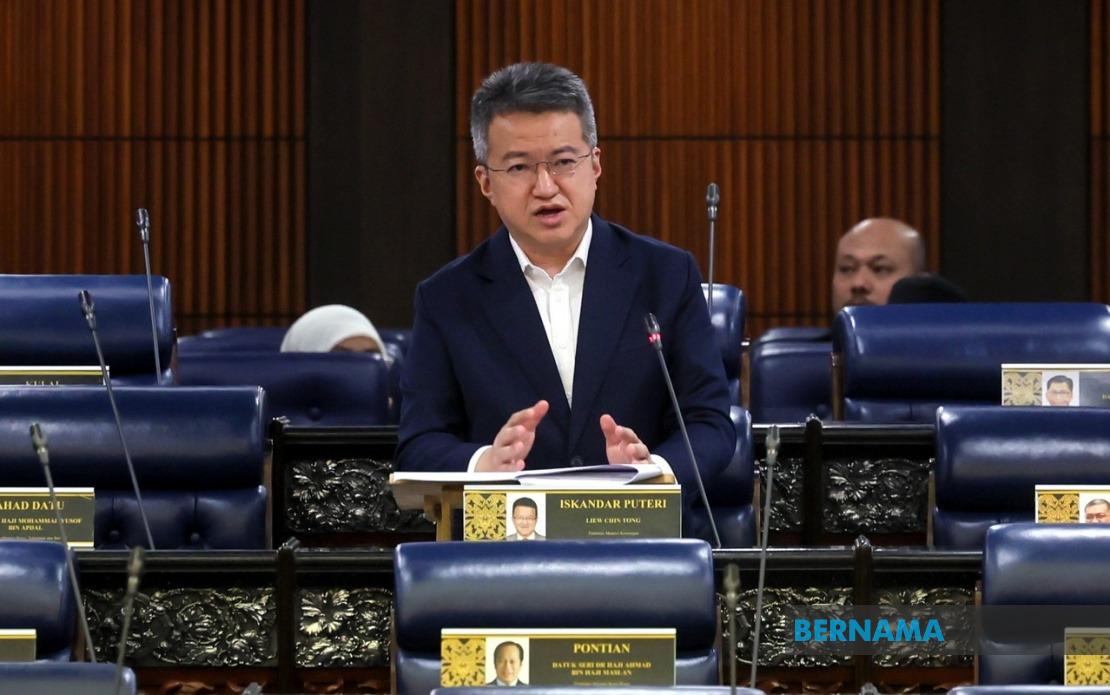
Malaysia's Ministry of Finance has committed RM15.77 million in government funding to the Malaysian Human Rights Commission (SUHAKAM) for 2025, representing a notable financial boost as the institution continues its mandate to protect and promote human rights across the nation. Deputy Finance Minister Liew Chin Tong announced the allocation during parliamentary proceedings, emphasising that the sum reflects the government's unwavering support for the independent commission since its establishment. The increased funding, up from RM13.55 million in 2024, underscores growing recognition of SUHAKAM's operational requirements in an increasingly complex human rights landscape.
The expanded budget allocation demonstrates the government's acknowledgement that SUHAKAM requires enhanced financial capacity to fulfil its expanding responsibilities. The additional RM2.2 million injection signals a meaningful commitment to strengthening institutional infrastructure at a time when human rights advocacy and monitoring have become more resource-intensive. This budgetary decision comes amid evolving social dynamics and heightened public interest in accountability mechanisms across Malaysia's governance structures, making adequate funding essential for effective institutional performance.
The 2025 allocation encompasses operational expenses for both SUHAKAM and the Office of the Children's Commissioner (OCC), a division that has gained prominence as child welfare and protection issues feature more prominently in national discourse. By consolidating funding for these related bodies under a single grant framework, the government streamlines administrative processes while ensuring coordinated delivery of human rights protections across vulnerable populations. The budgetary arrangement reflects an integrated approach to safeguarding fundamental rights and freedoms at both institutional and individual levels.
Within the broader funding envelope, resources are earmarked for essential operational components including commissioner allowances and emoluments, accommodation and utility costs, and programme implementation across SUHAKAM's portfolio of activities. These expenditure categories represent the basic infrastructure necessary for the commission to conduct investigations, publish research, engage with communities, and maintain its institutional presence across Malaysia's diverse regions. The government's allocation methodology, informed by Budget 2024 review assessments and SUHAKAM's historical spending patterns, reflects a pragmatic approach to financial planning that balances institutional needs against fiscal constraints.
The deputy finance minister's parliamentary statement addressed not merely SUHAKAM's funding requirements but also broader social protection frameworks affecting Malaysia's increasingly diverse workforce. In response to parliamentary queries concerning informal sector workers and gig economy participants, Liew outlined the government's continued emphasis on the i-Saraan programme, an initiative designed to encourage voluntary contributions to the Employees Provident Fund (EPF) among those typically excluded from traditional employment arrangements. This programme extension demonstrates recognition that adequate retirement security and social protection remain pressing national challenges requiring sustained governmental intervention.
The i-Saraan framework operates through a matching incentive mechanism whereby government contributions equal 20 per cent of an individual's annual EPF deposits, capped at RM500 yearly or RM5,000 across a contributor's lifetime. By subsidising voluntary contributions at this rate, the government effectively doubles the retirement savings potential for participating workers while reducing the financial burden on those operating in precarious employment arrangements. For Malaysia's informal sector, encompassing millions of hawkers, traders, service workers, and independent operators, this matching arrangement represents a tangible intervention addressing persistent retirement income vulnerabilities that plague large population segments.
Looking ahead to 2026, the government plans further programme expansion through introduction of the i-Saraan Plus initiative, specifically targeting platform-based transportation workers engaged in e-hailing and p-hailing services. This cohort, representing rapidly growing segments within Malaysia's gig economy, faces distinctive challenges including income volatility, absence of employer-provided benefits, and uncertain employment status. The i-Saraan Plus framework provides enhanced government matching support of up to RM600 annually or RM6,000 across a working lifetime, reflecting acknowledgement that technology-enabled gig work requires tailored social protection mechanisms distinct from traditional informal employment structures.
The expansion of social protection schemes targeting gig economy workers reflects Malaysia's evolving labour market realities. As digital platforms reshape employment patterns, generating income sources for millions while simultaneously removing workers from conventional safety nets, government policy must adapt accordingly. The introduction of platform-specific schemes demonstrates that Malaysian policymakers recognise this structural shift and are designing interventions that acknowledge gig workers' distinct circumstances rather than attempting to force modern working arrangements into outdated regulatory frameworks.
Beyond current programme implementations, the government through the EPF continues examining alternative mechanisms for extending contribution coverage to informal and gig economy workers. These exploratory efforts signal commitment to comprehensiveness, seeking pathways that capture those currently beyond institutional reach while maintaining sustainability and fiscal responsibility. The initiative reflects understanding that fragmented social protection leaves vulnerable populations exposed to destitution in old age, creating long-term costs for social welfare systems while perpetuating intergenerational poverty cycles.
The deputy minister's parliamentary responses reveal a government attempting to balance competing priorities: sustaining institutional human rights protections through SUHAKAM funding while simultaneously addressing social protection deficits affecting marginalised worker populations. Both domains represent fundamental governance challenges requiring sustained resource commitment and policy refinement. SUHAKAM's enhanced 2025 allocation and the expansion of social protection schemes suggest Malaysian authorities recognise that rights protection—whether constitutional human rights or economic security in retirement—demands institutional investment and programmatic consistency.
These budgetary and policy developments carry implications extending beyond Malaysia's borders. As Southeast Asian economies increasingly feature platform-based work and informal sector employment, SUHAKAM's evolution and the government's social protection innovations offer potential models for regional peers grappling with similar challenges. Malaysia's approach to funding independent rights institutions and designing worker protections for emerging employment categories may inform policy discussions across the region as nations confront comparable labour market transformations.
The consistency of government funding for SUHAKAM since establishment, emphasised by Liew during parliamentary debate, distinguishes Malaysia within the regional context where independent commissions sometimes face political pressure affecting operational capacity. This institutional stability enables SUHAKAM to maintain investigative independence and public credibility essential for its human rights mandate. Continued adequate funding represents not merely budgetary allocation but affirmation of institutional autonomy within Malaysia's democratic framework.

