The Malaysian government has committed over RM12 million to advance the Indian community through two major initiatives, signalling a renewed focus on inclusive development across Malaysia's diverse population. Announced at a ceremony in Seremban on July 7, the funding represents a substantial investment in both educational access and institutional strengthening, targeting vulnerable families and community infrastructure. The allocation comes through the Malaysian Indian Community Transformation Unit (MITRA), which has emerged as a coordinating mechanism for directing government support toward India-origin Malaysians across multiple sectors and regions.
The Early Education Subsidy Assistance Programme, branded as Celik MADANI 2026, accounts for RM8.87 million of the total allocation. This component directly addresses childhood development by supporting 162 kindergartens nationwide, reaching 3,612 young learners from bottom 40 per cent (B40) income households. Early childhood education has become increasingly recognised as foundational to breaking intergenerational poverty cycles, and this initiative recognises that Indian families in lower income brackets often face particular barriers to accessing quality preschool provision. By subsidising kindergarten fees, the programme removes a significant financial obstacle that might otherwise prevent disadvantaged children from participating in structured early learning environments during critical developmental years.
Complementing the education focus, the Third Series of Dharma MADANI Programme allocated RM3.36 million to support 168 Hindu houses of worship across Malaysia. This represents a strategic approach to community empowerment that works through existing institutional networks rather than imposing external structures. Hindu temples serve functions extending far beyond religious observance in many Malaysian Indian communities, operating as social hubs, educational centres, and welfare providers. Each temple receives RM20,000 to implement community-focused programmes, enabling them to expand services such as language classes, cultural preservation initiatives, skills training, and social support services for their congregations.
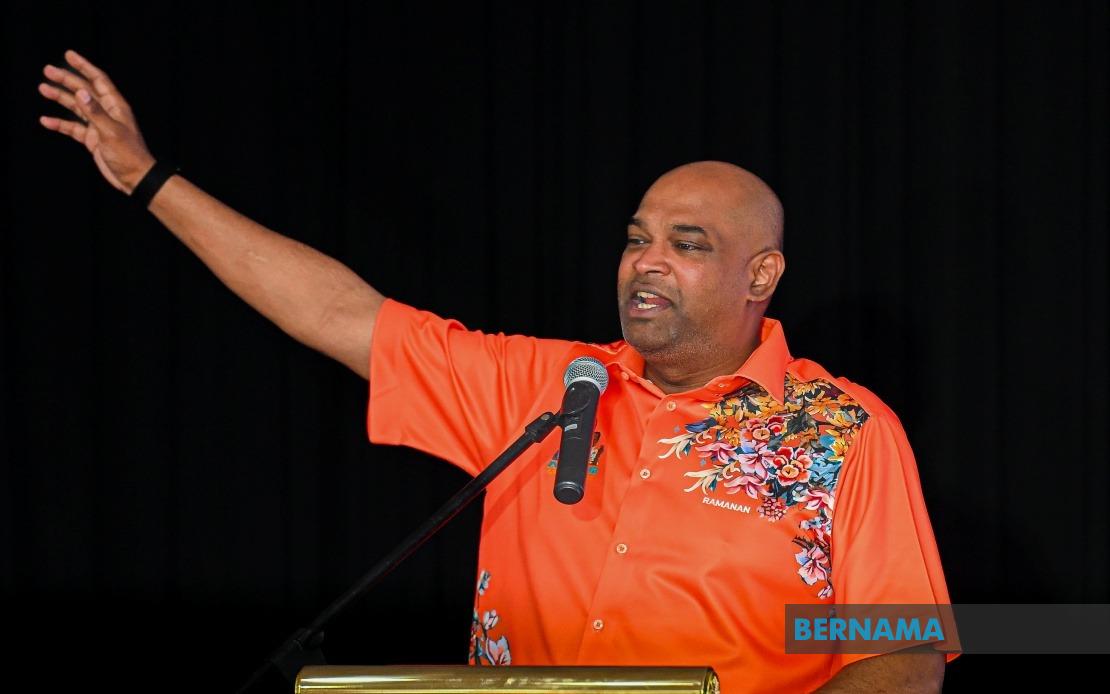
Human Resources Minister Datuk Seri R. Ramanan framed the disbursement as evidence of government commitment to inclusive human capital development and institutional strengthening. His statement acknowledged that community empowerment works most effectively when it builds upon existing institutions that already command trust and participation. By channelling resources through temples rather than creating parallel government structures, the approach leverages social capital that communities have already invested in building. This strategy recognises that sustainable development requires working with, rather than around, established community organisations.
The cumulative impact of repeated tranches of the Dharma MADANI Programme has grown substantially. With this third disbursement, total approved funding under the programme has reached RM12.54 million distributed among 627 Hindu temples nationwide. This expanding network of supported institutions demonstrates scaling of a successful model rather than a one-off initiative. The consistency of the RM20,000 per-temple allocation across different series ensures predictable funding that temples can incorporate into multi-year planning cycles. Over time, such sustained commitment allows religious institutions to undertake infrastructure improvements, develop permanent programmes, and build staff capacity rather than managing project-to-project uncertainty.
The South Zone programme distribution, held at Wisma Ceylonese in Seremban, channelled nearly RM3 million to 48 temples and 45 kindergartens across Melaka, Negeri Sembilan, and Johor. This regional approach acknowledges geographic variation in community needs and institutional density. The three southern states contain significant Indian population concentrations, particularly in urban centres and former plantation areas, making targeted investment in these regions strategically important. Transport Minister Anthony Loke's attendance alongside Ramanan signalled cross-ministerial coordination in the initiative, suggesting alignment across multiple government agencies in prioritising community development.
MITRA's role as administrative coordinator carries significance for implementation effectiveness. The unit's director-general Raveendran Nair's involvement in the announcement underscores the unit's operational responsibility for ensuring transparent and effective fund channelling. Ramanan's explicit commitment to transparency addresses a concern that sometimes accompanies government programmes reaching communities through multiple intermediaries—that funds might be diverted or poorly accounted for at various transition points. Establishing clear accountability mechanisms and publicising them helps build community confidence in such programmes, particularly important when building trust in initiatives meant to serve populations that may harbour historical grievances about resource allocation.
The framing of these initiatives within Malaysia MADANI reflects how community-specific programmes connect to the broader governing narrative. Malaysia MADANI positions government action as advancing shared prosperity across all communities, with particular attention to those facing systemic disadvantages. The Indian community's representation in such flagship programmes sends a signal about inclusion in national development priorities. For a community that has experienced periods of marginalisation in national discourse, explicit government investment carries symbolic weight alongside material benefit.
Educational access represents perhaps the most consequential long-term impact of the Celik MADANI component. Early childhood education's effects extend well beyond immediate learning gains, influencing school readiness, later educational attainment, and eventual economic outcomes. By removing cost barriers for B40 families, the programme enables children to participate regardless of parental income, creating more level competitive conditions. Research consistently demonstrates that quality early education produces returns spanning decades, making this form of investment among the most cost-effective uses of development resources. For Indian families specifically, enhanced educational access addresses a historical concern about unequal educational opportunities that persists despite overall improvements in Malaysia's education system.
The temple-focused approach to community development deserves particular attention for its potential as a replicable model. Rather than creating new institutions, the government partners with existing ones, reducing administrative overhead while strengthening community organisations' capacity. This approach mirrors successful community development work globally, where sustainable change typically emerges through local institutions rather than external impositions. The RM20,000 temple allocation, while modest, becomes consequential when multiplied across 627 institutions. Aggregate resources approach levels of significant community benefit when coordinated through established networks.
Implementation challenges remain, however, even with clear allocation and announced programmes. Ensuring that kindergarten subsidies reach their intended B40 beneficiaries without exclusion or bureaucratic barriers requires careful administration at school level. Similarly, temple programme quality depends upon local leadership capacity and community engagement. The MITRA unit's ongoing role in monitoring utilisation, addressing bottlenecks, and gathering impact data will ultimately determine whether announced allocations translate into meaningful community benefit.
Looking ahead, the sequential nature of these disbursements—this marks the third Dharma MADANI series—suggests potential institutionalisation of community support mechanisms. If repeated regularly with predictable amounts, such programmes allow community institutions to plan sustainably rather than pursuing crisis-mode fundraising. For the Indian community specifically, sustained commitment to education and institutional support through programmes like these demonstrates governmental recognition that inclusive development requires targeted investment in communities facing particular disadvantages, not merely universal policies applied uniformly across all groups.

