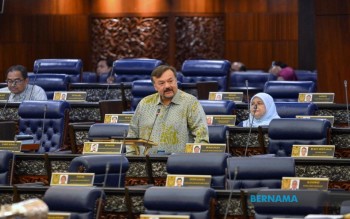
The Malaysian government has disbursed more than RM500 million in micro-financing to support over 30,000 entrepreneurs during a concentrated seven-week period from May 15 to June 26, 2026, according to Finance Minister II Datuk Seri Amir Hamzah Azizan. The substantial injection of capital represents a significant component of the government's commitment to safeguard the survival and growth of Malaysia's micro-enterprise sector, which forms the backbone of the nation's economic resilience and employment generation at the grassroots level.
The approved financing emerged from the broader Micro Financing Facility Programme, underpinned by a government allocation exceeding RM5 billion designed specifically to assist micro enterprises in maintaining operational sustainability despite mounting costs across raw materials, labour, and logistics. Speaking during Question Time in the Dewan Rakyat, Amir Hamzah outlined how the rapid deployment of these funds demonstrates the government's responsiveness to the immediate challenges facing Malaysia's small business community, particularly in an environment of persistent global economic uncertainty and inflationary pressures that disproportionately affect lower-capitalised enterprises.
The financing distribution involved a network of established developmental and commercial institutions, reflecting the government's deliberate strategy to leverage diverse lending channels. Amanah Ikhtiar Malaysia (AIM), Agrobank, Bank Simpanan Nasional (BSN), Bank Rakyat, MARA, and TEKUN Nasional collectively administered the disbursements, ensuring geographical reach and sector-specific expertise. This institutional arrangement allows the government to tailor support to different borrower profiles—from agricultural micro-enterprises requiring seasonal financing flexibility to urban-based traders facing acute cost pressures.
Paralleling the direct micro-financing effort, the government activated the RM5 billion MADANI Government Assistance Guarantee Scheme through Syarikat Jaminan Pembiayaan Perniagaan Bhd (SJPP) to further expand access to financing for micro, small, and medium enterprises. The guarantee mechanism fundamentally alters the risk calculus for commercial lenders, enabling banks to extend credit to borrowers who might otherwise lack sufficient collateral or credit histories. Between May 15 and June 20, 2026, SJPP had approved RM219 million in financing guarantees benefiting over 300 MSMEs, with particular emphasis on enterprises operating in agriculture, construction, logistics, and tourism sectors—industries vital to Malaysia's economic diversification and regional competitiveness.
Amir Hamzah's statement responds directly to concerns raised by Datuk Andi Muhammad Suryady Bandy (BN-Kalabakan) regarding the government's concrete measures to ensure small traders, hawkers, and MSMEs maintain resilience amid persistent global economic headwinds. The questioning reflected broader anxieties within Malaysia's small business community about their capacity to navigate compounding challenges including supply chain disruptions, fluctuating currency movements, and shifting consumer behaviour in the post-pandemic economy. The government's multifaceted response through various support mechanisms signals acknowledgment that a single intervention proves insufficient for such a heterogeneous business population.
Beyond direct lending and guarantees, SJPP also facilitates more nuanced forms of support by coordinating with commercial banks on loan restructuring and rescheduling arrangements tailored to individual borrower circumstances. This collaborative approach recognises that many MSMEs facing financial strain require temporary relief rather than permanent debt forgiveness—the ability to extend repayment timelines or temporarily reduce obligations can prove decisive in enabling businesses to weathered cyclical downturns and emerge intact. Targeted repayment assistance programmes further cushion enterprises during acute cash flow difficulties, preserving productive capacity and employment that might otherwise be lost through insolvency.
The SME Stabilisation Relief Facility (SME SRF), launched by Bank Negara Malaysia in mid-May 2026 with a RM5 billion capitalisation, represents yet another complementary initiative addressing the broader MSME financing landscape. Nearly RM1 billion has already been approved for over 1,500 MSMEs under this scheme, indicating substantial uptake and genuine demand for stabilisation support among Malaysia's small business sector. The facility's emphasis on stabilisation rather than growth financing acknowledges the immediate priority facing many enterprises: maintaining operational continuity and workforce retention during uncertain economic periods.
The availability of approximately RM4 billion in remaining funds under the SME SRF indicates that the government has constructed financing mechanisms with substantial capacity buffers, enabling responsive deployment to future applications without exhausting available resources. This reserve capacity proves particularly important given the uncertain trajectory of global economic conditions and the potential for renewed pressures on Malaysian MSMEs should international trade tensions escalate or regional supply chains experience additional disruptions. The adequacy of remaining financing capacity should theoretically encourage eligible enterprises to apply, knowing that capital availability does not represent a constraining factor.
For Malaysian MSMEs, the implications of this multi-institutional support architecture extend beyond immediate financial relief. The coordinated deployment of developmental finance, commercial lending with government guarantees, and Bank Negara Malaysia's direct stabilisation facility demonstrates institutional alignment toward a singular objective: preserving the productive capacity and employment generation embedded within Malaysia's small business ecosystem. The emphasis on enterprises in agriculture, construction, logistics, and tourism reflects strategic recognition that these sectors anchor Malaysia's regional competitiveness and employment generation, particularly in non-metropolitan areas where alternative economic opportunities remain constrained.
Regionally, Malaysia's comprehensive MSME support approach provides instructive contrast to less-coordinated responses in some peer economies. The integration of developmental institutions like MARA and TEKUN with commercial lenders and Bank Negara Malaysia's direct intervention suggests a deliberate rejection of market-only approaches, instead embracing active state stewardship of the small business ecosystem. This philosophy carries implications for Malaysia's broader economic resilience and inclusive growth trajectory, positioning the MSME sector as a deliberate policy priority rather than a marginal concern.
The scale of disbursements—exceeding RM500 million across 30,000 entrepreneurs within seven weeks—underscores the substantial administrative capacity mobilised to deliver these programmes. Behind the headline figures lies significant institutional coordination among multiple lenders, standardised application procedures enabling rapid processing, and risk assessment frameworks permitting confident deployment of government resources. The efficiency of disbursement suggests that administrative bottlenecks have not substantially constrained access, a meaningful achievement in a Malaysian context where bureaucratic delays have historically impeded programme effectiveness.
Moving forward, the government's maintenance of substantial RM4 billion reserve capacity within the SME SRF, coupled with ongoing operations of the Micro Financing Facility and SJPP guarantee mechanisms, ensures that the support infrastructure remains responsive to evolving conditions. Should economic pressures intensify, this pre-positioned capital can be rapidly deployed. Conversely, if conditions stabilise and application rates decline, unused allocation signals fiscal discipline—the government has constructed support mechanisms of appropriate scale without over-committing resources to a problem potentially resolving through natural economic adjustment. This approach balances active support with fiscal prudence, a difficult equilibrium to maintain but essential for programme sustainability.

