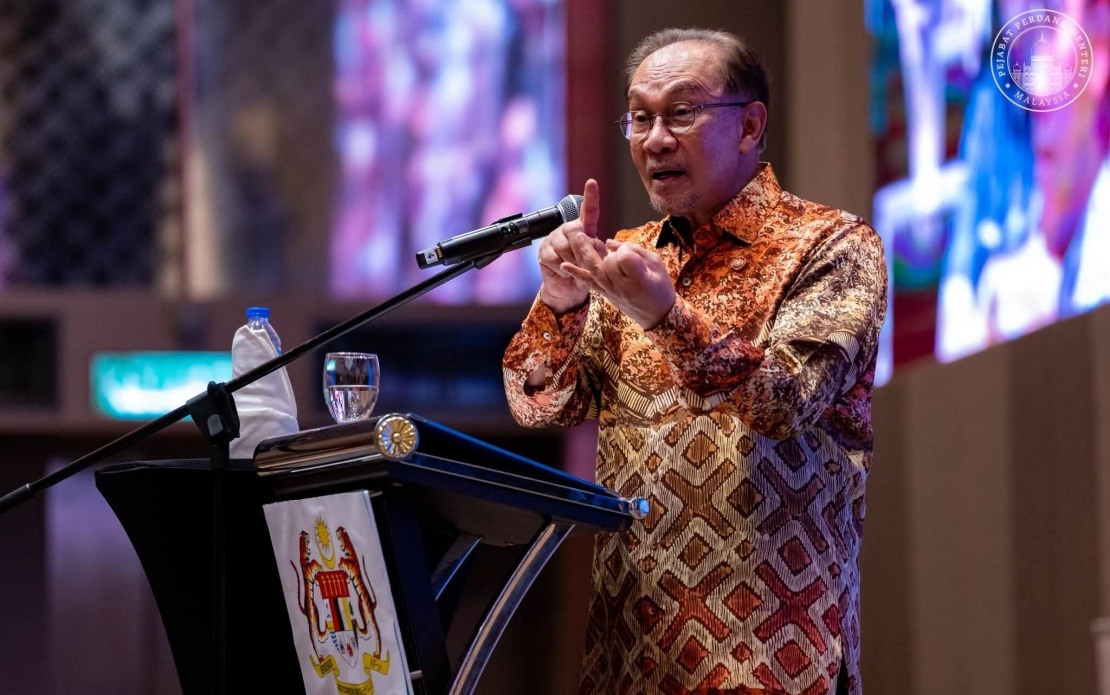
Prime Minister Datuk Seri Anwar Ibrahim has pledged that his administration will exert maximum effort within available resources to help young people address the multifaceted challenges they encounter in today's rapidly evolving landscape. The commitment emerged from his participation in the "Temu Anwar" engagement session and the opening of the 2026 International Youth Assembly (HAMKA) held in Klang, Selangor, where the Prime Minister had the opportunity to hear directly from youth representatives about their concerns and recommendations across various policy domains.
In a social media statement, Anwar emphasised that the government recognises the complex environment in which Malaysia's younger generation must operate and navigate. He acknowledged that while disagreement and ideological differences are inevitable in contemporary society, such discourse must be grounded in rational argument, evidence-based reasoning, and civilised debate rather than driven by emotion, animosity, or narrow factional interests. This framing reflects growing concern in governance circles about polarisation among younger demographics and the need for constructive dialogue on contentious issues.
The Prime Minister underscored the importance of listening directly to youth perspectives on pressing matters affecting their lives and futures. Having received various inputs and suggestions from young Malaysians at the HAMKA event, he reiterated that the government would endeavour, within its operational and budgetary constraints, to respond meaningfully to youth-related issues. This statement tacitly acknowledges fiscal limitations that policymakers currently face while signalling political will to prioritise youth concerns in resource allocation decisions.
Anwar's remarks carry particular significance given the demographic composition of Malaysia, where young people represent a substantial proportion of the population and increasingly constitute a key voting bloc. Youth employment, education quality, affordability of housing, mental health support, and climate change are among the pressing concerns that regularly emerge in surveys of Malaysian young people. By emphasising direct engagement through "Temu Anwar" sessions, the government is attempting to create channels for authentic dialogue with this demographic rather than relying solely on traditional consultative mechanisms.
The Prime Minister's reference to the International Youth Assembly's nomenclature—HAMKA—drew connections to the legacy of Abdul Malik Karim Amrullah, a revered Islamic scholar, intellectual, and prolific writer whose influence shaped educational and philosophical discourse across Southeast Asia. Anwar highlighted Amrullah's reputation as a formidable public speaker, influential author, and serious thinker whose scholarly output profoundly affected younger generations throughout the region. This historical reference serves to situate contemporary youth engagement within a broader intellectual tradition emphasising the importance of knowledge, reasoned discourse, and bold articulation of ideas.
Anwar further noted that Amrullah's intellectual contributions underscored the value of systematic knowledge, the ethical obligation to voice reasoned perspectives, and institutional openness to diverse ideas. By invoking this historical figure, the Prime Minister appears to be encouraging Malaysia's youth to engage with serious intellectual traditions while contributing their own perspectives to national discourse. The implicit message suggests that youthful energy and innovation should be channelled through informed engagement rather than reactionary sentiment.
The timing of these statements reflects broader government efforts to strengthen relationships with younger voters and demonstrate responsiveness to generational concerns. After a period of significant political turbulence in Malaysia, policymakers appear cognisant that youth alienation from political processes could pose longer-term challenges for democratic participation and social cohesion. Structured engagement initiatives like the "Temu Anwar" sessions represent attempts to bridge potential gaps between youth expectations and government capacity to deliver.
The HAMKA assembly itself carries international dimensions, bringing together youth representatives from multiple countries. This platform enables Malaysian young people to engage with regional peers facing similar challenges—economic pressures, technological disruption, climate anxiety, and questions about democratic governance. The international character of the assembly also positions Malaysia as a convener and contributor to youth-centred dialogue across Southeast Asia, potentially enhancing the country's soft power credentials among younger demographics across the region.
Government recognition of the intellectual heritage represented by figures like Amrullah also reflects awareness that Malaysian youth increasingly draw inspiration from diverse sources—religious scholars, technology entrepreneurs, climate activists, and social reformers. By acknowledging multiple intellectual traditions and emphasising the compatibility of knowledge-seeking with contemporary activism, the Prime Minister signals openness to pluralistic pathways through which young people might contribute to national development.
The statement's emphasis on government capacity constraints—framing commitments within "available capacity"—reflects fiscal realities that Malaysian policymakers must navigate. Whether addressing youth unemployment through skills training, improving mental health services, implementing environmental sustainability measures, or expanding affordable housing, each initiative carries budgetary implications. By being candid about constraints while emphasising commitment, Anwar positions the government as realistic about challenges while demonstrating determination to prioritise youth concerns within those boundaries.
Moving forward, the success of these engagement initiatives will likely be measured through concrete policy outcomes and subsequent feedback from youth constituencies. Whether the insights gathered at HAMKA and other "Temu Anwar" sessions translate into tangible programme modifications, resource reallocation, or new policy frameworks will indicate the substantive impact of these dialogues. For Malaysian youth, the Prime Minister's statements signal that their voices are being solicited and, theoretically, influence the policy development process—though translating such engagement into demonstrable results remains crucial for maintaining youth confidence in the democratic system.

