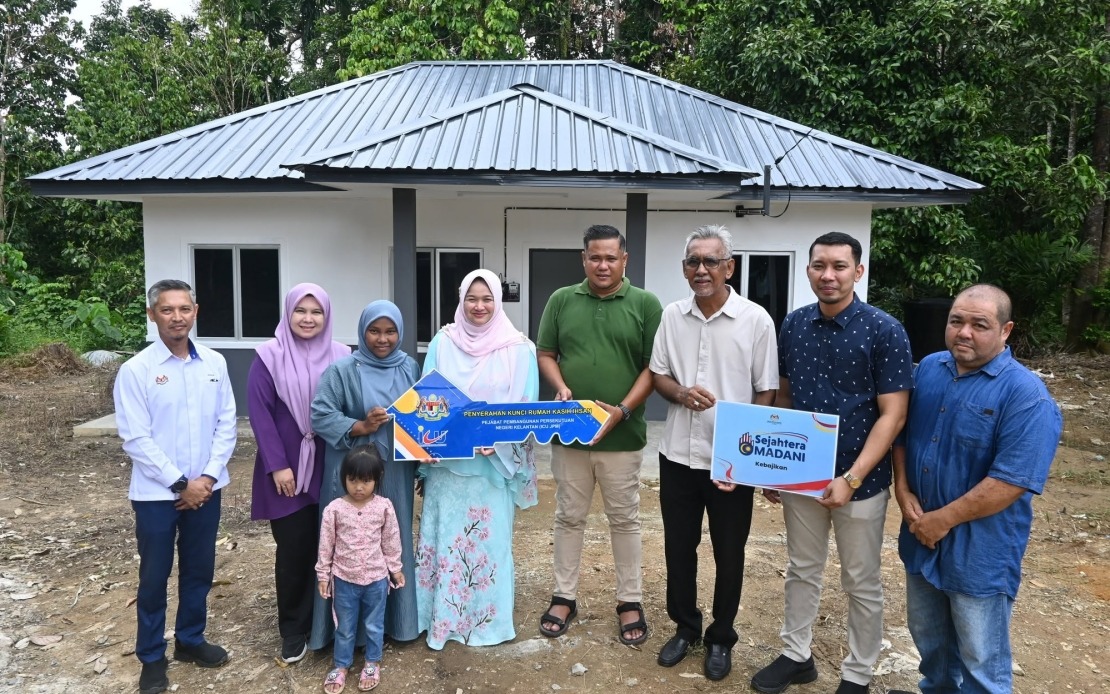
The Malaysian government has accelerated its push to enhance living standards among disadvantaged communities through the Rumah Kasih Ihsan housing programme, with two families in Jeli, Kelantan recently receiving new homes as part of this initiative. Prime Minister Datuk Seri Anwar Ibrahim highlighted the successful handover on social media, underscoring the administration's commitment to ensuring that vulnerable populations gain access to safer, more dignified residential spaces. The milestone represents tangible progress in addressing housing insecurity, a persistent challenge affecting numerous families across Malaysia's more rural districts.
The Kelantan Implementation Coordination Unit, operating under the Prime Minister's Department, orchestrated the handover ceremony in coordination with the PMX Coordination Team. Dr Wan Nur Ibtisam Wan Ismail, who directs the ICU in Kelantan, formally presented the homes to their recipients. This institutional framework reflects a deliberate government structure designed to coordinate social welfare initiatives at the state level, ensuring that policy announcements translate into concrete outcomes for beneficiaries.
For Yusof Mohamed Nawawi, a resident of Kampung Renyut in Jeli, the programme represents a transformative opportunity. He received formal documentation committing the government to construct a new residence to replace his existing dwelling, which presumably does not meet contemporary safety and habitability standards. The acceptance letter signifies the beginning of the construction phase, with the government assuming responsibility for delivering improved accommodation within a defined timeframe.
The second beneficiary, Shamsul Bahri Che Musa, received a fully completed house ready for immediate occupancy. This distinction between the two cases reflects how the Rumah Kasih Ihsan scheme operates flexibly, accommodating different circumstances and stages of project implementation. Some recipients may receive newly constructed units, whilst others participate in the planning and construction process itself, potentially creating employment opportunities within their communities.
Beyond the provision of physical structures, both families received food baskets, a symbolic acknowledgement of government concern for their immediate welfare needs. This supplementary gesture suggests a holistic approach to assistance, recognising that housing insecurity often accompanies broader economic challenges affecting food security and access to basic necessities. The combination of durable housing improvements and consumable aid addresses both long-term stability and short-term hardship.
The Kelantan ICU's philosophical framing of the initiative reveals important thinking about development and dignity. Officials emphasised that adequate housing transcends mere shelter, instead functioning as a foundation for broader human flourishing. This conceptualisation acknowledges research showing strong correlations between residential stability and improved educational outcomes, employment prospects, and mental health among residents. A secure home creates psychological and practical conditions enabling individuals to pursue economic opportunity and personal development.
The characterisation that meaningful development extends beyond physical infrastructure to encompassing genuine improvements in people's quality of life represents a significant articulation of development philosophy. This perspective contrasts with purely GDP-focused metrics and suggests an administration attuned to measuring progress through tangible impacts on household living conditions. For Malaysian policymakers and development professionals, this framing provides justification for targeted social spending even amid broader economic constraints.
The Rumah Kasih Ihsan programme sits within Malaysia's broader social safety net framework, addressing gaps in housing provision that market mechanisms have failed to resolve. Rural areas like Jeli, despite falling within a relatively developed nation, often lack adequate affordable housing options. Government intervention through targeted construction and handover programmes attempts to correct this market failure, ensuring that low-income families access dignified shelter regardless of their capacity to pay commercial rates.
For Southeast Asian readers observing Malaysia's approach, the programme demonstrates how government resources can be mobilised to address housing deficits affecting vulnerable populations. Similar challenges persist throughout the region, where rapid urbanisation and rural stagnation have created divergent living conditions. Malaysia's willingness to systematically identify and assist families lacking adequate housing provides a model that policymakers in other ASEAN nations might consider adapting to their specific contexts and institutional capacities.
The success of such initiatives depends partly on accurate identification of beneficiaries and appropriate allocation of limited resources. The government's coordination structure suggests effort to ensure that assistance reaches genuinely vulnerable households rather than being dispersed ineffectively. However, the scale of Malaysia's housing deficit for lower-income groups vastly exceeds what current programme funding appears to address, indicating that Rumah Kasih Ihsan likely represents initial intervention rather than comprehensive resolution.
Looking forward, the sustainability of improvements depends on whether recipients can maintain homes adequately and whether surrounding infrastructure—employment opportunities, healthcare, education—develops correspondingly. Housing alone, whilst foundational, cannot overcome economic marginalisation if recipients lack pathways to stable income generation. The government's framing suggesting homes provide bases for prosperity implies accompanying efforts to create economic opportunity within Jeli and similar communities.
The initiative reflects political prioritisation of regional equity, particularly in Kelantan, a state where the government has emphasised development attention. Such targeted spending on housing and welfare constitutes visible demonstration of government responsiveness to constituent needs, with potential electoral implications. Whether this commitment translates into sustained funding and programme expansion across multiple years and states will indicate the government's genuine commitment to addressing Malaysia's housing insecurity comprehensively.

